
Imagine turning on your lights only to find the power grid buckling under the weight of thousands of humming computer servers. That is the reality for many Iranians today. While ordinary households face rolling blackouts, massive industrial-scale Bitcoin mining operations run by the Islamic Revolutionary Guard Corps (IRGC) consume vast amounts of subsidized electricity. This isn't just a tech story; it's a geopolitical one. The IRGC uses these unlicensed or semi-licensed mining farms to bypass international financial restrictions, effectively turning national energy resources into hard currency that flows outside traditional banking channels.
The Sanctions Workaround
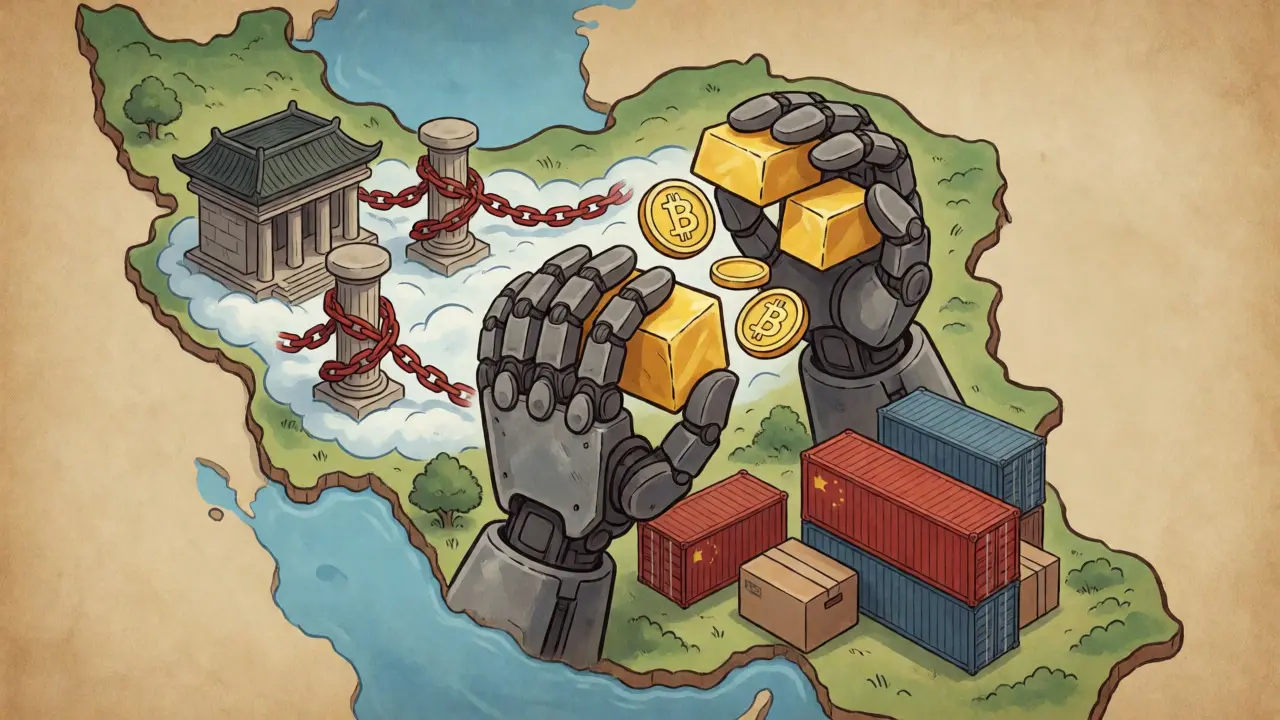
Why would a military organization care about cryptocurrency? It comes down to survival. International sanctions have choked Iran's access to global dollar markets. Traditional banking transfers are monitored, blocked, or heavily scrutinized. Cryptocurrency offers a different path. Because blockchain transactions can occur directly between digital wallets without central oversight, they provide a layer of anonymity that traditional wire transfers lack. For the IRGC, this means they can generate revenue from mining and move funds to support proxy groups or import goods without leaving a clear audit trail in Western banks.
This strategy gained momentum around 2019 and 2020. Reports indicate that entities linked to Supreme Leader Ali Khamenei began directing significant resources into the sector. The goal was simple: compensate for lost dollar channels. By partnering with foreign firms, particularly Chinese investors who brought hardware and expertise, the regime established large-scale farms. A prime example is the 175-megawatt facility in Rafsanjan, Kerman Province. Nominally a joint venture, it operates under the protection of IRGC-affiliated enterprises, leveraging Iran’s incredibly low domestic electricity prices to maximize profit margins.
Who Controls the Hashrate?
You might think private citizens dominate Iran's mining scene. The data suggests otherwise. Estimates suggest that well over half of all active mining hardware in Iran belongs to state or quasi-state organizations. Out of approximately 180,000 active devices, roughly 80,000 are in private hands. That leaves up to 100,000 units controlled by entities like the Astan Quds Razavi foundation, a massive charitable trust under Supreme Leader supervision.
This concentration creates what investigators call a 'crypto cartel.' These entities don't just mine; they monopolize access to cheap power. While private miners struggle with high tariffs and strict regulations, IRGC-linked operations often enjoy effectively free electricity or simply refuse to pay utility bills. They operate within special economic zones or military bases, areas where civilian regulators have little to no authority. This two-tiered system allows the regime to plunder national resources while maintaining a facade of legal compliance.
| Feature | Private Miners | IRGC/State-Linked Entities |
|---|---|---|
| Electricity Cost | High tariffs; frequent price hikes | Subsidized; often unpaid or negligible |
| Regulatory Oversight | Strict licensing via Ministry of Industry, Mines, and Trade | Minimal; self-regulated within military zones |
| Asset Disposal | Must sell to Central Bank of Iran (CBI) | Flexible; used for sanctions evasion and imports |
| Protection | Vulnerable to raids and confiscation | Armed protection; political immunity |
The Energy Crisis Connection
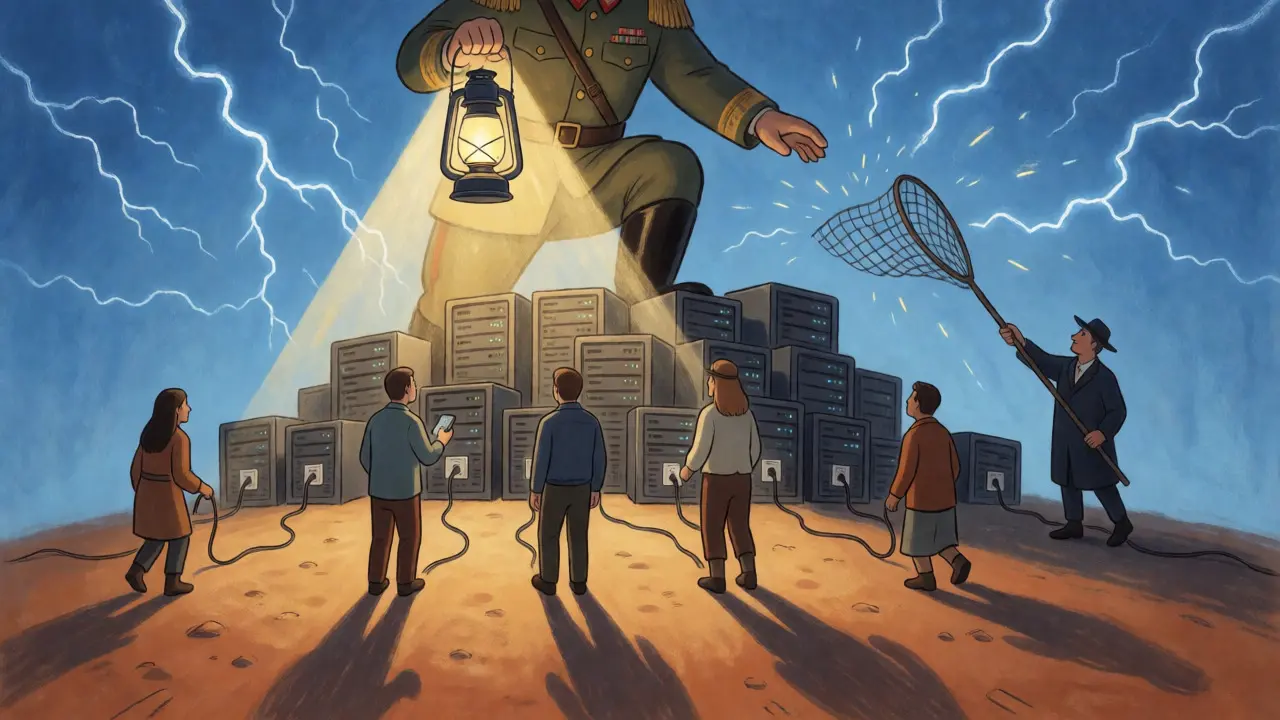
Here is the uncomfortable truth: every kilowatt-hour consumed by an IRGC server farm is a kilowatt-hour denied to a hospital or a factory. The scale of consumption is staggering. Industrial ASIC miners run 24/7, generating heat and demanding constant power. When these machines cluster in regions already prone to grid instability, the result is widespread outages.
Iranian Energy Minister Ali Abadi, himself a former IRGC commander, has publicly described unauthorized mining as "an ugly and unpleasant theft," likening it to putting a hand in someone else's pocket. His comments highlight the internal tension. The government knows the mining sector strains the grid, yet it hesitates to crack down hard on the very entities that fund its strategic objectives. The 2022 legislation allowing the military to build private power plants and transmission lines further cemented this dynamic. It enabled the IRGC to redirect public electricity intended for cities toward their secret mining hubs, exacerbating the shortage for civilians.
Regulatory Whack-a-Mole
On paper, Iran legalized cryptocurrency mining in 2019. The Ministry of Industry, Mines, and Trade issues licenses. But for whom? Licensed private miners face harsh conditions. They must sell their mined Bitcoin directly to the Central Bank of Iran at rates set by the state, often below market value. This requirement strips them of the ability to hedge against inflation or trade freely. Many find it financially unsustainable.
Consequently, much of the mining activity exists in a gray zone. Unlicensed rigs pop up in basements, warehouses, and remote areas, drawing power illegally. The state launches periodic crackdowns, seizing hardware and fining operators. Yet, the IRGC's own operations remain largely untouched. Recent moves by the Central Bank in late 2024 attempted to block crypto-to-rial payments through local websites, aiming to control the flow of money. However, by early 2025, some exchanges were selectively unblocked using government APIs, showing a desire to monitor rather than eliminate the sector. Citizens continue to use VPNs to access foreign exchanges like Nobitex alternatives, trying to navigate a system rigged against them.
Global Implications
The impact extends beyond Tehran's borders. Blockchain analytics firms have identified Iran as a major global Bitcoin producer. More critically, US Treasury and Israeli intelligence agencies track wallets tied to IRGC operations. These funds reportedly finance regional conflicts and support proxy groups. If you trace the transaction history, you see how digital assets convert into physical influence. The anonymity of blockchain allows these transfers to slip past traditional sanctions enforcement mechanisms.
For the average observer, this raises questions about the true cost of decentralization. Is cryptocurrency truly free when a military-industrial complex controls the infrastructure? In Iran, the answer seems to be no. The technology serves as a tool for state consolidation, not just individual empowerment. As long as the regime needs a way to bypass SWIFT restrictions and fund its activities abroad, the hum of those mining rigs will continue, regardless of the darkness falling on residential neighborhoods.
Is cryptocurrency mining illegal in Iran?
No, it is not entirely illegal. Iran legalized licensed mining in 2019. However, operating without a license is prohibited. The complexity lies in enforcement, where state-linked entities often operate with de facto immunity despite regulatory ambiguities.
Why does the IRGC engage in crypto mining?
The primary motivation is sanctions evasion. International restrictions limit Iran's access to global banking and dollar reserves. Cryptocurrency allows the IRGC to generate revenue from energy exports (in digital form) and transfer funds internationally without relying on traditional, monitored banking channels.
How does IRGC mining affect Iranian civilians?
It contributes significantly to the national energy crisis. Large-scale mining consumes vast amounts of subsidized electricity, leading to frequent power outages in homes and industries. Civilians bear the brunt of these shortages while state entities benefit from cheap, reliable power for their operations.
Do private miners have the same advantages as IRGC entities?
No. Private miners face higher electricity tariffs, strict licensing requirements, and mandatory sales of mined assets to the Central Bank at fixed rates. IRGC-linked entities often enjoy subsidized or unpaid electricity, minimal oversight, and greater flexibility in how they use their mined assets.
Can international sanctions stop IRGC crypto mining?
Sanctions make it harder but do not stop it. While authorities can freeze specific wallets or ban exchanges, the decentralized nature of blockchain and the use of intermediary-free transactions allow sophisticated actors like the IRGC to adapt and continue operations, albeit with increased friction and monitoring.

Rebecca Andrews
I'm a blockchain analyst and cryptocurrency content strategist. I publish practical guides on coin fundamentals, exchange mechanics, and curated airdrop opportunities. I also advise startups on tokenomics and risk controls. My goal is to translate complex protocols into clear, actionable insights.
More Articles

BABYDB (Baby Doge Billionaire) Airdrop Details - What You Need to Know
Discover the truth about BABYDB (Baby Doge Billionaire) airdrop claims, token stats, and how to stay safe in the crypto space.