
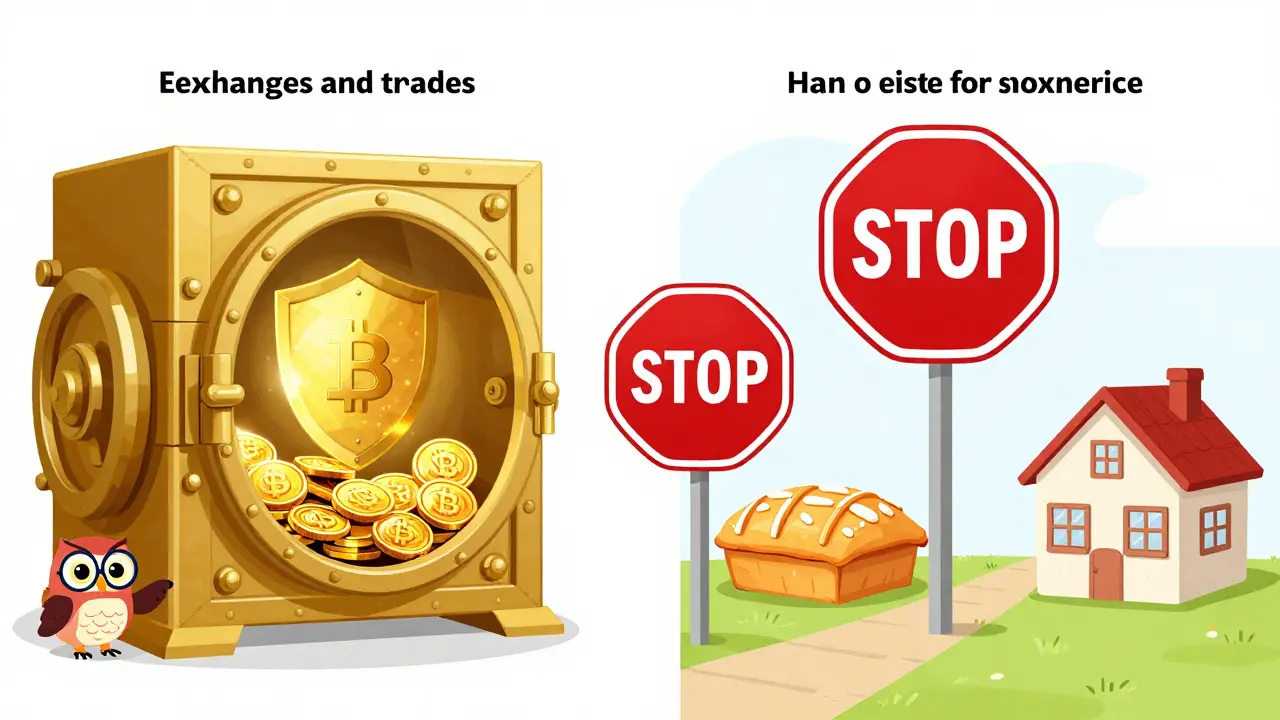
Imagine walking into a cafe in Istanbul with your favorite coffee order ready, pulling out your phone to pay with USDT or Bitcoin, only to have the barista shake their head. You can’t do that. Not because you don’t own the coins, but because Turkey strictly forbids using cryptocurrency as a method of payment for goods and services. This restriction, known as the Turkey crypto payment ban, has been a defining feature of the country’s digital asset landscape since April 2021.
If you are trading crypto in Turkey or planning to move there, understanding this rule is crucial. It creates a unique paradox: you can buy, sell, hold, and trade digital assets freely on licensed platforms, but you cannot use them to buy bread, rent an apartment, or pay for internet services. This guide breaks down why this ban exists, how it works today in 2026, and what it means for traders, businesses, and everyday users.
The Origin: Why Turkey Banned Crypto Payments in 2021
To understand the current rules, we need to look back at the pivotal moment in April 2021. The Central Bank of the Republic of Turkey (CBRT) issued a regulation on April 16, 2021, which took effect on April 30, 2021. This wasn't a sudden impulse; it was a calculated move to protect the national financial system during a period of high economic volatility.
The CBRT cited five specific risks that justified the prohibition:
- Lack of Supervision: Cryptoassets operate without a central regulatory authority or oversight mechanisms.
- Excessive Volatility: The market values of cryptocurrencies fluctuate wildly, making them unreliable for pricing goods and services.
- Anonymity Risks: The anonymous nature of many crypto transactions facilitates illegal activities, including money laundering and terrorist financing.
- Security Vulnerabilities: Wallets can be stolen or accessed unlawfully without the holder's authorization, leading to irreversible losses.
- Irrrevocable Transactions: Unlike credit card charges, crypto transactions cannot be reversed if an error occurs or fraud is detected.
The regulation explicitly stated that "cryptoassets will not be used for payments, directly or indirectly." This meant that payment institutions and electronic money issuers were prohibited from processing any transaction where cryptocurrency served as the medium of exchange. However, the law made a critical distinction: owning crypto was not illegal. Buying, selling, transferring, or holding crypto via licensed platforms remained permitted.
How the Rules Evolved: From Ban to Licensing (2024-2025)
While the payment ban remains in place, the broader regulatory framework for crypto trading has tightened significantly. In July 2024, Turkey implemented the "Law on Amendments to the Capital Markets Law," which fundamentally changed how crypto businesses operate in the country.
This law requires all Crypto Asset Service Providers (CASPs)-including exchanges, custodians, and wallet providers-to obtain operating licenses from the Turkish Capital Markets Board (CMB). This shift moved crypto from a gray area into a highly regulated sector under the CMB’s watchful eye.
| CASP Type | Minimum Capital Requirement | Primary Function |
|---|---|---|
| Crypto Exchanges | TRY 150 million (~$4.1 million) | Facilitating buying and selling of assets |
| Custodians | TRY 500 million (~$13.7 million) | Safeguarding user assets |
| Wallet Providers | Varies by risk assessment | Providing storage interfaces |
These high capital thresholds ensure that only financially stable entities can operate in Turkey, reducing the risk of platform collapses affecting local users. The CMB serves as the primary regulator, while the Financial Crimes Investigation Board (MASAK) enforces Anti-Money Laundering (AML) regulations. Additionally, the Scientific and Technological Research Council of Türkiye (TÜBİTAK) oversees technical compliance standards, ensuring platforms meet security benchmarks.
The New AML Thresholds: What Changed in 2025?
In December 2024, Turkey published additional AML regulations in the Official Gazette, which came into effect on February 25, 2025. These rules introduced a significant change for everyday traders: identity verification thresholds.
Transactions exceeding 15,000 Turkish lira (approximately $425 at the time of writing) now require strict identity verification. This applies to transfers between wallets and interactions with unregistered addresses. If a transfer lacks adequate sender details or involves an unverified wallet, it may be flagged as "risky" and subject to suspension.
For users, this means:
- You must complete full KYC (Know Your Customer) procedures on licensed exchanges.
- Transfers above the 15,000 TRY threshold trigger automatic scrutiny.
- Unregistered wallet addresses are treated with suspicion, potentially blocking incoming funds.
This measure aims to curb illicit flows while allowing legitimate trading to continue. However, it adds friction to cross-border transactions and decentralized finance (DeFi) usage, as noted by Dig Watch in March 2025.
The Paradox: High Adoption Despite Restrictions
Here’s the surprising part: despite the payment ban, Turkey remains one of the most active crypto markets in the world. According to survey data cited by MiTrade in March 2025, approximately 19.3% of Turkey’s population actively uses cryptocurrencies. This represents a massive user base, especially considering the restrictions.
Why does adoption remain so high? Several factors drive this trend:
- Hedging Against Inflation: With high inflation rates, many Turks turn to stablecoins like USDT or Bitcoin to preserve value.
- Access to Global Markets: Crypto provides access to international investment opportunities otherwise difficult to reach.
- Remittances: Migrant workers send money home more cheaply and quickly via crypto than through traditional banks.
However, enterprise adoption lags behind. A 2024 survey by TÜİK (Turkish Statistical Institute) found that only 2% of Turkish businesses accept cryptocurrency, compared to 14% in neighboring Georgia, which has more permissive regulations. This gap highlights the impact of the payment ban on commercial innovation.
Legal Challenges and Future Outlook
The status quo is not set in stone. Legal experts are challenging the payment ban, arguing that it stifles financial development. Sima Baktaş, founding partner of Turkish law firm GlobalB, filed a landmark case scheduled for May 28, 2025, in Ankara. Baktaş argues that lifting the ban would "foster financial sector development, make payments more effective, and increase Turkey's attractiveness for blockchain businesses."
Baktaş points to survey data showing an 11-fold increase in cryptocurrency users during 2021 and sustained growth through 2023. If successful, this lawsuit could lead to "better secondary laws and new licensing opportunities for cryptocurrency businesses," opening the door for limited payment pilots or regulated stablecoin usage.
Conversely, the CMB has shown no signs of relaxing enforcement. In March 2025, the board blocked 46 crypto platforms, including popular DeFi protocols like PancakeSwap, for failing to register locally or comply with AML rules. This action signals that Turkey’s approach is moving toward stricter centralization rather than liberalization.

Practical Advice for Users and Businesses
If you are navigating this landscape, here’s what you need to know:
For Traders
- Use Licensed Exchanges: Only trade on platforms registered with the CMB. Unlicensed sites risk being blocked suddenly.
- Complete KYC Early: Ensure your identity is verified to avoid issues with the 15,000 TRY threshold.
- Avoid Direct P2P Payments: Do not attempt to pay merchants directly with crypto. Use fiat currency instead.
For Businesses
- Do Not Accept Crypto: Even if a customer offers it, accepting crypto as payment violates CBRT regulations. Stick to TRY or major fiat currencies.
- Monitor Compliance Costs: If you plan to offer crypto-related services, budget for significant compliance staffing. Deloitte Turkey reported a 30-40% increase in compliance needs for exchanges in early 2025.
- Watch for Legal Changes: Follow the outcome of the GlobalB lawsuit, as it may reshape the regulatory environment.
Comparison: Turkey vs. Other Regulatory Models
Turkey’s approach sits between two extremes: China’s total ban and El Salvador’s full adoption. Here’s how it compares:
| Country | Crypto Trading | Crypto Payments | Legal Status |
|---|---|---|---|
| Turkey | Allowed (Licensed) | Prohibited | Restricted Asset |
| China | Prohibited | Prohibited | Banned Activity |
| El Salvador | Allowed | Legal Tender | Official Currency |
Turkey’s model aligns more closely with Kazakhstan and Russia, which restrict payment usage but allow trading under supervision. This balanced approach aims to mitigate financial risks while capturing economic benefits from the growing crypto sector.
Conclusion: Navigating the Gray Area
The Turkey crypto payment ban is not just a rule; it’s a reflection of the country’s struggle to balance innovation with stability. For users, it means adapting to a system where you can own crypto but not spend it. For businesses, it presents both challenges and opportunities in a rapidly evolving regulatory landscape.
As we move through 2026, keep an eye on legal developments and CMB announcements. The next few years will determine whether Turkey becomes a hub for regulated crypto innovation or maintains its cautious stance. Until then, trade wisely, stay compliant, and never try to pay for dinner with Bitcoin.
Is it illegal to own cryptocurrency in Turkey?
No, owning cryptocurrency is not illegal in Turkey. The ban specifically prohibits using crypto as a method of payment for goods and services. You can buy, sell, hold, and trade crypto on licensed platforms without breaking the law.
What happens if I try to pay with crypto in Turkey?
Merchants are legally prohibited from accepting crypto payments. If you attempt to pay with crypto, the merchant should refuse. Payment processors that facilitate such transactions face penalties from the CBRT. Always use fiat currency for purchases.
Which exchanges are legal in Turkey?
Only exchanges licensed by the Turkish Capital Markets Board (CMB) are legal. As of 2025, major platforms like Binance Turkey, Paribu, and Bithumb have obtained licenses. Always verify a platform’s license status before depositing funds.
What is the 15,000 TRY AML threshold?
This is a regulatory limit introduced in February 2025. Transactions exceeding 15,000 Turkish lira require enhanced identity verification. Transfers involving unregistered wallets or lacking sender details may be flagged as risky and suspended.
Will the crypto payment ban be lifted?
It is uncertain. A legal challenge led by GlobalB law firm is scheduled for May 28, 2025, arguing that the ban hinders financial development. While the CMB has tightened regulations recently, a court ruling could change the landscape. Monitor official announcements for updates.

Rebecca Andrews
I'm a blockchain analyst and cryptocurrency content strategist. I publish practical guides on coin fundamentals, exchange mechanics, and curated airdrop opportunities. I also advise startups on tokenomics and risk controls. My goal is to translate complex protocols into clear, actionable insights.
13 Comments
-
Caique Muniz
May 18, 2026 AT 21:52lol another article explaining how 'regulated' everything is like thats gonna help anyone who actually uses crypto i mean sure you can trade it if you fill out 50 forms and wait 3 weeks for kyc approval but then you cant even use it to buy coffee? whats the point bro just keep your money in the bank where it loses value every day anyway. typical government move really. 🙄
-
Bradley Geldenhuys
May 20, 2026 AT 21:24You're missing the forest for the trees here my friend. This ban isn't really about payments at all its about control and surveillance. By forcing everyone into licensed exchanges they know exactly who owns what and when they move it. That's the real game. They want the tax revenue from trading fees but they don't want the anonymity of blockchain. Its a classic state power move. And yeah maybe its harsh but look at the alternative total chaos. We need to think about what freedom actually means in a digital age. Is it the freedom to spend freely or the freedom from having your life savings wiped out by a market crash while you're standing in line for groceries? Thats a deep philosophical question right there. Lets not be quick to judge the regulators without understanding the systemic risks involved. 🤔
-
robert Whitehead
May 21, 2026 AT 23:01The fact that people are still arguing about this shows how little they understand financial systems. Turkey's approach is actually the most sensible in the world right now. China banned it completely which was too extreme and El Salvador made it legal tender which was a disaster waiting to happen. Turkey found the middle ground allow trading but ban payments. This protects consumers from fraud and volatility while still allowing capital flows. The new AML thresholds are also crucial because without them criminals would use Turkey as a haven for dirty money. You guys calling it oppressive are just naive idealists who have never had to deal with real economic policy. Grow up and read the white papers instead of complaining on reddit.
-
Mike S
May 22, 2026 AT 06:37Oh please spare me the lecture on 'financial literacy'. I've been trading since 2013 and I've seen more scams from 'licensed' banks than from crypto exchanges. The CBRT is just covering their backsides because they couldn't manage the Lira's collapse. Blaming crypto for inflation is like blaming the thermometer for the fever. The real issue is poor monetary policy and corruption not some imaginary risk from Bitcoin. And don't get me started on these huge capital requirements for custodians. Who do they think they are scaring away only the biggest players? Typical crony capitalism move. 😒
-
H F
May 23, 2026 AT 23:51I think we can all agree that the situation is complex but perhaps we should focus on the opportunities rather than just the restrictions. The fact that 19% of the population is using crypto despite the ban shows incredible resilience and adaptability. Maybe instead of fighting the system we can work within it to push for better regulations. Collaboration is key here! Let's support the businesses that are complying and help educate others on how to stay safe. We can make this work together! 🚀
-
Michael Berggren
May 24, 2026 AT 11:41This is actually a really nuanced take on the whole situation. I appreciate that you highlighted the specific risks cited by the CBRT like the lack of supervision and security vulnerabilities. Those are valid concerns especially for everyday users who might not understand private keys. However I think the comparison to Kazakhstan is spot on. They are trying to find a balance between innovation and stability. The key will be whether the courts rule in favor of GlobalB next year. If they do we might see a pilot program for stablecoin payments which could be a game changer. Fingers crossed for progress! ✨🌍
-
Kiran CS
May 25, 2026 AT 10:57One must acknowledge the sheer absurdity of expecting a nation with such profound historical weight to suddenly embrace the whimsical nature of decentralized finance. It is quite amusing to watch the technocrats try to impose order on chaos. The regulations are indeed stringent but perhaps that is precisely what is needed to prevent the barbarians at the gate from sacking the digital city walls. One should not underestimate the bureaucratic inertia of Istanbul. It is a fortress after all. 🎩
-
Bijan Das
May 26, 2026 AT 21:42yeah whatever rich people get richer poor people get poorer and the government takes a cut. simple as that. why bother reading all this stuff just use p2p and dont tell anyone. stupid rules for stupid people.
-
Ashley Rodriguez
May 27, 2026 AT 23:06i mean i guess i can see why they would want to protect people from losing their money but it feels kind of restrictive you know like i just want to buy a shirt online with usdt because its cheaper than converting back to lira and paying fees but apparently that makes me a criminal almost. its just confusing because everyone talks about crypto being the future but then governments act like its the past. i hope things change soon because it is getting hard to travel and use cards everywhere else. 😔
-
Bridget Coogle
May 28, 2026 AT 16:49I hear you it is frustrating when technology moves faster than laws. But remember that safety comes first. Imagine if someone stole your crypto payment and you had no way to get it back. That would be terrible. Let's stay positive and compliant. There is always a way to navigate these rules safely. 💖
-
Zara Zaman
May 29, 2026 AT 13:14Turkey knows what is best for its own people unlike some foreign influencers telling them how to live. The central bank is doing its job to protect national sovereignty. Crypto is often used by bad actors to bypass sanctions and controls. We should respect their decision to keep their financial system clean and secure. No outsiders should dictate their economic policies. Stand strong Turkey. 🇹🇷
-
Larry Port
May 30, 2026 AT 22:41I wonder if the high capital requirements for custodians will actually reduce competition or just create a monopoly for a few big players. On one hand it ensures security but on the other hand it might stifle small innovative startups. It's a tricky balance. I suppose we will have to wait and see how the market reacts over the next few years. The data from MiTrade suggests adoption is high so demand is definitely there. Maybe the regulators will soften their stance if they see the economic benefits clearly. Only time will tell I guess.


Write a comment
More Articles

India's 30% Crypto Tax: Complete Breakdown for Bitcoin Traders
A complete breakdown of India's 30% crypto tax under Section 115BBH. Learn how the flat rate, no-loss offsetting rule, and 1% TDS impact Bitcoin traders.


Jan Gilmore
May 16, 2026 AT 23:16Look, I've been tracking the CBRT regulations since day one and honestly this is just basic macroeconomics 101. You cannot have a sovereign currency and a volatile asset class competing for daily transactions without creating massive instability. The Central Bank isn't trying to stop innovation they are trying to stop hyperinflation from eating their lunch. People forget that Turkey has some of the highest inflation rates in the G20 so using Bitcoin to buy bread is literally financial suicide for the average citizen. If you lose your wallet or the exchange gets hacked there is no FDIC insurance coming to save you. It's not about being anti-crypto it's about protecting the local economy from external shocks. We saw what happened when countries tried to let crypto run wild and now we see regulated frameworks emerging which is actually good for long term adoption. The licensing requirements for CASPs are high but necessary to filter out the scams. Trust me on this.