
Imagine losing your seed phrase and watching your life savings vanish into the void. For years, that was the terrifying reality of self-custody in blockchain. But a shift is happening. Account abstraction is rewriting the rules, allowing users to interact with blockchains through smart contracts rather than rigid private keys. This technology turns your wallet into a programmable account, enabling features like social recovery, biometric login, and gasless transactions. It’s not just a technical upgrade; it’s the bridge between Web2 convenience and Web3 ownership.
If you’ve ever abandoned a transaction because you didn’t have ETH for gas, or feared what would happen if you misplaced your hardware wallet, this is the solution you’ve been waiting for. By mid-2026, this isn't experimental tech anymore-it's becoming the standard for how mainstream users access decentralized finance. Let’s break down how it works, why it matters, and what it means for your digital assets.
The Core Shift: From Keys to Code
Traditional blockchain accounts are called Externally Owned Accounts (EOAs). Think of an EOA as a simple mailbox. Only the person with the key (your private key) can open it. If you lose the key, the mail (your funds) is gone forever. There is no "forgot password" option. There is no two-factor authentication built-in at the protocol level. You are entirely dependent on one piece of data.
Smart Contract Wallets, powered by account abstraction, change this model completely. Instead of a mailbox controlled by a single key, you have a smart office with specific rules. These rules are written in code. You can define who has access, how they get access, and what they can do. This is where the magic happens. Your wallet becomes a program that executes logic, not just a container for signatures.
This distinction is critical. In an EOA, the blockchain only sees a cryptographic signature. In a smart contract wallet, the blockchain sees a set of conditions that must be met. This allows for complex security measures that were previously impossible without moving funds into a separate multi-sig vault.
How EIP-4337 Makes It Possible
You might wonder: if smart contracts are so great, why haven't we always used them? The problem was gas. To execute a smart contract function, you needed ETH. But to buy ETH, you needed a transaction. And to make that transaction, you needed... ETH. It was a chicken-and-egg problem. Plus, the Ethereum Virtual Machine (EVM) was designed primarily for EOAs.
EIP-4337 solved this without changing the core protocol. Proposed by Vitalik Buterin and others, this standard introduced a new layer on top of Ethereum. It creates a parallel track for transactions called UserOperations. These operations don't go through the standard mempool immediately. Instead, they are handled by specialized actors called Bundlers.
Here is how the flow works:
- UserOperation Creation: Your wallet signs a request using its internal logic (e.g., "I want to send 1 DAI"). This doesn't require ETH yet.
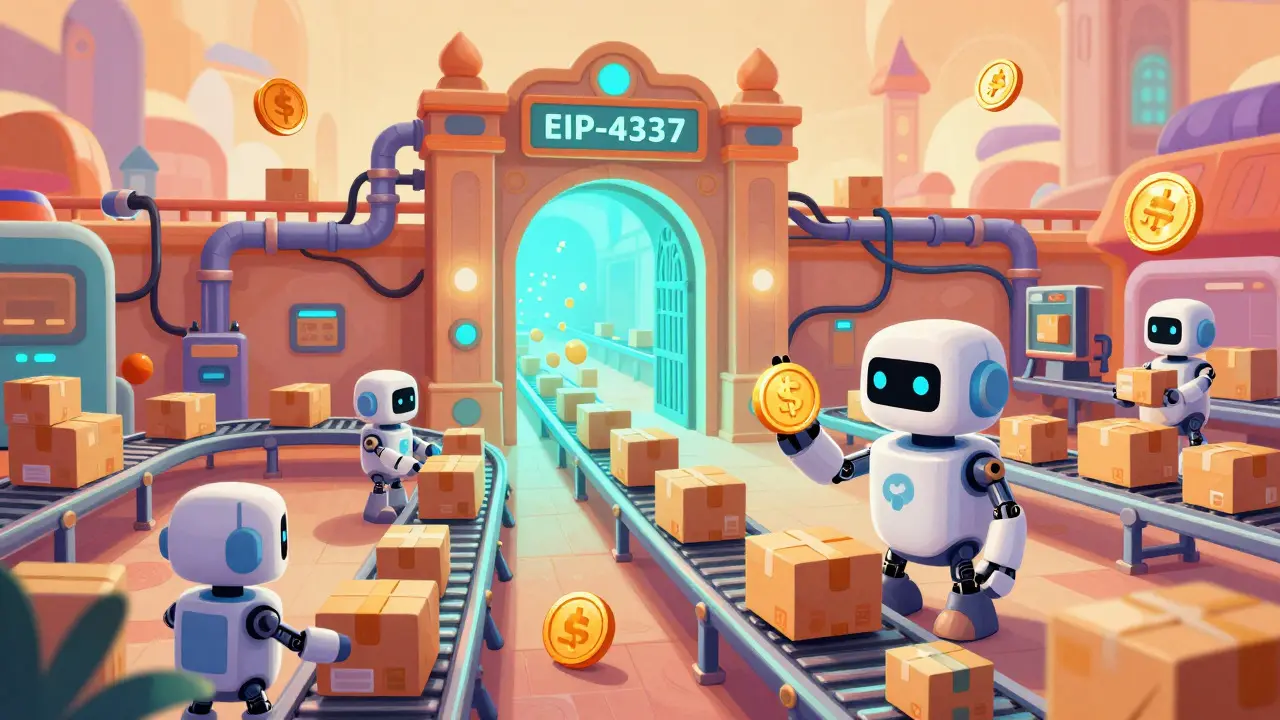
- Bundling: A Bundler collects these requests from many users. They act like a delivery service, grouping packages together.
- EntryPoint Execution: The Bundler submits the batch to a specific contract called the EntryPoint. This contract validates each operation against the user's smart contract rules.
- Settlement: Once validated, the transactions are executed on-chain. The fees can be paid by the user, the app, or a third party.
This architecture is backward-compatible. It doesn't break existing apps. It just adds a new way to enter the system. That’s why adoption has exploded since its mainnet launch in March 2023.
Key Components of the Ecosystem
To understand the full picture, you need to know the players involved. It’s not just about your wallet. It’s a network of services working together.
- Bundlers: These are the infrastructure backbone. Companies like Stackup, Pimlico, and Particle operate public bundlers. They ensure your transaction gets processed. Without them, your smart wallet is stuck.
- Paymasters: This is the game-changer for user experience. Paymasters allow someone else to pay the gas fee. Imagine visiting a dApp where you swap tokens, but you don't need ETH for gas. The dApp pays the fee via a Paymaster. Or, you pay the fee in USDC instead of ETH. This removes the biggest barrier to entry for new users.
- Aggregators: Services that help find the best price for gas or route your UserOperation to the most efficient Bundler.
The interplay between these components creates a seamless experience. You click "Swap," and behind the scenes, a Paymaster covers the cost, a Bundler picks up the package, and the EntryPoint validates it. You never see the mechanics, just the result.
Security: Better or Worse?
Every time we add complexity, security experts raise their eyebrows. Is a smart contract wallet safer than an EOA? The answer is nuanced. On one hand, you eliminate the risk of losing a single private key. You can implement social recovery, where five friends hold parts of a key, and if you lose your device, they can restore access. You can set daily spending limits. You can require a hardware signature for large transfers.
On the other hand, you introduce code risk. If there’s a bug in your wallet’s smart contract, hackers can exploit it. In 2023, security researchers found vulnerabilities in several popular implementations. However, these were mostly implementation errors, not flaws in the EIP-4337 standard itself. As the ecosystem matures, audits have become rigorous. Major providers like Argent and Safe have undergone multiple audits, significantly reducing this risk.
For the average user, the shift from "lose key = lose funds" to "bug in code = potential loss" is a trade-off. But with proper audits and established protocols, the latter is often more manageable because it allows for upgrades and patches. An EOA cannot be patched. A smart contract wallet can.
Real-World Benefits and Use Cases
Why should you care? Because your daily interactions with crypto are about to get smoother.
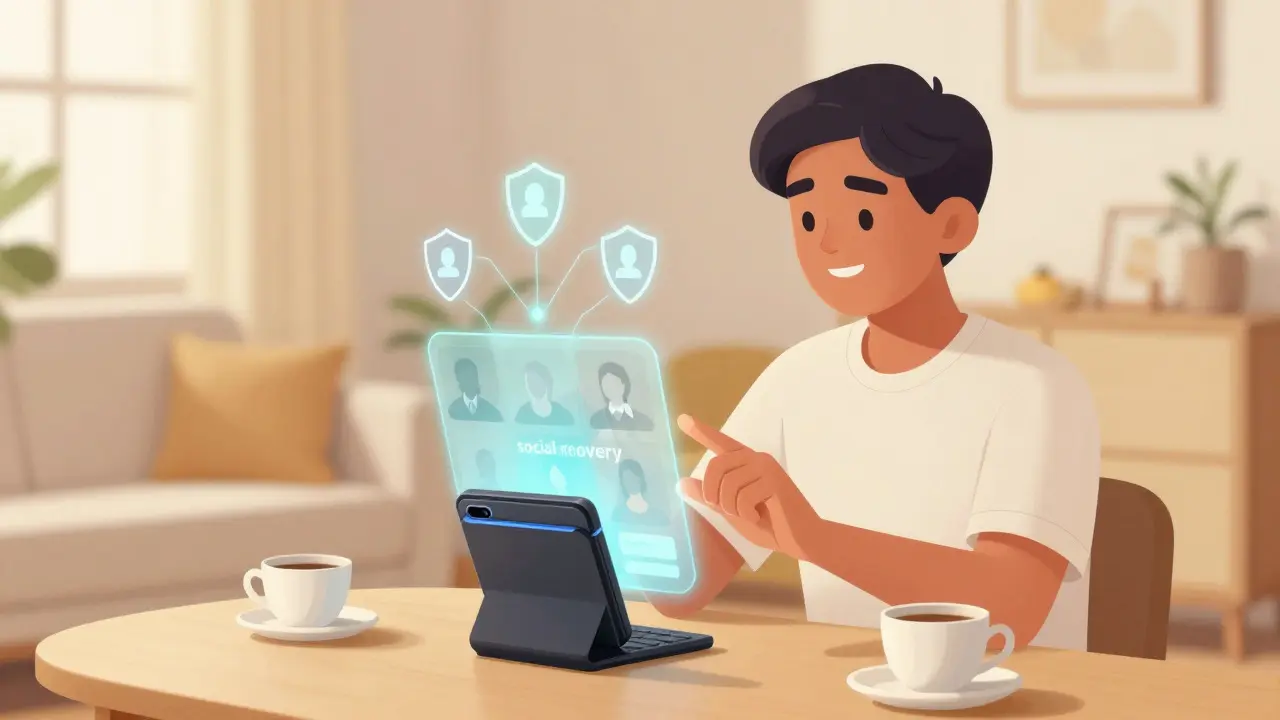
Social Recovery: No more writing down 12 words on paper. Set up trusted contacts. If you lose your phone, they approve a recovery transaction. It feels like resetting your email password.
Gasless Onboarding: New users can start using DeFi without buying ETH first. Apps can sponsor their initial transactions. This is crucial for mass adoption. Data shows that nearly 70% of new users drop off when asked to buy native tokens before doing anything else. Account abstraction fixes this friction.
Batching Transactions: Want to swap Token A for B, then lend B, then stake C? With a smart wallet, you can bundle these into one transaction. This saves gas fees and reduces the number of confirmations you need to sign.
Session Keys: Approve a dApp to make small trades for you for 24 hours. No need to sign every single micro-transaction. This is huge for gaming and frequent trading.
Challenges and What to Watch For
It’s not all sunshine. There are hurdles. First, complexity. Developers have to learn new patterns. Integrating with Bundlers and Paymasters takes time. Second, centralization risk. Right now, a few major Bundlers handle most traffic. If one goes down, transactions stall. Ethereum developers are working on solutions to decentralize this further, but it’s a work in progress.
Third, regulatory clarity. Smart contract wallets blur the line between self-custody and custody. Regulators are watching closely. The EU’s MiCA framework, for instance, treats certain advanced wallet features with specific KYC requirements. Keep an eye on how jurisdictions classify these tools.
Finally, UX consistency. Not all wallets implement account abstraction the same way. Some are clunky. Choose reputable providers with strong community support and audit history.
Getting Started with a Smart Contract Wallet
If you’re ready to try one, here’s how to approach it safely.
- Choose a Reputable Provider: Look for wallets like Argent, Safe, or Coinbase Smart Wallet. Check their audit reports and community reputation.
- Start Small: Don’t move your entire portfolio at once. Test the waters with a small amount. Try a gasless swap. See how the recovery process works.
- Configure Security Properly: Don’t just accept defaults. Set up social recovery with people you trust. Enable multi-sig if available for larger amounts.
- Understand the Fees: While gasless options exist, some actions still incur costs. Know who is paying. If the app sponsors it, check if there’s a hidden markup.
The future of blockchain isn’t about memorizing hex strings. It’s about intuitive, secure, and flexible interfaces. Account abstraction is the engine driving that future. It’s already here, and it’s making crypto usable for everyone, not just the tech-savvy elite.
Do I need ETH to use a smart contract wallet?
Not necessarily. Thanks to Paymasters, you can often perform transactions where the gas fee is paid by the application or in a different token like USDC. However, you may still need some native currency for certain complex operations or if the Paymaster runs out of funds.
Is account abstraction safe?
Generally, yes, provided you use audited, well-known wallets. The security model shifts from protecting a single key to trusting the code and the recovery mechanism. Always choose established providers and keep your recovery contacts updated.
What is the difference between EOA and Smart Contract Wallet?
An EOA is controlled solely by a private key and offers limited functionality. A Smart Contract Wallet is controlled by code, allowing for custom logic like social recovery, session keys, and batched transactions. It offers more flexibility and better user experience.
Can I migrate my existing EOA funds to a smart wallet?
Yes. You simply send your assets from your EOA address to your new Smart Contract Wallet address. Once the funds arrive, they are governed by the smart contract's rules. You can also set up bridging mechanisms to manage both accounts simultaneously during the transition.
Which chains support account abstraction?
Ethereum is the primary chain due to EIP-4337. However, many EVM-compatible chains like Polygon, Arbitrum, and Optimism also support it. Solana has implemented its own native version of account abstraction. Support is expanding rapidly across major networks.

Rebecca Andrews
I'm a blockchain analyst and cryptocurrency content strategist. I publish practical guides on coin fundamentals, exchange mechanics, and curated airdrop opportunities. I also advise startups on tokenomics and risk controls. My goal is to translate complex protocols into clear, actionable insights.
16 Comments
-
Patrick Pat
August 22, 2026 AT 15:06So basically, we invented a way to make losing our money harder by making the process of finding it more complex. Brilliant. I've been using MetaMask since 2017 and my biggest fear wasn't losing the key, it was clicking "approve" on a scam token. Account abstraction doesn't fix human error, it just adds a layer of code that might have a bug. But hey, at least I can pay gas in USDC now. That's progress, I guess.
-
Claudio Perrone
August 24, 2026 AT 05:19they are all liars
the government wants ur wallet so they can tax evrything u own
this is just step one -
Aaron Morrissey
August 25, 2026 AT 12:48One must acknowledge the profound philosophical shift occurring here: the transition from cryptographic sovereignty to algorithmic stewardship. For decades, the blockchain purist held the private key as the ultimate symbol of individual liberty, an unassailable bastion against central authority. Yet, as this guide elucidates, that very rigidity became the primary barrier to mass adoption, creating a digital divide where only the technically literate could participate in the decentralized economy.
The introduction of smart contract wallets represents not merely a technical upgrade, but a democratization of access. By allowing the logic of ownership to be defined by code rather than static keys, we open the door to a world where financial inclusion is no longer contingent upon memorizing hex strings. The ability to implement social recovery mechanisms mirrors the intuitive nature of Web2 interfaces, thereby lowering the cognitive load required to manage digital assets. Furthermore, the decoupling of gas fees from the native currency via Paymasters removes the most significant friction point for new users, who often abandon their journey simply because they lack ETH for transaction costs.
However, this evolution is not without its perils. The complexity introduced by bundlers and entry points creates new vectors for centralization and potential exploitation. Nevertheless, if managed with rigorous auditing and transparent governance, account abstraction stands as the essential bridge between the rugged individualism of early crypto and the seamless utility demanded by the mainstream. It is, in essence, the maturation of the medium itself. -
Patrick Quairoli
August 25, 2026 AT 20:35you guys dont see the big picture do you? the bundlers are just front for the feds to track every move. why else would vitalik push this so hard? he knows the eoa days are over and they want full visibility into your wallet. its all about control. mark my words, next year they will require kyc for every smart contract wallet deployment. wake up sheeple
-
Zothana Pachuau
August 27, 2026 AT 10:58Great breakdown, honestly. I've been hesitant to switch because I'm used to the simplicity of EOAs, but the gasless onboarding point really hit home for me. I tried to get my cousin into DeFi last month and he got stuck at the "buy ETH for gas" step. He never came back. With account abstraction, that hurdle is gone. Just curious though, how reliable are these public bundlers? I read somewhere that if the main ones go down, transactions can stall for hours. Is that still a thing?
-
Shawn Schaerer
August 28, 2026 AT 06:28IT IS TIME TO EMPOWER THE INDIVIDUAL THROUGH CODE!
We have spent too long worshipping at the altar of the private key, treating it as a sacred relic when it is nothing more than a single point of failure. Account abstraction is the liberation movement we have been waiting for. It allows us to define our own rules, our own security parameters, and our own path to financial freedom.
Do not let the skeptics deter you. They cling to the old ways because change terrifies them. Embrace the smart contract wallet. Embrace the future. The era of the rigid, inflexible EOA is dead. Long live the programmable self-custody! -
Hicham Mounir
August 29, 2026 AT 22:56I feel like everyone is focusing so much on the tech side that they forget the human element. For people who aren't tech-savvy, the idea of "social recovery" is actually terrifying. What if one of your trusted contacts dies? Or gets hacked themselves? It feels like you're just spreading the risk around instead of solving it. But then again, I get it. It's better than writing down 12 words on a piece of paper that could burn in a fire. It's a trade-off, I guess. Just hope the UX is intuitive enough that normal people don't mess it up.
-
Sarah Campbell
August 30, 2026 AT 15:03Finally some common sense! 🇺🇸 Why are we still using clunky foreign tech standards when we can build our own robust systems? The EU is already trying to regulate this out of existence with MiCA, so we need to make sure American wallets lead the charge. Let's not let the Europeans set the pace for innovation! 💪🚀
-
Phelan Deihl
September 1, 2026 AT 09:38quietly impressed by the batching feature. saved me a ton of gas fees when i was testing out a few defi protocols last week. also nice that you can pay in stablecoins. less stress about eth price volatility during a swap.
-
michelle aguilar
September 2, 2026 AT 23:42Oh, *finally*... a comprehensive overview that doesn't treat the reader like a complete novice, yet still manages to explain the mechanics without drowning in jargon. One simply cannot find such balanced discourse in this day and age, can one? It is quite refreshing, truly. One hopes that the implementation details remain as clear as the theory, for clarity is the cornerstone of trust, after all...
-
Lance Konig
September 4, 2026 AT 14:28The article misses a critical nuance regarding the EntryPoint contract. While it is designed to be permissionless, the current implementation relies heavily on a small set of audited contracts. If a vulnerability is found in the EntryPoint itself, it affects *all* smart contract wallets using EIP-4337, not just the specific wallet implementation. This systemic risk is often glossed over in favor of discussing individual wallet bugs. It is a fundamental difference in threat modeling that developers and users alike should understand before migrating their entire portfolios.
-
Dina Lazarova
September 6, 2026 AT 12:08One assumes that the average reader finds this topic sufficiently tedious to warrant a "complete guide." The prose is adequate, if somewhat dry. It serves its purpose, I suppose. One does not expect poetry in technical documentation, but one does appreciate brevity. This is neither brief nor particularly poetic. It is, however, functional. Which is, I daresay, the highest compliment one can bestow upon such material.
-
Evelyn Kula
September 7, 2026 AT 19:06They are lying to you. The whole point of crypto was to remove intermediaries, and now we are bringing them back in the form of "Bundlers" and "Paymasters." It's a Trojan horse. Once you accept that someone else can pay your gas, you accept that they can also censor your transactions. Wake up! The elites are building a walled garden and calling it "convenience." We need to stick to pure EOAs or we lose our freedom forever.
-
manish jha
September 8, 2026 AT 19:57You are making a mistake. The true path to enlightenment in blockchain is not through complexity, but through simplicity. A private key is simple. A smart contract is complex. Complexity breeds bugs. Bugs breed loss. Stick to what you know. Do not chase trends. The market will punish the impatient.
-
Ashley Snyder
September 9, 2026 AT 00:55I think this is a really great step forward. I've always felt a bit anxious about holding large amounts in an EOA because of the single point of failure. Having the option to set up session keys for gaming or frequent trading sounds like a huge quality of life improvement. I'm going to look into Argent this weekend and see how the setup process feels. Thanks for the detailed explanation!


Write a comment
More Articles

WSG Airdrop Guide: Wall Street Games Token Details & How to Claim
Discover how to claim the WSG airdrop from Wall Street Games on CoinMarketCap. Learn about the 161B token pool, Arbitrum network benefits, and key market risks.

Jade Brown
August 20, 2026 AT 23:47Let's cut through the marketing fluff for a second. This "guide" is basically just regurgitating the EIP-4337 whitepaper with extra steps and less rigor. The real issue here isn't that you can lose your seed phrase, it's that you're trusting a third-party Bundler to not rug you or go offline. The decentralization narrative is a myth right now; we are just swapping one point of failure (your brain) for another (a centralized infrastructure node).
The Paymaster concept is the only genuinely interesting part, but even that has hidden costs. Who pays for the gas? If the dApp does, they're likely subsidizing it from your trading fees or taking a larger spread. It's not "free," it's just opaque. And don't get me started on the "social recovery" feature. That's just multi-sig with a worse UI and a higher social attack surface. You think five friends are safer than a hardware wallet? Please.