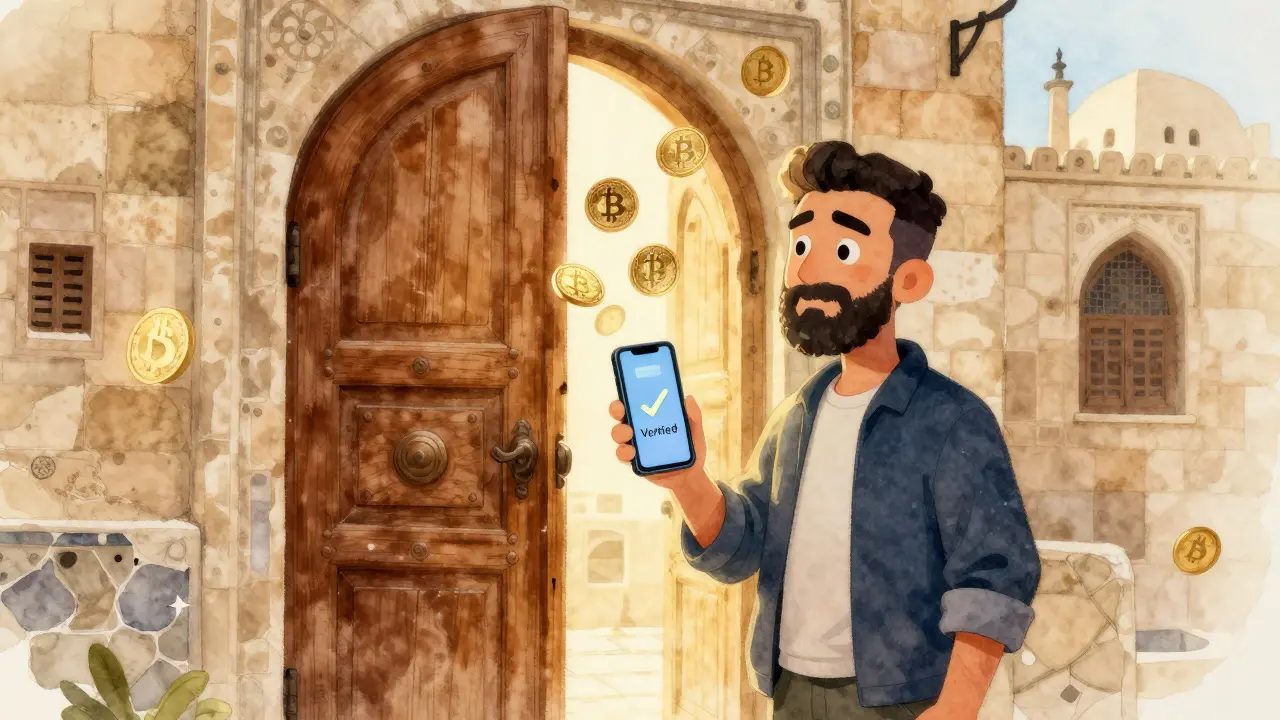
For over two decades, Syrian citizens were locked out of the global financial system. If you lived in Damascus or Aleppo and wanted to send money abroad, buy Bitcoin, or use a digital wallet connected to a U.S.-based service, you were breaking federal law. The Office of Foreign Assets Control (OFAC) enforced strict blocks that made cryptocurrency transactions with Syrians virtually impossible for compliant platforms.
That reality shifted dramatically in mid-2025. With the revocation of comprehensive sanctions and the introduction of targeted restrictions, the landscape for Syrian crypto users has transformed from total isolation to conditional access. But what does this actually mean for your daily transactions? Are you free to trade, or are there still hidden traps?
The End of Comprehensive Sanctions
To understand where we stand today in 2026, we need to look at the massive regulatory overhaul that happened last year. On June 30, 2025, Executive Order 14312 was signed, formally titled "Providing for the Revocation of Syria Sanctions." This order didn't just tweak the rules; it dismantled the foundation of U.S. economic pressure on Syria that had existed since 2004.
Six foundational executive orders-dating back to E.O. 13338 in 2004 through E.O. 13582 in 2011-were revoked effective July 1, 2025. For years, these orders created a blanket prohibition. They banned most financial interactions between U.S. persons and Syrian entities. In the crypto world, this meant that if an exchange like Coinbase or Kraken detected a user in Syria, they had to block them immediately to avoid penalties.
The practical hammer fell on August 26, 2025. OFAC published a final rule removing the Syrian Sanctions Regulations (SySR) from the Code of Federal Regulations entirely. This wasn't just paperwork. It meant the legal barrier that prevented Syrian individuals from accessing U.S.-based cryptocurrency exchanges, wallet providers, and decentralized finance (DeFi) protocols was officially gone for the general population.
Did all sanctions on Syria end?
No. While comprehensive economic sanctions were lifted, targeted sanctions remain on specific individuals and entities linked to the Assad regime, human rights abuses, and terrorism.
Who Is Still Blocked? Understanding Targeted Sanctions
Here is the critical nuance: while the *comprehensive* ban is gone, *targeted* sanctions remain active. OFAC did not wipe the slate clean for everyone. Instead, they shifted from blocking the entire country to blocking specific bad actors.
As of 2026, OFAC maintains sanctions on over 100 individuals and entities affiliated with the Bashar al-Assad regime. Additionally, restrictions continue against:
- Human rights abusers
- Captagon traffickers
- Persons linked to Syria's past proliferation activities
- ISIS and Al-Qa'ida affiliates
- Iran and its proxies operating within Syria
This creates a complex environment for cryptocurrency platforms. If you are a regular Syrian citizen wanting to send remittances via USDC or invest in Ethereum, you are likely fine. However, if your name appears on the List of Specially Designated Nationals and Blocked Persons (SDN List), or if you are associated with any of the groups above, your assets can still be frozen, and you face criminal prosecution.
The good news? OFAC removed 518 individuals and entities from the SDN List in 2025. This mass delisting cleared the path for many previously blocked users to re-enter the digital asset economy. But for those remaining on the list, the old rules still apply.
New Framework: PAARSS and General Licenses
In September 2025, OFAC rebranded the remaining sanctions program. The old "Syrian Sanctions Regulations" became the "Promoting Accountability for Assad and Regional Stabilization Sanctions Regulations," known as PAARSS. This isn't just a name change; it signals a policy shift toward precision targeting rather than broad economic isolation.
Two key mechanisms now protect legitimate Syrian crypto users:
- General License 24 and 25: These licenses, issued earlier in 2025, remain in effect. Specifically, General License 25 provides blanket authorization for transactions that would otherwise be prohibited by other sanctions programs, such as those related to global terrorism. This creates a legal safety net for Syrian users engaging with U.S. services.
- Risk-Based Compliance: Financial institutions and Virtual Asset Service Providers (VASPs) are now encouraged to take a risk-based approach. Instead of blanket bans, they must implement sophisticated screening to distinguish between sanctioned individuals and the broader civilian population.
Technology and Infrastructure: The BIS Role
Sanctions aren't just about money; they're also about technology. For crypto users, this matters because it affects the hardware you can buy and the infrastructure available locally.
On August 28, 2025, the Bureau of Industry and Security (BIS) introduced a new License Exception called "Syria Peace and Prosperity" (SPP). Effective September 2, 2025, this exception authorizes the export and reexport of all EAR99 items to Syria.
What does EAR99 mean for you? It covers low-tech items and basic consumer electronics. More importantly, it facilitates the transfer of cryptocurrency mining equipment, blockchain infrastructure hardware, and related tech that previously required specific, hard-to-get licenses. This could spark a local boom in mining operations and node hosting within Syria, provided the operators aren't on the SDN list.
Practical Steps for Syrian Crypto Users in 2026
If you are in Syria and looking to engage with cryptocurrency markets, here is how to navigate the new normal safely.
1. Verify Your Status
Before depositing funds into any centralized exchange, check the OFAC SDN List. Search for your name and any business entities you own. If you find a match, do not proceed. Contact a sanctions attorney immediately. If you are clear, keep a record of this search for your own files.
2. Choose Compliant Platforms
Not all exchanges have updated their compliance systems yet. Some may still block Syrian IP addresses out of caution (over-compliance). Look for platforms that explicitly state they support users under General License 25. Major U.S.-based exchanges are more likely to have robust screening tools that allow legitimate Syrian users to pass KYC (Know Your Customer) checks.
3. Beware of Counterparty Risk
Even if you are clean, who are you trading with? If you use peer-to-peer (P2P) platforms, ensure your counterparty is not a sanctioned entity. Transferring crypto to someone on the SDN list can taint your own transaction history. Stick to reputable P2P escrow services that perform their own due diligence.
4. Monitor Regulatory Updates
OFAC has indicated plans to supplement the PAARSS framework with more detailed regulations in the coming months. New interpretive guidance could clarify definitions of "affiliation" or expand general licenses. Keep an eye on official OFAC announcements to stay ahead of changes.
| Feature | Pre-July 2025 (Comprehensive Sanctions) | Post-August 2025 (Targeted Sanctions/PAARSS) |
|---|---|---|
| Access to U.S. Exchanges | Banned for all Syrians | Allowed for non-sanctioned individuals |
| Penalties for Violation | Up to $20M or twice transaction value | Same penalties, but only for sanctioned entities |
| Hardware Imports | Restricted, required specific licenses | EAR99 items allowed under SPP exception |
| Banking Integration | Impossible for U.S. banks | Risk-based assessment allowed |
| Legal Basis | Syrian Sanctions Regulations (SySR) | PAARSS + General Licenses 24/25 |
Challenges That Remain
Despite the progress, hurdles persist. The biggest issue is "over-compliance." Many international crypto platforms are risk-averse. Even though the law allows them to serve Syrian users, some may choose to block the entire country to save on compliance costs. You might find yourself needing to try multiple exchanges before finding one that accepts your KYC documents.
Additionally, the financial infrastructure in Syria is still fragile. Internet connectivity issues, power outages, and limited banking options can make executing trades difficult. While crypto offers a way around traditional banking, it requires reliable internet and electricity-resources that are not always guaranteed.
Finally, the stigma remains. Some merchants and businesses outside Syria may still hesitate to accept payments from Syrian wallets due to outdated perceptions of high risk. Education and transparency will be key to overcoming this social barrier.
Looking Ahead: A Test Case for Global Policy
Syria’s transition from comprehensive to targeted sanctions serves as a test case for the rest of the world. It demonstrates that financial inclusion and national security goals can coexist. For Syrian crypto users, this means a future where digital assets can facilitate trade, remittances, and investment without the fear of sudden account freezes-provided you stay off the radar of designated bad actors.
The Department of State’s 180-day waiver of the Caesar Act restrictions further reduces compliance risks for infrastructure development. This encourages foreign investment in Syrian tech startups, including those focused on blockchain solutions. As the ecosystem matures, expect to see more local fintech innovations tailored to the needs of Syrian users.
Stay informed, verify your status, and choose your partners wisely. The door is open, but you must walk through it carefully.
Can I use Bitcoin ATMs in Syria?
Bitcoin ATM availability depends on local operators. Since comprehensive sanctions are lifted, foreign manufacturers can potentially export hardware under the SPP license exception. However, individual ATMs must still comply with local laws and avoid serving sanctioned individuals. Check with local providers for current availability.
What happens if I accidentally transact with a sanctioned person?
If you unknowingly transact with someone on the SDN list, you should immediately cease further transactions and consult a legal expert. OFAC considers intent and due diligence in enforcement actions. Demonstrating that you took reasonable steps to screen counterparties can mitigate penalties.
Are DeFi protocols safe for Syrian users?
Decentralized Finance (DeFi) protocols operate on public blockchains and generally do not enforce KYC. However, many DeFi front-ends and liquidity pools integrate OFAC screening tools. While technically accessible, using DeFi does not grant immunity from U.S. jurisdiction if you later interact with regulated entities. Proceed with caution and understand that smart contracts cannot reverse illegal transfers.
How long does KYC verification take for Syrian users now?
Verification times vary by platform. Due to enhanced due diligence requirements, it may take longer than for users in non-sanctioned countries. Expect anywhere from 24 hours to several days as platforms manually review documents to ensure no links to the Assad regime or terrorist organizations exist.
Does the Caesar Act still affect crypto investments?
The Department of State issued a 180-day waiver for Section 7412 of the Caesar Syria Civil Protection Act. This reduces restrictions on certain investment activities, including those supporting digital asset infrastructure. However, core prohibitions on investing in the energy and industrial sectors of the Syrian government remain. Crypto projects tied to state-owned enterprises may still be restricted.

Rebecca Andrews
I'm a blockchain analyst and cryptocurrency content strategist. I publish practical guides on coin fundamentals, exchange mechanics, and curated airdrop opportunities. I also advise startups on tokenomics and risk controls. My goal is to translate complex protocols into clear, actionable insights.
23 Comments
-
Monica Pathammavong
June 18, 2026 AT 06:02wait wait wait so ur saying if i have a cousin in damascus he can now buy bitcoin? that seems like a huge loophole for money laundering right?? also why arent they checking every single transaction manually?? someone is gonna get away with something big here
-
Tim Lefebvre
June 20, 2026 AT 02:47hey guys just wanted to say its pretty cool that normal people can finally use crypto there. i know some folks in syria who were stuck for years. hopefully the exchanges update their systems soon so they dont block everyone by mistake. its a good step forward even if its slow
-
Mekz Wheoki
June 20, 2026 AT 13:13oh great another country gets 'relief' while the rest of us deal with inflation. typical american foreign policy flip flop. one day they ban everything next day they let it slide. makes no sense at all.
-
Danna Charris
June 22, 2026 AT 03:45It is fascinating how quickly regulatory frameworks shift. One must remain vigilant regarding the SDN list. Compliance is not optional, it is imperative for any serious investor.
-
Fede Faith
June 22, 2026 AT 14:16This is actually really important info. I think a lot of people are confused about what 'targeted sanctions' means. It basically means if you are not on the bad guy list you are okay. But you have to prove it. So make sure your KYC is solid before you try to move funds. Stay safe out there!
-
Josh Dodson
June 22, 2026 AT 23:16super glad to see this change! hope it helps the everyday folks in syria. its been rough for them for so long. lets keep an eye on which exchanges are actually letting them in though because some might still be scared to touch it
-
Mauricio Contreras Loredo
June 24, 2026 AT 16:47lol imagine being banned from buying a toaster because of politics. but hey welcome to the club of over-compliance. now we just need to make sure the internet works enough to check the prices.
-
sreeja boora
June 26, 2026 AT 09:23The implications for regional stability are significant. While economic relief is noted, one must consider the broader geopolitical ramifications. The lifting of comprehensive sanctions does not equate to endorsement of current governance structures. Vigilance is required.
-
Grace Newman
June 26, 2026 AT 15:40I find it deeply concerning that OFAC would allow such a porous system. How do we truly verify that these transactions are not funneling back into illicit activities? The general licenses seem like a blanket covering for potential abuse. We must demand stricter oversight mechanisms immediately.
-
Annemarie Fitzgerald
June 26, 2026 AT 17:54the nature of freedom is complex isnt it? one man's liberation is another's chaos. i wonder if the blockchain remembers the sins of the past or if it just sees zeros and ones. maybe the code is the only true judge here. anyway its confusing as hell
-
Abby Sivertsen
June 28, 2026 AT 16:29i feel for the families trying to send money home. it was impossible before. now they have a chance. but yeah the risk is real if you mess up. just be careful and read the rules.
-
Filbert Reeves
June 30, 2026 AT 14:31everyone is missing the point here. this is just a setup for more control. they lift the ban so they can track every penny you spend. before you were invisible now you are on the grid. the sdn list is just a honeypot. once you interact with the system they own you. its a digital dragnet and we are walking right into it. wake up sheeple.
-
Nick Rice
July 1, 2026 AT 14:20We need to ensure that inclusive practices are adopted by all platforms. If an exchange blocks Syrian users without cause, they are violating the spirit of the new regulations. Let's hold them accountable and push for fair access for everyone regardless of geography.
-
Amit Thakur
July 1, 2026 AT 14:54From a technical standpoint, the integration of OFAC screening APIs into DeFi front-ends is going to be a nightmare for UX. Developers will have to balance anonymity with compliance. Expect high latency during KYC checks and frequent false positives. The infrastructure needs to scale fast to handle this new volume of verified users.
-
Eric Scheinberg
July 1, 2026 AT 18:42The legal framework has shifted significantly. General License 25 provides necessary authorization. However, entities must conduct due diligence. Failure to screen counterparties may result in severe penalties. Prudence is advised.
-
pankaj chawla
July 1, 2026 AT 23:16I agree with the assessment that this opens up new opportunities. Collaboration between local tech startups and international partners could yield interesting results. We should support initiatives that bring financial inclusion to underserved regions.
-
Jessica Lane
July 2, 2026 AT 14:05This raises many questions about the future of cross-border payments. Will we see similar changes for other sanctioned nations? It would be wonderful to see a global standard for humanitarian exemptions in financial regulations.
-
Charles Pawlikowski
July 4, 2026 AT 11:24typical washington nonsense :/ first they bomb them then they sanction them then they lift it when it suits them. where was this compassion before? probably selling oil to the same dictators. hypocrites all around.
-
Andrea Burd
July 6, 2026 AT 00:39boring article. too much legalese. nobody reads this stuff. just tell me if i can trade or not. oh wait i cant because im not syrian. whatever.
-
Akeem Whittaker
July 7, 2026 AT 16:03We must ensure that our actions promote fairness and equality. Blocking entire populations based on nationality is outdated. We need precise targeting of bad actors while allowing citizens to thrive. This is the right path forward.
-
Manish Prajapat
July 8, 2026 AT 09:01The philosophical shift from collective punishment to individual accountability is profound. It reflects a maturation of international law. We must observe how this model influences other conflict zones. Technology serves as both a tool of oppression and liberation depending on its application.
-
John Doe
July 8, 2026 AT 23:47It is a dramatic turn of events for those living under the shadow of sanctions. The emotional toll of financial isolation cannot be overstated. Now comes the hard work of rebuilding trust and infrastructure. The stakes are incredibly high for every transaction made.


Write a comment
More Articles

Tokenized Securities and Bonds: How Blockchain Is Changing Finance
Tokenized securities and bonds use blockchain to turn traditional assets like stocks and bonds into digital tokens, enabling instant settlement, fractional ownership, and lower fees. Major institutions are already issuing them at scale.

Terry Hyland
June 16, 2026 AT 17:49its still wrong to help them. the assads did bad things and people should suffer for it. you cant just erase history with a click of a mouse. this is moral decay.