
If you try to move funds from a traditional bank account to a crypto exchange in the Gulf, you might hit a brick wall. For many in the Middle East, the reality of crypto banking bans isn't just a legal footnote-it's a daily hurdle. While the world talks about the future of finance, several countries in the Gulf Cooperation Council (GCC) have drawn a hard line between supporting blockchain technology and allowing banks to touch private digital assets.
The situation is a bit of a contradiction. On one hand, governments are pouring millions into Central Bank Digital Currencies (CBDCs). On the other, they've told their commercial banks to stay far away from Bitcoin. This "patchwork quilt" of rules means that what's legal in Dubai might be a fast track to a frozen account in Kuwait City. Understanding these boundaries is the only way to navigate the region's financial waters without risking your capital.
The Spectrum of Restrictions in the GCC
Not all bans are created equal. In the Middle East, the approach to digital assets generally falls into three buckets: total prohibition, licensed frameworks, and the "restricted but managed" middle ground. The primary goal for these regulators isn't just to stop people from trading; it's about maintaining financial stability and preventing money laundering while they figure out how to modernize their economies.
For instance, Saudi Arabia is a major economic power that treats cryptocurrencies as assets rather than legal tender . The Saudi Arabian Monetary Authority (SAMA) doesn't allow banks to touch crypto transactions without explicit, rare approval. They aren't against the tech-they're just not trusting the current banking infrastructure to handle the volatility of private coins.
Then you have the UAE, which has taken a more surgical approach. They don't ban everything; they just ban the unlicensed stuff. If a token is approved-like certain Dirham Payment Tokens-banks can play. If it's not, it's a no-go. This creates a clear divide between the "wild west" of retail trading and the regulated world of institutional finance.
| Country | Banking Status | Primary Regulator | Key Approach |
|---|---|---|---|
| Qatar | Strict Ban | QFCRA | Prohibits virtual asset services entirely |
| Kuwait | Strict Ban | Central Bank of Kuwait | Aggressive enforcement (including mining) |
| UAE | Licensed/Hybrid | Central Bank of UAE | Permits approved tokens only |
| Bahrain | Regulated/Permissive | Central Bank of Bahrain | CRA Module for licensed activities |
| Saudi Arabia | Restricted | SAMA | Prohibited for banks without special approval |
The Hardliners: Qatar and Kuwait
If you're looking for the most restrictive environments, look no further than Qatar and Kuwait. In Qatar, the Qatar Financial Centre Regulatory Authority (or QFCRA) is the body responsible for enforcing a comprehensive ban on cryptocurrency services, including Bitcoin and stablecoins . They've been consistent since 2018, and even their 2024 Digital Asset Regulations kept the ban on "Excluded Tokens"-their fancy term for cryptocurrencies.
Kuwait takes it a step further by targeting the infrastructure. They didn't just stop the banking; they went after the miners. By cracking down on Crypto Mining, the process of using high-powered hardware to secure a blockchain and earn rewards , Kuwait managed to slash local electricity usage by about 55%. This shows that their ban isn't just about financial rules-it's about national resource management.
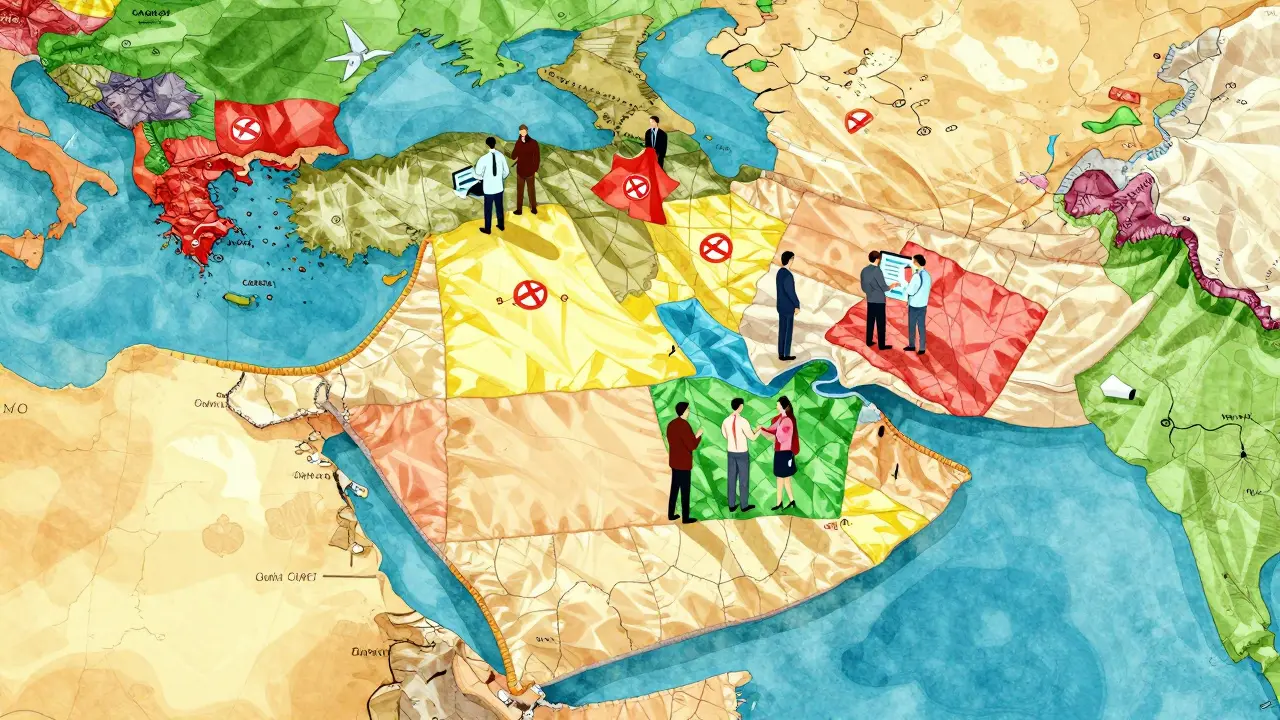
The Pragmatists: Bahrain and the UAE
On the flip side, Bahrain is essentially the region's laboratory for regulated crypto. The Central Bank of Bahrain created the Crypto-Asset (CRA) module, which acts as a rulebook for what banks can and cannot do. Because they have a licensing system, financial institutions can actually engage with digital assets if they play by the rules. This is why you'll see more institutional experimentation there, including partnerships with giants like JP Morgan.
The UAE is similarly pragmatic. They've launched Project Aber, a cross-border CBDC interoperability test conducted by the Central Bank of the UAE . By testing how digital currencies can move across borders, they are building the plumbing for a future where the "ban" on private crypto might eventually shift into a "managed" environment for licensed providers.
Why the Ban? It's Not Just About Volatility
You might wonder why these countries are so hesitant. It's not just because Bitcoin's price swings like a pendulum. There is a deeper strategic play here. Experts from the Carnegie Endowment for International Peace point out that these restrictions are tied to economic diversification. Most of these nations want to move away from oil-dependency and reduce their reliance on Western financial systems, specifically the US dollar.
By banning private, decentralized cryptocurrencies but embracing CBDCs (Central Bank Digital Currencies), governments get the efficiency of blockchain without losing control. They want the speed of a digital transaction, but they want the regulator to hold the keys. This allows them to maintain financial sovereignty while still appearing "tech-forward" to global investors.

The mBridge Project and the Future of GCC Finance
While your local bank might still block your transfer to an exchange, the banks themselves are using blockchain behind the scenes. The mBridge project is a multi-CBDC platform involving the UAE, Saudi Arabia, China, Thailand, and Hong Kong . This is a wholesale system designed for financial institutions to settle payments without needing to go through traditional correspondent banking networks in the West.
This creates a weird paradox: the"banking ban" exists for the retail consumer, but the "banking infrastructure" is becoming blockchain-based for the elite. The mBridge project proves that the GCC isn't anti-crypto; they are anti-unregulated crypto. The technology is being adopted at the highest levels, which usually signals that retail restrictions will eventually loosen as the infrastructure proves its stability.
What this Means for the Average User
If you're living or working in the GCC, the banking bans mean you have to be careful. Using a personal bank account to fund a crypto account can lead to account freezes or requests for "source of funds" documentation that are nearly impossible to satisfy if the activity is technically prohibited. Many users end up using P2P (peer-to-peer) markets or prepaid cards, but these come with higher risks and fees.
However, the tide is slowly turning. With Qatar expected to finalize a new digital asset regulatory framework by mid-2025, we are likely to see a shift toward "tokenization." This means banks might start allowing the trade of tokenized stocks or bonds-assets that are backed by real-world value-long before they let you buy a meme coin. The path to legalization is through utility, not speculation.
Is it illegal for me to own Bitcoin in Saudi Arabia or Qatar?
Generally, owning cryptocurrency isn't a criminal offense for individuals, but the banking bans mean that financial institutions are prohibited from facilitating those transactions. The risk isn't usually jail time, but rather having your bank account closed or your funds frozen because the bank is following regulatory mandates to avoid crypto-related activity.
What is the difference between a crypto ban and a CBDC?
A crypto ban targets private, decentralized assets like Bitcoin or Ethereum, which operate without a central authority. A CBDC (Central Bank Digital Currency) is a digital version of a country's official currency, issued and controlled by the government. GCC countries ban the former to prevent financial instability but promote the latter to increase payment efficiency.
Which GCC country is the most crypto-friendly for banking?
Bahrain and the UAE are currently the most permissive. Bahrain has a specific licensing module (CRA) that allows banks to engage in approved crypto activities. The UAE has a structured system where licensed tokens are permitted, making it much easier to find institutional support compared to Kuwait or Qatar.
Will the mBridge project end banking bans for retail users?
Not directly. mBridge is a wholesale system for banks and central banks to settle cross-border payments. While it builds the technical foundation for digital finance, it doesn't automatically legalise retail crypto trading. However, it does prove that the governments trust the technology, which often paves the way for future retail regulations.
What happens if I use a bank account for crypto in a restricted zone?
You risk an "Account Closure" or a "Compliance Hold." Banks in countries like Kuwait or Qatar have strict triggers for crypto-related transfers. If a transaction is flagged, the bank may freeze the funds and ask for an explanation. Since the activity is prohibited for the bank, they often choose to terminate the customer relationship entirely to avoid regulatory fines.

Rebecca Andrews
I'm a blockchain analyst and cryptocurrency content strategist. I publish practical guides on coin fundamentals, exchange mechanics, and curated airdrop opportunities. I also advise startups on tokenomics and risk controls. My goal is to translate complex protocols into clear, actionable insights.
17 Comments
-
VIVEK SINGH
April 28, 2026 AT 20:32Oh sure, because giving the government a digital leash via CBDCs is exactly what the crypto movement was about. Absolute genius. Let's just hand over the keys to the kingdom and call it "modernization" while the retail peasants get their accounts frozen for buying a bit of ether. Truly a masterstroke of financial engineering to ensure the elite keep their blockchain toys while we get the digital version of a leash. I love how we pretend this is about "stability" and not just absolute control over every single cent you move. Pure poetry in regulatory form.
-
Emily A
April 30, 2026 AT 08:32The distinction between retail prohibition and institutional adoption is the primary catalyst here. It is quite apparent that these regimes are merely utilizing the infrastructure to optimize their own hegemony without introducing the systemic risk of volatile assets into the public sphere. If one actually analyzes the mBridge project, it becomes obvious that the goal is efficiency, not democratization. Most of the people complaining in this thread clearly lack a basic understanding of macroeconomic policy.
-
Livvy Cooper
May 1, 2026 AT 11:02Just sounds like a bunch of banks trying to keep their money. Who cares anyway.
-
Arti Jain
May 3, 2026 AT 01:34Typical Western obsession with these coins. We have better systems in India anyway.
-
Ralph Espinosa
May 4, 2026 AT 10:18This is a great breakdown!!! I've worked with some GCC firms,,, and they are incredibly strict about compliance!!!! It's honestly a nightmare for the onboarding process!!!!
-
Felix Eduardo Velasquez
May 5, 2026 AT 21:16The paradox mentioned regarding the elite infrastructure is where the real story lies. We are witnessing the birth of a tiered financial system where the technology is liberated for the sovereign but restricted for the citizen. This reflects a broader historical trend where new financial tools are first weaponized by the state before being leaked to the public in a sanitized, controlled manner. It's less about the volatility of Bitcoin and more about the volatility of losing power.
-
Lloyd I
May 6, 2026 AT 07:46Keep pushing forward! It's awesome to see the UAE and Bahrain leading the way. There's always a path to a better system if we stay positive!
-
Rain Richardsson
May 6, 2026 AT 19:49That sounds really stressful for the people there.
-
Harvey Alford
May 8, 2026 AT 17:46I bet the people getting their accounts frozen are just hiding something. What are you actually doing with your money?
-
Gabrielle Danis
May 9, 2026 AT 09:04It is worth noting that the "source of funds" requirements mentioned are standard AML (Anti-Money Laundering) protocols. However, in the GCC, the lack of a clear legal framework for digital assets makes these requirements practically impossible to satisfy for the average retail user.
-
Jimmy vasquez
May 10, 2026 AT 09:13Just a heads up for anyone reading this, if you're using P2P, always use a trusted escrow service. The risks in these regions are way higher than in the US or Europe.
-
Veronica Bago
May 11, 2026 AT 21:21Wow, I didn't know about the mining ban in Kuwait. That's actually kind of wild lol.
-
Janis Naglis
May 13, 2026 AT 13:22The synergistic potential of tokenization within these frameworks is just massive!!! I believe the pivot toward real-world assets (RWA) will create a much more robust ecosystem for everyone involved!!!! We just need to keep the dialogue open and inclusive!!!!
-
Gabby Puche
May 14, 2026 AT 20:41Love seeing the progress in Bahrain! 🌟 Keep it up! ✨
-
Kathleen Warren
May 15, 2026 AT 15:44It's just sad that regular people have to jump through so many hoops. It's like they want the tech but not the people who actually use it. I hope it gets easier soon for everyone.
-
Pramendra Singh
May 17, 2026 AT 00:22It is very interesting to see how different countries handle this. I hope the regulations become more friendly over time.


Write a comment
More Articles

TNNS PROX Crypto Exchange Review: Risks, Features & Verdict
Discover the truth behind TNNS PROX. We analyze its trading performance, security gaps, and user experiences to help you decide if this high-risk crypto exchange is right for you.

Supply Chain NFT Implementation Challenges: Real Barriers to Adoption
A short summary for the article based on the topic. You need to write a summary with up to 5 sentences or 160 symbols that covers the provided topic. Try to write the most human text.

Tunisia's Complete Crypto Ban Explained: Laws, Risks & Future Outlook
Tunisia enforces a strict ban on all cryptocurrency activities, including trading, mining, and payments, with penalties up to five years in prison. Learn about the legal framework, enforcement realities, and potential future changes.
Robert Smith
April 28, 2026 AT 09:57Wild stuff 🚀