Imagine waking up one morning and finding that the money in your pocket is worth half of what it was yesterday. This isn't a dystopian novel plot; for millions of Venezuelans, this is daily life. With annual inflation hitting 229% as of May 2025, the Venezuelan bolívar has become virtually useless for preserving purchasing power. In response, citizens haven't just adopted cryptocurrency-they've built their entire financial survival strategy around it.
This isn't about getting rich quick or speculative trading. For people in Caracas, Maracaibo, and beyond, Bitcoin (BTC) and stablecoins like USDT (Tether) are essential tools for buying food, paying rent, and receiving remittances from family abroad. The shift represents one of the most significant real-world experiments in decentralized finance ever recorded, driven not by tech enthusiasm but by economic necessity.
Key Takeaways
- Venezuelans use USDT on the TRC-20 network primarily because of low fees and stability against the volatile bolívar.
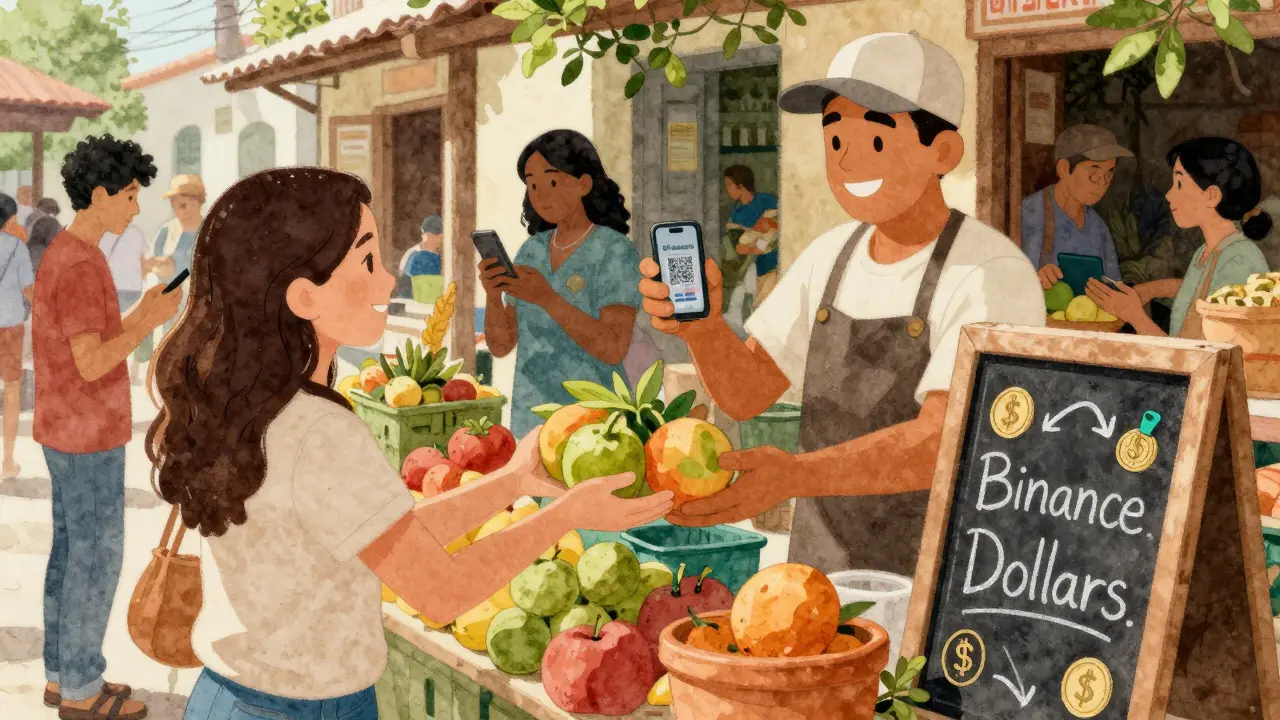
- Binance P2P is the dominant platform, with locals referring to USDT as "Binance Dollars" due to its widespread acceptance.
- Three exchange rates exist simultaneously: official BCV rate, black market rate, and the P2P crypto rate used by merchants.
- Crypto adoption ranks 13th globally in Venezuela, serving as a critical lifeline for remittances and daily commerce.
- Infrastructure challenges like internet instability and power outages require users to develop creative workarounds.
The Economic Collapse That Forced Digital Adoption
To understand why cryptocurrency became so vital, you need to look at the sheer scale of the economic breakdown. Under President Nicolás Maduro's tenure, Venezuela experienced what economists call "one of the worst economic meltdowns outside a war zone in modern history." While hyperinflation previously peaked at a staggering 10 million percent in 2018, current rates remain devastatingly high. By May 2025, month-on-month inflation hit approximately 26%, meaning prices doubled roughly every two months.
The bolívar lost over 70% of its value between early 2025 and mid-2025 alone. When currency devalues this fast, holding cash becomes a losing game. If you earned a salary on Monday, it might only buy half the groceries by Friday. This reality pushed ordinary citizens toward digital assets that maintain value relative to the US dollar. It wasn't a choice made in boardrooms; it was a grassroots movement born from desperation.
Traditional banking systems failed to protect savings. Banks imposed strict withdrawal limits, and interest rates couldn't possibly keep up with inflation. Consequently, people turned to platforms where they could control their own funds without government interference. This shift created a parallel economy running on blockchain technology, completely separate from the state-controlled financial system.
Why USDT and TRC-20 Dominate Daily Transactions
If you walk through a market in Caracas today, you'll hear vendors quoting prices in "Binance Dollars." This slang term refers to USDT (Tether), a stablecoin pegged to the US dollar. Unlike Bitcoin, which fluctuates in price, USDT stays relatively stable at $1.00. For someone trying to budget for rent or school supplies, that predictability is everything.
But not all USDT is equal. Most Venezuelans use the TRC-20 version of USDT, which runs on the Tron blockchain. Why? Because transaction fees are incredibly low-often less than $1-and transfers happen within minutes. Compare this to sending USDT via Ethereum's ERC-20 network, where gas fees can spike to $20 or more during busy periods. For a street vendor selling fruit for $5, a $20 fee makes no sense. TRC-20 keeps the cost of doing business minimal.
USDT (Tether) is a cryptocurrency token designed to maintain a stable value equivalent to the US dollar, widely used in emerging markets for hedging against local currency inflation. In Venezuela, it serves as the primary medium of exchange for small transactions, replacing the bolívar in many informal sectors.This preference for low-cost networks highlights a crucial point: utility drives adoption here, not speculation. Users aren't worried about the long-term viability of Tron versus Ethereum; they care about whether they can send $10 to a supplier without losing half of it to fees. The private sector recorded $119 million in cryptocurrency transactions in July 2025 alone, proving that businesses rely heavily on these efficient channels.
Binance P2P: The New Banking Infrastructure
In countries with functioning banks, you deposit cash into an account. In Venezuela, that process happens on peer-to-peer (P2P) trading platforms. Binance P2P has emerged as the de facto central bank for everyday Venezuelans. It allows users to buy and sell crypto directly with each other using local payment methods, bypassing traditional financial institutions entirely.
Here’s how a typical transaction works:
- A user wants to convert bolivars into USDT.
- They open the Binance app and find a seller offering a competitive rate.
- They transfer bolivars via mobile banking apps like Pago Móvil or bank transfer.
- Once the seller confirms receipt, Binance releases the USDT into the buyer's wallet.
This system creates trust through escrow services. If something goes wrong, Binance holds the crypto until both parties agree the trade is complete. LocalBitcoins also plays a role, though Binance dominates due to its liquidity and ease of use. Many users have never touched a physical US dollar; their entire relationship with the global economy is mediated through this interface.
The dominance of Binance is so strong that receipts in shops often display totals in "Binance dollars." Merchants accept payments in USDT, then immediately convert them back to bolivars for payroll or taxes if necessary. But increasingly, they hold onto the USDT to preserve value. This dual-pricing system reflects a society operating in two economies simultaneously: the official one controlled by the state, and the shadow one powered by blockchain.
| Rate Type | Source | Usage Context | Reliability for Citizens |
|---|---|---|---|
| Official BCV Rate | Central Bank of Venezuela | Government salaries, formal imports | Low (significantly undervalued) |
| Dólar Negro (Black Market) | Parallel street exchanges | Cash transactions, informal goods | Medium (volatile, risky) |
| P2P Crypto Rate | Binance/LocalBitcoins | Digital payments, remittances, merchant pricing | High (market-driven, transparent) |
Remittances: Keeping Families Alive Across Borders
One of the most critical functions of cryptocurrency in Venezuela is facilitating remittances. In 2023, total remittances reached $5.4 billion, with 9% processed through cryptocurrency channels. That might sound small compared to Western Union or bank wires, but consider the context: traditional banking restrictions make it difficult to move money out of or into Venezuela.
Family members living in Spain, Italy, or Colombia often send money home via crypto. Here’s why it matters:
- Speed: Traditional transfers can take days. Crypto moves instantly.
- Cost: Wire services charge hefty fees. Crypto networks charge pennies.
- Access: Not everyone has a bank account. Everyone with a smartphone can access Binance.
Carlos, a resident of Caracas, explains: "I use USDT for everything - buying food, paying rent. It is much more reliable than the bolívar." His story mirrors thousands of others. Without crypto, his family would struggle to receive support from relatives abroad. The ability to convert foreign earnings into stable digital assets ensures that aid reaches those who need it most, quickly and efficiently.
Moreover, these flows help stabilize local communities. Small businesses thrive when customers have purchasing power backed by stable currencies. Restaurants, clinics, and schools benefit from this influx of capital, creating a ripple effect throughout the economy. Remittances aren't just charity; they're the backbone of Venezuela's informal resilience.
Navigating Infrastructure Challenges
Using crypto sounds easy until you face the realities of living in a country with crumbling infrastructure. Internet connectivity is spotty. Power grids fail regularly. Smartphones are expensive and hard to replace. These obstacles force users to innovate constantly.
Many Venezuelans learn crypto basics through community groups on WhatsApp or Telegram. There are no formal training programs; instead, neighbors teach neighbors. The learning curve takes about 2-3 weeks for basic transactions. Users master skills like connecting wallets, verifying addresses, and spotting scams. Advanced strategies, such as arbitrage trading between different P2P platforms, develop over months of practice.
Power outages pose a serious threat. If your phone dies during a transaction, you risk losing funds. To mitigate this, some users carry portable power banks everywhere. Others schedule trades during hours when electricity is more likely to be available. Some even use prepaid SIM cards specifically for crypto activities, separating personal communication from financial operations.
Security remains another concern. Private key management is tricky for beginners. Losing your seed phrase means losing your money forever. Scammers target inexperienced users with fake websites and phishing messages. Despite these risks, the alternative-holding bolivars-is far worse. People accept the dangers because the rewards outweigh the threats.

Government Stance and Regulatory Ambiguity
The Venezuelan government maintains a contradictory position on cryptocurrency. On one hand, it tolerates dollar-backed crypto exchanges because they provide some economic relief. On the other hand, it cracks down on mining operations and certain platforms deemed threatening to national sovereignty.
Recall the Petro, the state-backed cryptocurrency launched in 2018. It was supposed to solve Venezuela's economic woes but failed miserably due to lack of transparency and public distrust. Discontinued in 2024, the Petro stands as a cautionary tale about top-down attempts to control decentralized technologies.
Today, the government hasn't officially legalized dollarization but allows de facto usage of stablecoins. This regulatory gray area creates uncertainty. Will rules change tomorrow? Will exchanges be banned again? No one knows for sure. Yet, adoption continues growing regardless. As long as the bolívar remains unstable, people will seek alternatives. Political shifts may alter specifics, but the underlying demand for financial stability won't disappear.
Is Crypto a Long-Term Solution?
Experts warn that while cryptocurrency offers tactical relief, it doesn't fix structural problems. Venezuela faces deeper issues: political instability, international sanctions, resource mismanagement, and corruption. Stablecoins help individuals survive day-to-day, but they don't rebuild factories or restore infrastructure.
Still, the trend appears irreversible. Blockchain-based dollarization has taken root. Younger generations grow up seeing crypto as normal. Older adults adapt out of necessity. Even universities now accept tuition payments in BTC or USDT. This cultural shift suggests that digital assets will remain part of Venezuela's financial landscape for years to come.
Looking ahead, improvements in internet access and mobile penetration could accelerate adoption further. Better education around security practices might reduce fraud cases. And if political conditions improve, perhaps hybrid models combining regulated banking with crypto flexibility could emerge. Until then, Venezuelans continue pioneering new ways to use technology for survival.
What is the best cryptocurrency for Venezuelans?
USDT (Tether) on the TRC-20 network is the most popular choice due to its stability and low transaction fees. Bitcoin is also used but less frequently for daily purchases because of price volatility.
How do Venezuelans buy crypto without a bank account?
They use peer-to-peer platforms like Binance P2P. Sellers offer crypto in exchange for mobile payments (Pago Móvil), gift cards, or cash meetups. Escrow services protect both parties during trades.
Is using crypto legal in Venezuela?
The government hasn't explicitly banned individual crypto use, though regulations are ambiguous. Mining operations face crackdowns, but everyday transactions via P2P platforms generally operate in a tolerated gray zone.
Why do merchants accept USDT instead of bolivars?
Because USDT retains value while bolivars lose it rapidly. Accepting stablecoins protects businesses from inflation erosion and simplifies pricing across multiple exchange rates.
Can I send money to Venezuela via crypto safely?
Yes, provided you use reputable platforms like Binance P2P. Verify recipient details carefully, start with small test transactions, and communicate clearly to avoid misunderstandings.

Rebecca Andrews
I'm a blockchain analyst and cryptocurrency content strategist. I publish practical guides on coin fundamentals, exchange mechanics, and curated airdrop opportunities. I also advise startups on tokenomics and risk controls. My goal is to translate complex protocols into clear, actionable insights.
More Articles

What is MotaCoin (MOTA)? A Deep Dive into the Cannabis Crypto
Explore MotaCoin (MOTA), a niche cryptocurrency built for the cannabis industry. Learn about its X13 algorithm, Proof-of-Stake mechanics, low liquidity challenges, and real-world utility in 2026.