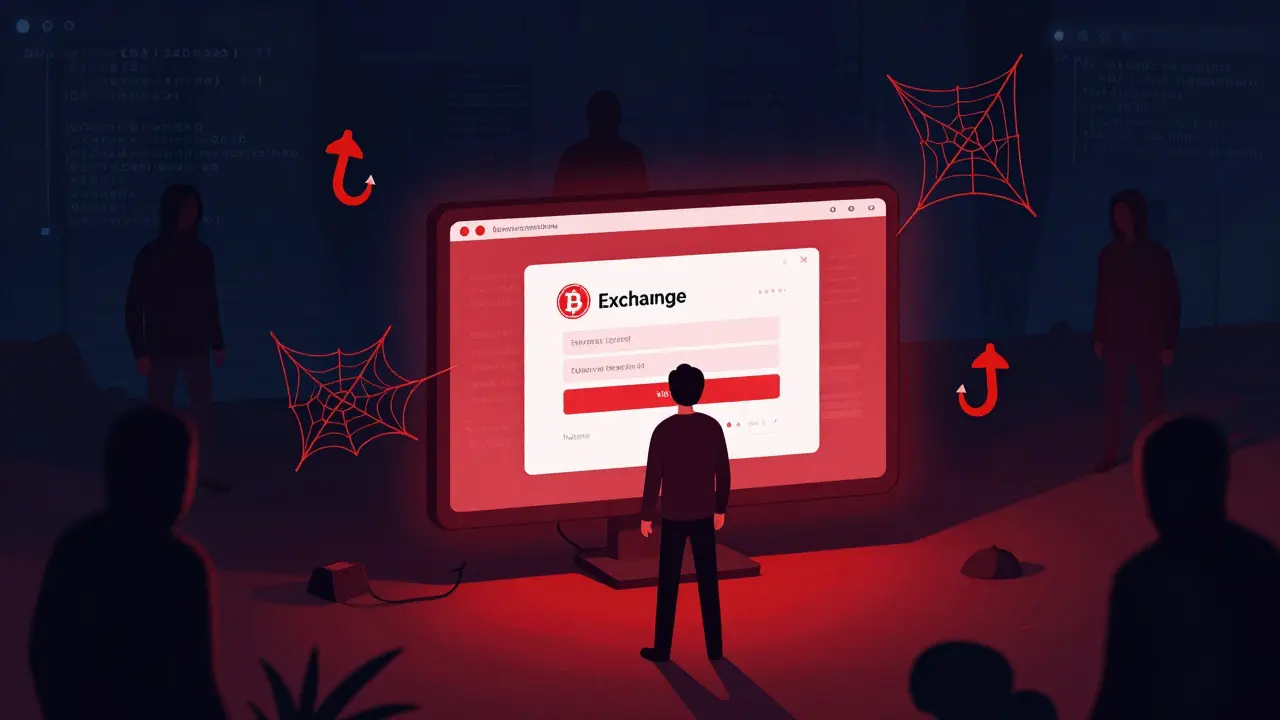
You click a link in an email that looks exactly like it came from your favorite exchange. You type in your password. You enter the six-digit code sent to your phone. Then, minutes later, your balance hits zero. There is no customer support hotline to call. There is no chargeback button. The money is gone forever. This is the harsh reality of cryptocurrency phishing scams, which are not just annoying pop-ups but sophisticated theft operations designed to exploit the irreversible nature of blockchain transactions.
In 2026, these attacks have evolved far beyond simple typos in email addresses. Attackers now use artificial intelligence, deepfake technology, and social engineering tactics that bypass even seasoned users’ defenses. Understanding how these scams work is not optional if you hold digital assets; it is survival. Let’s break down exactly what these threats look like, how they operate, and most importantly, how you can stop them before they drain your wallet.
The Core Mechanism: Why Crypto Phishing Is So Deadly
To understand why these scams are so effective, you first need to grasp what attackers are after. Unlike traditional banking, where a bank holds your funds and can freeze a transaction, cryptocurrency operates on a decentralized model. You are your own bank. This means your security relies entirely on two things: your private keys and your seed phrase.
A private key is a long string of characters that proves ownership of your crypto. Your seed phrase (usually 12 or 24 words) is the master backup for those keys. If an attacker gets either one, they don’t just steal your account-they take everything, instantly, and anonymously. Traditional phishing steals passwords. Crypto phishing steals sovereignty. Once funds leave your wallet via a valid signature generated by your compromised keys, the blockchain records it as legitimate. No central authority can reverse it.
This fundamental difference changes the stakes. In email phishing, you might lose access to your inbox until you reset your password. In crypto phishing, you lose life savings with no recourse. That is why every layer of defense matters more here than anywhere else online.
Common Types of Cryptocurrency Phishing Attacks
Attackers use many different methods to trick victims. Knowing the specific type helps you recognize the red flags faster. Here are the most prevalent forms today:
- Spear Phishing: Generic spam emails are easy to spot. Spear phishing is personal. Attackers research you on LinkedIn or Twitter first. They know your name, your recent transactions, and who you follow. An email appearing to come from a colleague or a known project team member feels safe because it contains accurate details about your life.
- Whaling Attacks: This is spear phishing aimed at high-value targets like CEOs or large wallet holders. The goal isn’t just one person’s wallet; it’s often gaining access to corporate networks or multi-signature treasury wallets used by companies.
- Clone Phishing: Have you received a legitimate invoice or announcement from an exchange? Attackers copy that exact email, keep the same subject line and logo, but swap the attachment or link for a malicious one. Because you’ve seen this email before, your brain registers it as safe.
- Pharming: This is technical redirection. Even if you type "binance.com" correctly into your browser, a compromised DNS server or infected device can redirect you to a fake site that looks identical. You think you’re on the real platform, but you’re handing credentials to thieves.
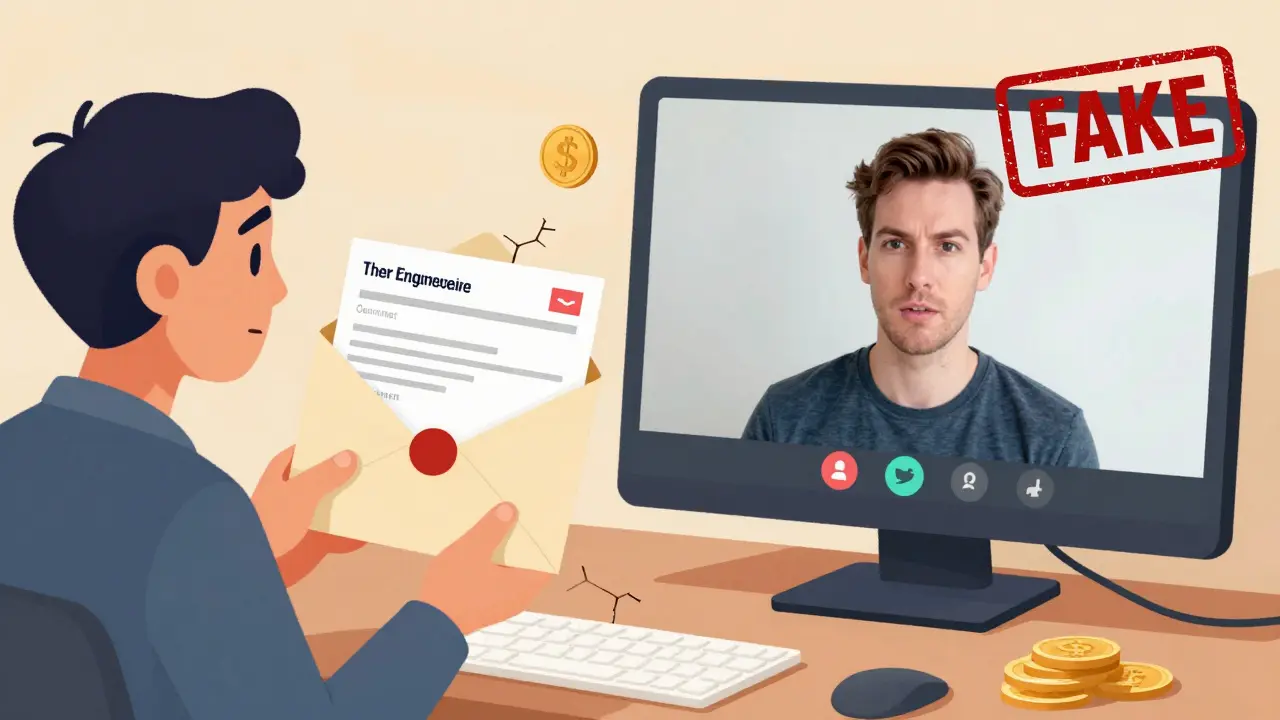
- AI-Powered Impersonation: Deepfake videos and voice clones are now cheap and accessible. You might see a video of Elon Musk or Vitalik Buterin promising free tokens. The facial movements and voice match perfectly. It’s AI-generated fiction designed to create urgency and trust.
The Human Element: Social Engineering Tactics
Technology alone doesn’t cause these breaches. Psychology does. Scammers exploit human emotions-fear, greed, curiosity, and urgency-to make you act without thinking. Two major categories dominate this space:
Romance and "Pig Butchering" Scams: These start innocently. Someone matches with you on a dating app or sends a friendly DM on Instagram. Over weeks, they build emotional intimacy. Then, casually, they mention their success investing in a specific cryptocurrency platform. They show screenshots of profits. Eventually, they invite you to join. You invest small amounts, see returns, and get hooked. Then you invest everything. Suddenly, the partner disappears, and the platform locks your funds. This isn’t quick theft; it’s a months-long manipulation campaign.
Fake Giveaways and Airdrops: "Send 1 ETH, receive 2 ETH back." This promise has existed since Bitcoin’s early days. Modern versions use sophisticated websites that mimic official project launches. They ask for a small "gas fee" or verification deposit to unlock massive rewards. There is never a reward. The gas fee goes straight to the scammer. Legitimate projects never ask you to send crypto to receive more crypto.
Technical Traps: Wallet Draining and Smart Contract Risks
Even if you never give out your password, you can still be drained through technical exploits. This is where decentralized finance (DeFi) introduces new risks.
Malicious Smart Contracts: When you connect your wallet to a DeFi site, you approve a smart contract to interact with your tokens. Usually, this approval is limited. However, scammers create sites that request unlimited approval for all your tokens. Once you click "Approve," the contract executes immediately, transferring everything to the attacker’s address. This happens in seconds. You didn’t leak a password; you authorized a transfer.
Fake Exchanges and Trading Platforms: Some scammers build entire trading platforms that look professional. They allow small withdrawals initially to build trust. You deposit $500, withdraw $50. Feeling safe, you deposit $50,000. Now, withdrawals are "under maintenance" or require impossible KYC steps. The platform vanishes.
SIM-Swap Attacks: This targets your phone number. Attackers call your mobile carrier pretending to be you, claiming you lost your phone. They convince the carrier to port your number to a new SIM card in their possession. Now, when you try to log in to your exchange, the SMS two-factor authentication code goes to them. They reset your password and move your funds. This bypasses standard security unless you use app-based authenticators instead of SMS.
| Scam Type | Primary Target | Key Red Flag | Prevention Strategy |
|---|---|---|---|
| Spear Phishing | Individuals with public profiles | Personalized details but slight URL mismatch | Verify sender identity via separate channel |
| Wallet Draining | DeFi users | Requesting unlimited token allowance | Use revocation tools; check contract addresses |
| SIM-Swap | High-net-worth individuals | Sudden loss of cell service | Use Authenticator apps, disable SMS 2FA |
| Pig Butchering | People seeking relationships/investment | Rapid romance leading to investment talk | Never invest based on romantic partners' advice |
| Pharming | All internet users | Correct URL but suspicious content/loading | Bookmark official sites; check SSL certificates |
How to Protect Yourself: A Practical Defense Plan
Defense requires layers. No single tool stops all attacks. Combine behavioral habits with technical safeguards.
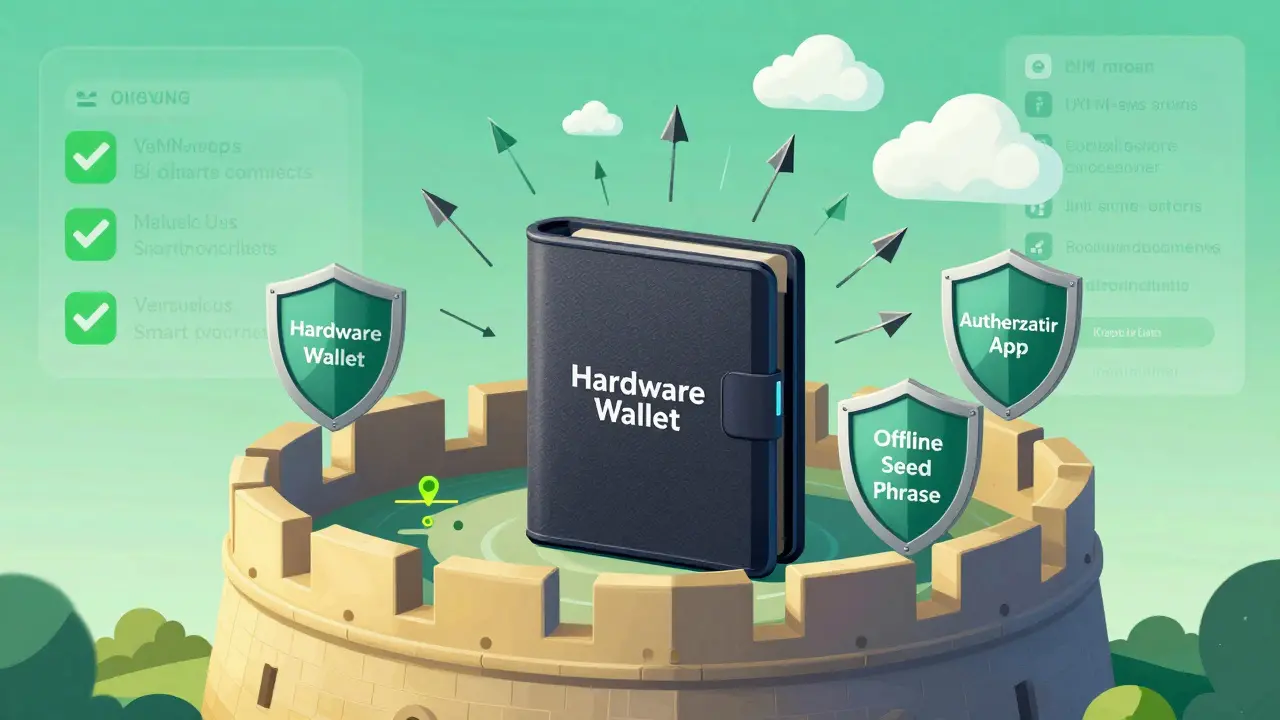
- Use Hardware Wallets: Keep significant holdings offline. Devices like Ledger or Trezor sign transactions locally. Even if your computer is infected with malware, the private key never leaves the device. You must physically press buttons on the hardware to authorize any move.
- Disable SMS Two-Factor Authentication: SMS is vulnerable to SIM-swapping and interception. Use Google Authenticator, Authy, or YubiKeys. These generate codes locally on your device or hardware, independent of your phone number.
- Bookmark Official Sites: Never search for exchanges or wallets via general search engines. Attackers buy ads for keywords like "Coinbase login." Bookmark the exact URL directly from the official domain. Check the HTTPS certificate carefully.
- Revoke Unnecessary Permissions: Regularly audit your wallet connections using tools like Revoke.cash. If you used a test dApp last month, its permissions might still be active. Revoke them to prevent future draining.
- Verify Communications Independently: If you receive an urgent email about a security issue, do not click links inside it. Go to the company’s official website manually and check announcements there. Contact support through official channels only.
- Store Seed Phrases Offline: Never write your seed phrase on a computer, cloud storage, or note-taking app. Write it on metal or paper and store it in a fireproof safe. Photos of seed phrases stored in clouds are prime targets for hackers.
What to Do If You’ve Been Phished
If you suspect compromise, act immediately. Time is critical.
First, disconnect your device from the internet if possible to stop ongoing data exfiltration. Second, change passwords for all related accounts from a clean, uncompromised device. Third, enable enhanced 2FA immediately. Fourth, if funds were moved, you cannot recover them through blockchain reversal. However, you can report the incident to local authorities and provide transaction hashes. While recovery is rare, reporting helps track scam networks.
Finally, monitor your other wallets. Attackers often harvest multiple credentials from one breach. Assume everything connected to that session is compromised.
Can I recover cryptocurrency stolen by a phishing scam?
Generally, no. Blockchain transactions are irreversible. Once funds are sent to a scammer's wallet, they cannot be recalled by banks or exchanges. Prevention is the only reliable strategy. Reporting to law enforcement may help shut down scam operations but rarely results in fund recovery for individual victims.
Are hardware wallets completely immune to phishing?
Hardware wallets protect your private keys from malware on your computer, but they do not protect you from social engineering. If you are tricked into typing your PIN or confirming a fraudulent transaction on the device screen, the funds will still be stolen. Always verify transaction details on the hardware screen itself.
How can I tell if a website is a fake phishing site?
Check the URL carefully for subtle misspellings (e.g., "coinbace.com" instead of "coinbase.com"). Look for HTTPS padlocks, though fakes can have these too. Bookmark official sites and always navigate through bookmarks. Be wary of sites asking for your seed phrase or private key; legitimate services never require this.
What is a SIM-swap attack and how do I prevent it?
A SIM-swap occurs when attackers trick your mobile carrier into transferring your phone number to their SIM card, allowing them to intercept SMS codes. Prevent this by disabling SMS-based two-factor authentication for crypto accounts. Use app-based authenticators like Google Authenticator or physical security keys like YubiKey instead.
Is it safe to connect my wallet to DeFi applications?
Connecting wallets is necessary for DeFi but carries risk. Only connect to reputable, audited platforms. Never approve unlimited spending allowances. Use dedicated "burner" wallets with small amounts for testing new protocols. Regularly revoke unused permissions using tools like Revoke.cash to minimize exposure.

Rebecca Andrews
I'm a blockchain analyst and cryptocurrency content strategist. I publish practical guides on coin fundamentals, exchange mechanics, and curated airdrop opportunities. I also advise startups on tokenomics and risk controls. My goal is to translate complex protocols into clear, actionable insights.
24 Comments
-
Ellie Riddell
May 14, 2026 AT 00:35It is fascinating how we treat security as a product purchase rather than a behavioral discipline. We buy the shiny box, yet we still type our passwords into websites that look slightly off because we are too lazy to check the URL. The irony is palpable. You can have the most expensive vault in the world, but if you hand the key to someone wearing a mask, you deserve whatever happens next. It is not about the tool; it is about the mindset.
-
Bianca Vilas Boas Lourenço
May 14, 2026 AT 17:17omg this is so scary 😱 i literally just got an email from my exchange saying my account was locked 💀 do i click it or not?? 🤔 please tell me its real because i cant afford to lose my crypto again 😭📉
-
Jesse Alston
May 15, 2026 AT 00:37Please do not click any links in emails claiming your account is locked! 🛑 That is exactly how phishing works. They create urgency to make you act without thinking. Instead, open a new browser window and manually type in your exchange's website address. Log in there to see if there are any actual notifications. If the email was legitimate, the notification will be on the dashboard. Always verify through independent channels! 🔒✅
-
Shelby Cantu
May 16, 2026 AT 22:21Stay safe everyone. Small steps count. Use 2FA.
-
Matt Davis
May 17, 2026 AT 11:15The entire premise of this article is flawed because it assumes the average user has any semblance of common sense, which they demonstrably do not. You cannot educate people out of their own greed. These scams work because people want free money. Until you address the underlying psychological defect of expecting returns without risk, no amount of technical advice will save them. It is not a security problem; it is a moral failing of the populace.
-
Samara McCallum
May 19, 2026 AT 08:16i feel like were missing the point entirely. its not just about greed. its about loneliness. these pig butchering scams work because people are desperate for connection. the romance part is real to them until the money comes up. its sad really. we are all just looking for someone to care about us even if its a bot
-
Bronwen Butler
May 20, 2026 AT 04:51stop whining. if you cant tell a fake site from a real one you shouldnt be using crypto. its that simple. the technology is sound. the users are trash. i use a burner wallet for everything and never share my seed phrase. why is this so hard for some people
-
beti macedo
May 21, 2026 AT 17:10It is truly heartening to see such detailed guidance being shared. In my experience, many individuals overlook the importance of verifying sender identities. I always suggest double-checking the email domain carefully. Also, please remember that legitimate organizations will never ask for your private keys. Let us all strive to be more vigilant and supportive of each other in maintaining secure digital environments. Thank you for this informative post.
-
Michelle Bonahoom
May 22, 2026 AT 15:45why do we keep letting these offshore scammers operate with impunity? it makes me sick. our laws are too weak. i bet half these sites are hosted in countries that dont care about us. we need stricter regulations here at home to protect american investors from this garbage. its disgusting how easy it is to steal from honest people
-
Albert Lee
May 23, 2026 AT 02:56I completely understand the frustration! It feels incredibly violating when your trust is exploited like that. But remember, you are not alone in this struggle. Many of us have walked this path. The key is to learn from these mistakes and build stronger habits. Take a deep breath. You can recover from this by securing your remaining assets. Focus on what you can control now. Your safety is paramount!
-
Ankush Pokarana
May 23, 2026 AT 06:57the nature of trust in digital spaces is fundamentally altered by anonymity. we project identity onto screens and assume continuity where there is none. the scammer does not see you as a person but as a vector for value transfer. understanding this detachment helps in recognizing the artificiality of their overtures. when someone offers you the world for a small fee question the reality of the offer. it is usually a reflection of your own desires projected back at you by a mirror made of code
-
Sarah C
May 25, 2026 AT 01:43This is such a helpful breakdown. I agree that layering defenses is crucial. I started using a hardware wallet last year after reading similar warnings and it has given me so much peace of mind. It is worth the investment to protect your savings. Thanks for sharing these tips!
-
Kimberly Herbstritt
May 26, 2026 AT 13:42I actually think SMS 2FA is fine for most people. It is convenient and gets the job done. Not everyone wants to deal with authenticator apps or yubikeys. Scammers are smart but regular folks are smart too. We just need to be careful sometimes. Don't panic over every email.
-
Yash Lodha
May 27, 2026 AT 15:51You are being deceived by the surface-level narrative. The real threat is not just phishing but the systemic manipulation of DNS infrastructure by state actors and corporate entities who benefit from chaos. When you type binance.com you are trusting a chain of intermediaries that could be compromised at any node. The illusion of security is maintained to keep you compliant. Wake up. The system is rigged against individual sovereignty.
-
Sharada Vakkund
May 29, 2026 AT 10:40We need to talk more about social engineering. It is not just about tech skills. It is about understanding human psychology. Scammers exploit our fears and hopes. By recognizing these emotional triggers we can better defend ourselves. Let us support each other in staying alert and informed. Community awareness is our best defense.
-
Sudarshan Anbazhagan
May 30, 2026 AT 20:56it is imperative that one understands the fundamental mechanics of blockchain irreversibility. once a transaction is signed it is immutable. this is not a bug it is a feature. however many users fail to grasp the gravity of signing arbitrary contracts. they click approve without reading the terms. this negligence leads to catastrophic losses. one must exercise extreme diligence in verifying contract addresses before authorizing any interaction with decentralized applications
-
Jan Gilmore
May 31, 2026 AT 09:11Folks, listen up. If you are holding significant amounts on an exchange you are doing it wrong. Exchanges get hacked. Exchanges go bankrupt. Only keys you hold are yours. Move your coins to a cold storage device immediately. Stop making excuses. Security is not optional. It is mandatory if you want to survive in this space.
-
Bijan Das
June 2, 2026 AT 08:11ugh another article telling people to be smarter. as if they can be. the elites know how to stay safe. the rest of you are just targets. i suppose you enjoy playing victim. maybe if you stopped clicking random links you wouldnt get scammed. but then again critical thinking is rare these days
-
Ashley Rodriguez
June 4, 2026 AT 06:01i totally get why people fall for these scams. its so easy to get tricked when everything looks so real. i mean who checks the url every time right? i just try to be careful and hope for the best. its stressful trying to stay on top of all this stuff. thanks for the info though it helps to know what to look out for
-
Bridget Coogle
June 5, 2026 AT 03:09you got this! dont let fear win. take small steps to secure your accounts today. change your passwords enable 2fa and bookmark your sites. every little bit helps. stay positive and keep learning. you are capable of protecting yourself
-
Larry Port
June 5, 2026 AT 11:54It is interesting to consider the balance between convenience and security. We often sacrifice security for ease of use. But in crypto that trade-off is dangerous. Maybe we need better tools that make security effortless. Until then we have to be vigilant. What do you think is the biggest barrier to better security adoption?
-
Jocelyn Garcia
June 6, 2026 AT 17:39From a technical standpoint the rise of AI-generated content complicates detection significantly. Traditional heuristics based on text analysis are becoming obsolete. We need multimodal verification systems that can analyze video audio and text simultaneously. The attack surface is expanding rapidly. Users must adapt their mental models accordingly.
-
Amit Varpe
June 7, 2026 AT 07:05india is seeing a huge rise in these scams too. people need to be more aware. dont trust strangers online. protect your money. stay safe brothers and sisters 🇮🇳💪


Write a comment
More Articles
Vietnam #5 Crypto Adoption: Why Strict Rules Are Driving Users Underground
Vietnam ranks #5 in global crypto adoption despite strict bans on stablecoins and local exchanges. Discover how 17 million users navigate P2P platforms and offshore markets to drive massive transaction volumes.


John Gonzalez Bentham
May 12, 2026 AT 22:00lol u guys really think hardware wallets are magic shields? nah. if ur brain is compromised the device dont matter much. i lost 3k to a fake support ticket on ledger live cause i was tired and just clicked what looked like official help. stop acting like tech fixes human stupidity