
Imagine plugging your electric car into a neighbor’s driveway charger without needing an RFID card or a specific app subscription. That is the promise behind Electric Vehicle Zone, a blockchain project designed to create a decentralized network for sharing EV charging infrastructure. But what exactly is the EVZ coin? Is it just another speculative asset, or does it solve real-world problems in the green energy sector?
The short answer is that EVZ is an ERC-20 utility token built on the Ethereum blockchain. It serves as the financial backbone for a platform that connects idle home chargers with drivers who need them. However, like many projects launched during the 2021 crypto bull run, it faces significant hurdles regarding adoption, liquidity, and market trust. Before you consider buying or using this token, you need to understand how its dual-token system works, why the price has crashed from its all-time high, and whether the technology actually functions outside of theory.
How the EVZ Platform Works: The Core Concept
The central problem EVZ aims to solve is "charger anxiety." As electric vehicle ownership grows, public charging stations are often occupied or broken. Meanwhile, millions of private chargers sit idle for hours each day. Electric Vehicle Zone proposes a peer-to-peer solution: homeowners can rent out their unused chargers to passing drivers.
Traditionally, accessing a private charger requires complex logistics-sharing passwords, handling cash payments, or installing proprietary hardware. EVZ simplifies this through a dedicated hardware module. This module replaces the need for traditional RFID cards. Instead, a driver uses a smartphone app to locate available chargers, initiate the session, and pay automatically. The system claims to work even without a strong internet connection at the charger site, relying on local communication protocols to verify the transaction before syncing with the blockchain later.
This model creates a marketplace. Charger owners earn revenue by renting out their equipment, while drivers gain access to a broader network of charging points. The blockchain ensures that transactions are transparent, immutable, and automated via smart contracts, removing the need for a middleman to process payments.
The Dual-Token Economy: EVZ vs. EVP
One of the most confusing aspects for new users is the two-token structure. The ecosystem relies on two distinct assets, each with a specific purpose. Understanding the difference is critical because they cannot be swapped directly.
| Feature | EVZ Coin ($EVZ) | EVZ Point (EVP) |
|---|---|---|
| Type | ERC-20 Cryptocurrency | Utility Points / Fiat-backed credits |
| Primary Use | Governance, rewards, trading on exchanges | Paying for actual EV charging sessions |
| Tradeable? | Yes, on crypto exchanges | No, non-transferable |
| Acquisition | d>Bought on exchanges or earned as rewards | Purchased directly with credit card/cash |
| Volatility | High (market-driven) | Low (fixed value) |
$EVZ Coin is the tradable asset. You can buy it on cryptocurrency exchanges. Its value fluctuates based on supply and demand. Holders might receive $EVZ tokens as incentives for participating in the network, such as referring users or maintaining charger uptime.
EVP (EVZ Point) is strictly for utility. If you want to charge your car, you need EVP. You cannot convert your $EVZ coins into EVP. Instead, you must purchase EVP separately using traditional fiat currency methods like credit cards. This separation is designed to protect users from crypto volatility when paying for essential services. A driver doesn’t want the cost of a charging session to spike because Bitcoin dropped overnight.
Tokenomics and Supply Details
To evaluate the investment potential, you must look at the tokenomics-the economic rules governing the supply. Scarcity drives value, but inflation dilutes it.
According to data from major aggregators like Coinbase and CoinMarketCap, the metrics for EVZ are as follows:
- Maximum Supply: 8,420,257,833 EVZ tokens
- Total Supply: 8,304,504,457 EVZ tokens
- Circulating Supply: Approximately 2.26 billion EVZ tokens
This means that roughly 27% of the maximum possible supply is currently in circulation. The remaining ~73% is either unminted or held in reserve. For investors, this is a red flag to watch. Large amounts of reserved tokens can lead to future selling pressure if the developers decide to release them into the market, potentially driving the price down unless demand increases proportionally.
The fully diluted valuation (FDV)-what the market cap would be if all tokens were circulating-is approximately $20 million USD based on recent price levels. This is relatively small compared to established layer-1 blockchains or major DeFi protocols, indicating that EVZ remains a micro-cap asset.
Price History and Market Performance
If you look at the chart for EVZ, you will see a dramatic story of hype followed by correction. The token reached its all-time high (ATH) of $0.67 USD on April 6, 2021. This peak coincided with the broader cryptocurrency boom and heightened interest in "green tech" narratives.
As of May 2026, the price has fallen significantly. Recent data from Coinbase shows the price hovering around $0.0024 USD. Other platforms like Crypto.com have shown even lower valuations, sometimes listing it at fractions of a cent due to liquidity issues. This represents a decline of over 99% from its peak.
Why did it crash? Several factors contributed:
- Market Correction: The entire crypto market cooled off after 2021, affecting altcoins disproportionately.
- Lack of Adoption: While the concept is sound, widespread adoption of the physical charging modules has been slow. Without real-world usage, the token lacks fundamental utility demand.
- Liquidity Fragmentation: EVZ is not listed on major centralized exchanges like Binance Spot. Trading occurs primarily on decentralized exchanges (DEXs) or smaller venues, leading to wider spreads and volatile pricing.
The current market capitalization sits around $5.38 million USD. This places EVZ in the lower tiers of the cryptocurrency rankings (often below the top 3,000). At this level, the token is highly susceptible to manipulation and low liquidity risks.
Technical Architecture and Security
From a technical standpoint, EVZ operates as an ERC-20 token on the Ethereum blockchain. This standard ensures compatibility with popular wallets like MetaMask, Trust Wallet, and Ledger devices.
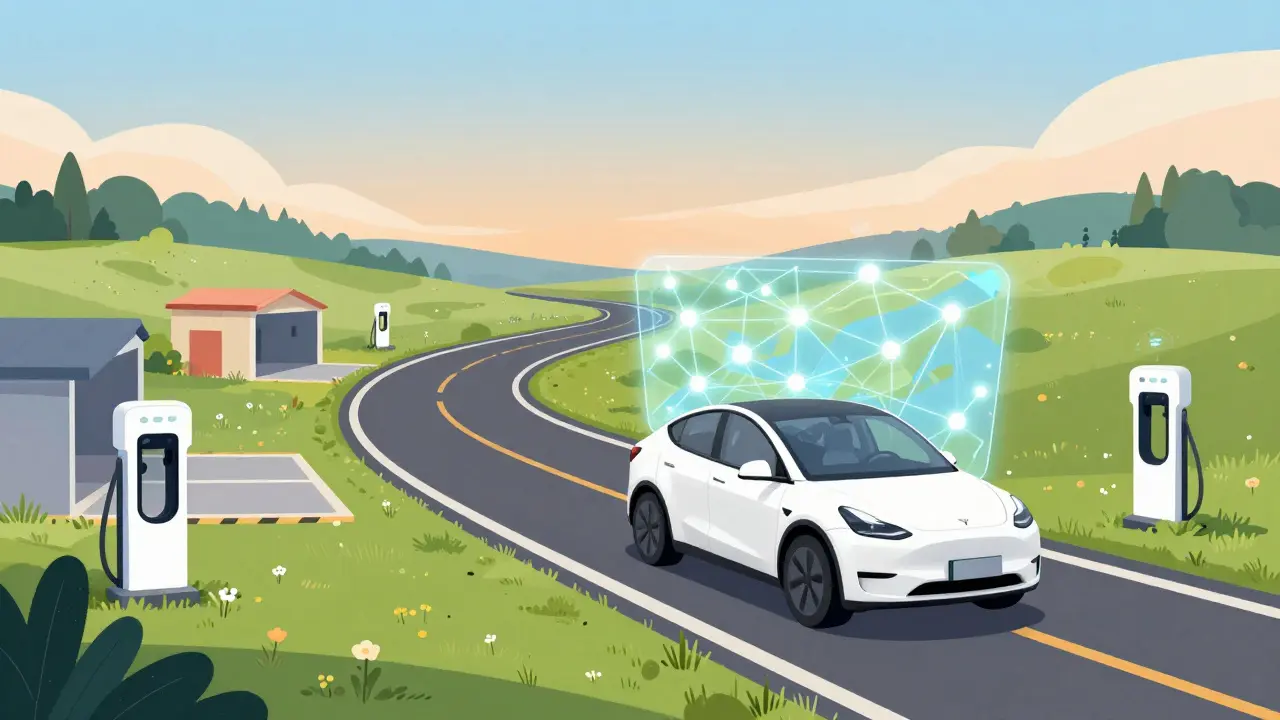
The platform utilizes smart contracts to automate the sharing agreements between charger owners and drivers. These contracts hold funds in escrow until the charging session is verified as complete. This reduces the risk of fraud-for example, a driver claiming they didn’t use the charger or an owner refusing to unlock it.
Security also extends to the hardware layer. The EVZ module uses cryptographic keys to authenticate transactions locally. Even if the internet connection drops, the system records the transaction securely on the device, syncing it to the blockchain once connectivity is restored. This offline capability is a key differentiator from purely app-based solutions that fail in areas with poor cellular coverage.
How to Buy and Store EVZ Coins
If you decide to proceed despite the risks, here is how you can acquire and store the token. Note that you cannot buy EVZ directly with USD on major platforms like Coinbase Pro or Binance Centralized Exchange.
- Set Up a Wallet: Download a non-custodial wallet like Trust Wallet or MetaMask. Ensure you save your seed phrase securely.
- Acquire Ethereum (ETH): Since EVZ is an ERC-20 token, you need ETH to pay for gas fees and to swap for EVZ. Buy ETH on a major exchange and transfer it to your wallet.
- Connect to a DEX: Use a decentralized exchange like Uniswap or PancakeSwap (if bridged). Connect your wallet to the DEX interface.
- Find the Contract Address: Always verify the official contract address for EVZ from the project’s official website or trusted aggregators like CoinMarketCap. Beware of fake tokens with similar names.
- Swap ETH for EVZ: Enter the amount of ETH you wish to trade and set your slippage tolerance appropriately (often higher for low-liquidity tokens).
For those interested in the utility side rather than speculation, you would purchase EVP separately through the official EVZ application using a credit card. Remember, these two paths do not intersect financially.
Risks and Challenges to Consider
Investing in niche utility tokens like EVZ carries substantial risk. Here are the primary concerns:
- Regulatory Uncertainty: Governments worldwide are tightening regulations on crypto-assets used for real-world utilities. If EVZ is classified as a security rather than a utility token, it could face legal restrictions.
- Competition: The EV charging space is dominated by well-funded incumbents like Tesla Superchargers, ChargePoint, and Electrify America. Convincing users to switch to a decentralized, crypto-based alternative requires overcoming significant inertia.
- Hardware Dependency: The success of the token depends entirely on the distribution of physical EVZ modules. If manufacturers stop producing them or if installation costs remain high, the network effect will never materialize.
- Liquidity Risk: With low trading volume, selling large amounts of EVZ can cause the price to crash instantly. You may find it difficult to exit your position without significant loss.
Future Outlook: Is There Hope?
The viability of Electric Vehicle Zone hinges on execution. The technology addresses a genuine pain point-charger availability. If the team can secure partnerships with housing complexes, parking garages, or retail centers to install the modules, the network could grow organically.
Incentive mechanisms, such as rewarding early adopters with $EVZ tokens, might drive initial user acquisition. However, long-term sustainability requires that the service provides tangible value beyond speculative gains. Drivers need reliable, affordable charging, and owners need hassle-free income. If EVZ delivers that, the token could stabilize. If it remains a theoretical concept with limited real-world traction, the price may continue to languish near zero.
Keep an eye on announcements regarding exchange listings. A spot listing on a major tier-1 exchange would dramatically improve liquidity and visibility. Until then, treat EVZ as a high-risk, experimental asset.
Is EVZ coin a good investment in 2026?
EVZ is considered a high-risk investment. It has lost over 99% of its value from its all-time high and suffers from low liquidity and limited exchange listings. While the underlying concept of shared EV charging is promising, the token's performance depends heavily on real-world adoption of the hardware, which has been slow. Only invest money you can afford to lose entirely.
Can I convert EVZ coins to EVP points?
No, you cannot directly convert EVZ coins to EVP points. EVP is purchased separately using fiat currency (credit card or cash) within the EVZ app. EVZ coins are traded on cryptocurrency markets and serve as a reward or governance token, not a direct payment method for charging sessions.
Where can I buy EVZ tokens?
EVZ is not listed on major centralized exchanges like Binance Spot or Coinbase Pro. You typically need to use a decentralized exchange (DEX) like Uniswap. First, acquire Ethereum (ETH), connect your wallet (e.g., MetaMask or Trust Wallet) to the DEX, and swap ETH for EVZ using the correct contract address.
What is the total supply of EVZ?
The maximum supply of EVZ is 8,420,257,833 tokens. As of recent data, the circulating supply is approximately 2.26 billion tokens, meaning about 73% of the total supply is still in reserve or unminted.
Does EVZ work without an internet connection?
Yes, the EVZ hardware module is designed to function without a constant internet connection at the charging site. It uses local cryptographic verification to initiate charging, syncing the transaction data to the blockchain once connectivity is restored. This makes it suitable for remote locations with poor cellular coverage.

Rebecca Andrews
I'm a blockchain analyst and cryptocurrency content strategist. I publish practical guides on coin fundamentals, exchange mechanics, and curated airdrop opportunities. I also advise startups on tokenomics and risk controls. My goal is to translate complex protocols into clear, actionable insights.
More Articles

Crypto Exchange Regulations in Japan by FSA: What You Need to Know in 2026
Japan's FSA enforces the world's strictest crypto exchange rules: mandatory cold storage, local incorporation, and heavy penalties for non-compliance. By 2026, new securities-style rules will further tighten oversight.