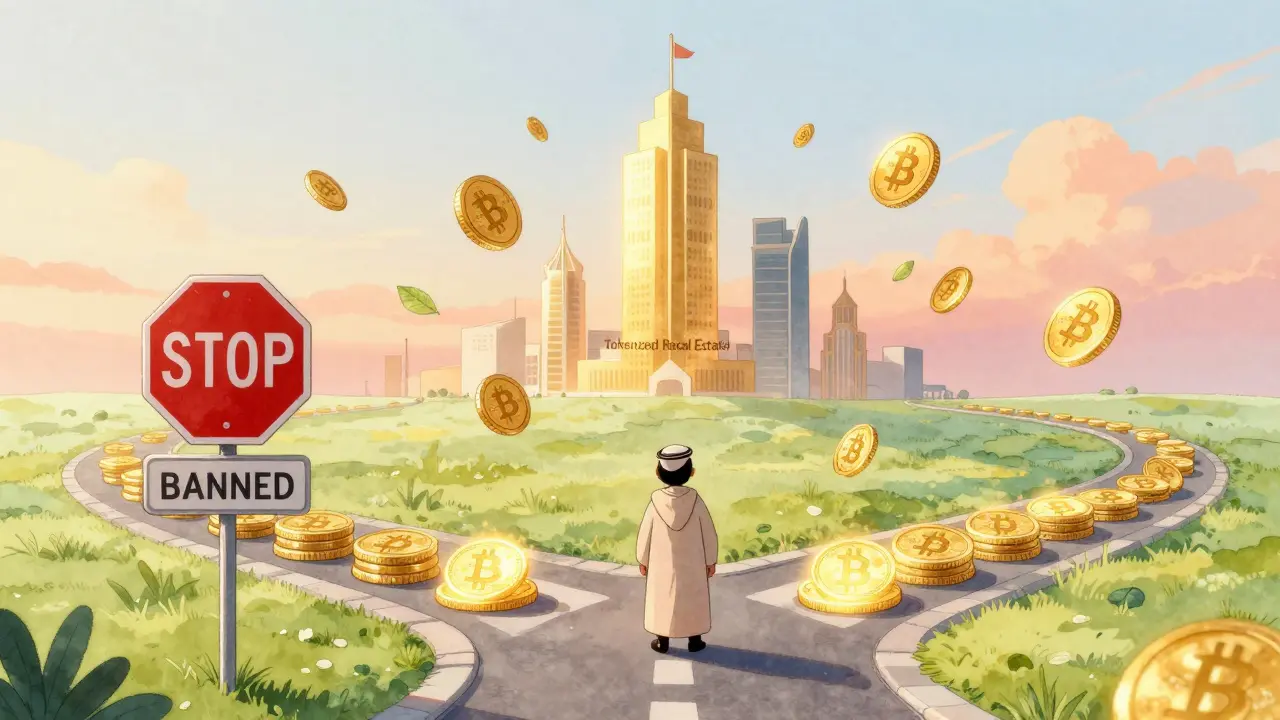
If you live in Qatar and you're wondering whether you can buy Bitcoin, trade Ethereum, or use a crypto wallet, the short answer is: no-not legally, not through local services, and not with any real protection. But it’s not that simple. While traditional cryptocurrencies are banned, something else is quietly growing behind the scenes: tokenized real estate, bonds, and commodities. Qatar isn’t shutting down blockchain-it’s redirecting it.
What’s Completely Banned in Qatar
Since September 2024, Qatar’s Digital Assets Regulations 2024 have made it crystal clear: Bitcoin, Ethereum, Dogecoin, Tether, USDC, and every other cryptocurrency or stablecoin are classified as "Excluded Tokens." That means they’re not just unregulated-they’re illegal to trade, hold, or offer as a service within Qatar’s jurisdiction. The Central Bank of Qatar first banned banks from dealing in crypto back in 2018. Then, in 2019, the Qatar Financial Centre Regulatory Authority (QFCRA) expanded that ban to cover any service provider offering crypto trading, custody, or exchange. By 2020, even crypto-related businesses operating inside the Qatar Financial Centre (QFC) were shut down. The 2024 rules didn’t change the ban-they just made it official, detailed, and legally enforceable. If you’re a resident, you can’t use any local exchange. You can’t open a crypto wallet through a Qatari bank. You can’t even legally run a business that accepts Bitcoin as payment. Violating these rules could land you under Qatar’s Law No. 20 of 2019 on Combating Money Laundering and Terrorism Financing, which treats digital assets as "funds"-meaning crypto activity could trigger criminal investigation, even if it’s outside the regulated framework.What’s Actually Allowed-And How It Works
Here’s where things get interesting. Qatar didn’t ban blockchain. It banned speculation. What it’s promoting is tokenization-turning real, physical assets into digital tokens on a blockchain. Under the new rules, you can legally invest in tokenized versions of:- Real estate (apartments, commercial buildings)
- Corporate shares and sukuk (Islamic bonds)
- Gold, oil, and other commodities
- Infrastructure projects
- Validation: A licensed validator confirms the asset’s ownership and legal status.
- Request: The asset owner formally applies for tokenization.
- Generation: A licensed token generator creates the digital token on approved infrastructure.
Why Qatar Took This Path
Most Gulf countries are trying to attract crypto businesses. Saudi Arabia has licenses for exchanges. The UAE has free zones for crypto firms. Qatar chose a different route. The government’s reasoning is straightforward: avoid volatility, prevent illicit finance, and protect the financial system. Cryptocurrencies don’t have intrinsic value-they’re driven by hype, memes, and speculation. Qatar’s economy is built on oil, gas, real estate, and sovereign wealth. It doesn’t need speculative digital assets. It needs better ways to trade its existing ones. Tokenization solves real problems. Imagine a Qatari family wanting to invest in property but not able to afford a whole apartment. With tokenization, they can buy a fraction of one. A small business can raise capital by tokenizing its equipment. Foreign investors can buy into Qatari infrastructure without dealing with complex local laws. It’s a smart, controlled way to use blockchain technology without opening the door to chaos.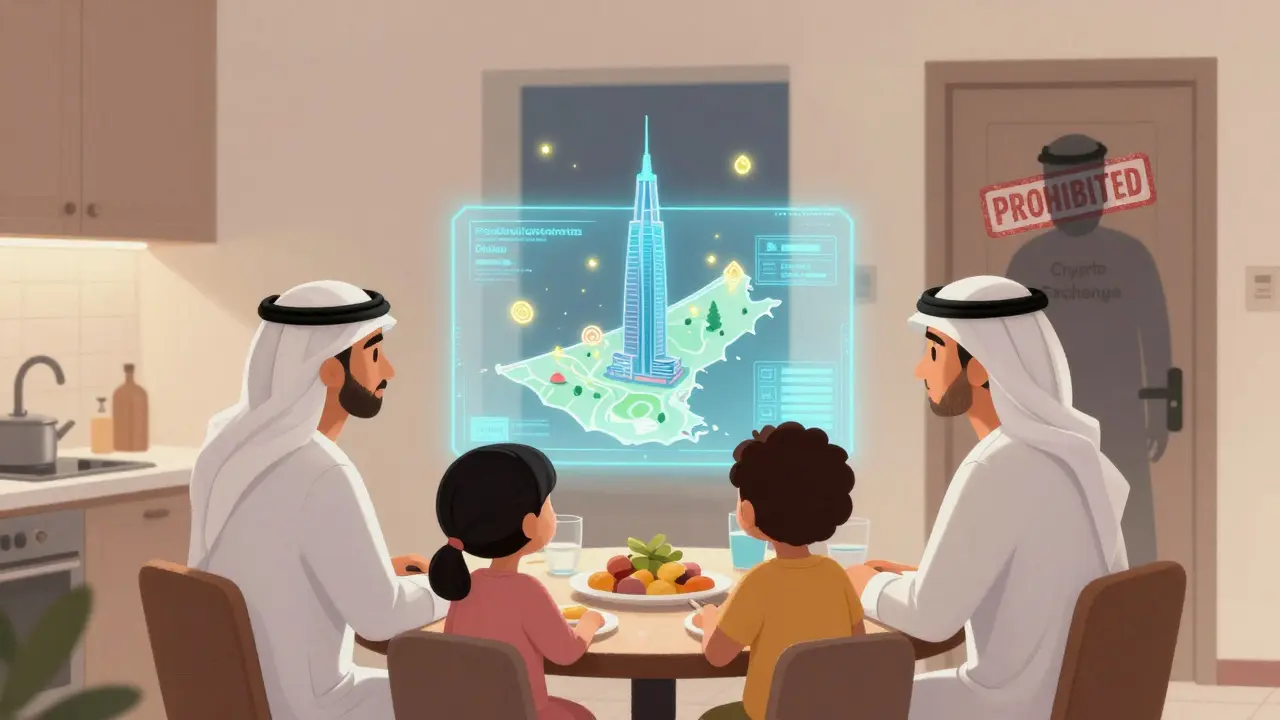
What This Means for You as a Resident
If you’re a regular resident in Qatar, here’s what you can and can’t do:- Can’t do: Buy Bitcoin on Binance, use Coinbase, trade Dogecoin, hold USDT, use a crypto wallet app like Trust Wallet for crypto assets.
- Can do: Invest in tokenized real estate through a licensed QFC provider, buy shares in a Qatari company via tokenized securities, invest in tokenized gold or oil.
How Businesses Are Adapting
Financial institutions in Qatar-banks, investment firms, asset managers-are completely prohibited from touching cryptocurrencies. But they’re racing to become licensed token service providers. Qatar National Bank, QNB, and other major players are partnering with blockchain firms to build platforms for tokenized sukuk and real estate. Law firms are hiring specialists in smart contract law. Audit firms are developing new compliance tools for asset validation. The big shift? From "don’t touch crypto" to "only touch this kind of digital asset." Compliance isn’t about KYC forms or transaction monitoring anymore. It’s about making sure every token you issue is tied to a real, validated asset.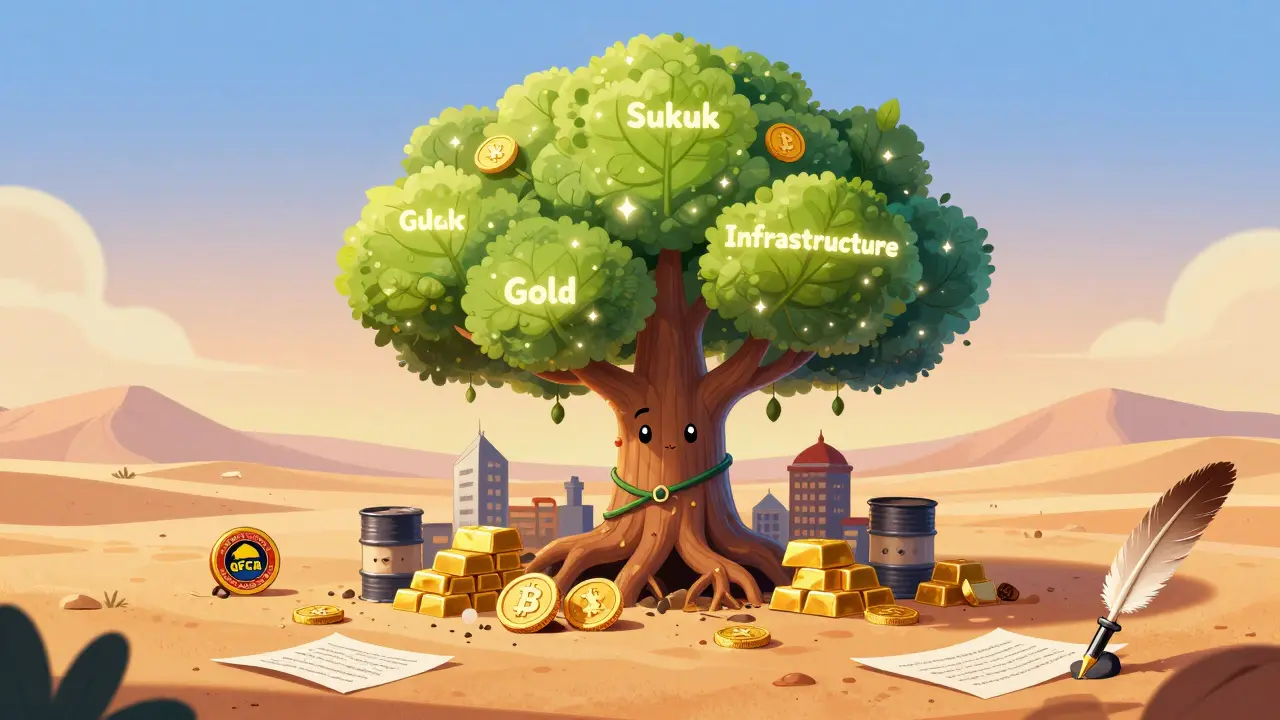
What’s Next for Qatar’s Crypto Landscape
Don’t expect Qatar to lift its crypto ban anytime soon. The 2024 framework was designed to last. The government has no interest in becoming a crypto hub like Dubai. Its goal is to be a leader in secure, asset-backed digital finance. In the next few years, we’ll likely see:- More asset classes added to the permitted list-maybe carbon credits or intellectual property.
- Increased international partnerships with blockchain firms from Europe and Asia.
- Expansion of tokenized investment funds aimed at retail investors.
Final Thoughts
Qatar’s approach isn’t about being anti-technology. It’s about being anti-risk. The country is betting that the future of finance isn’t in wild price swings and anonymous wallets-it’s in transparent, legally backed digital ownership. If you’re a resident, your best move isn’t to find loopholes for crypto. It’s to explore what’s allowed: tokenized real estate, bonds, and commodities. These aren’t flashy. But they’re legal, regulated, and backed by Qatar’s massive wealth. The next time someone tells you crypto is the future, remember: in Qatar, the future is already here-it just looks different.Is it illegal to own Bitcoin in Qatar?
There’s no explicit law saying it’s illegal to privately hold Bitcoin or other cryptocurrencies. But you can’t buy, sell, trade, or use them through any legal financial service in Qatar. All exchanges, wallets, and trading platforms are banned. If you hold crypto, you’re doing so outside the legal system-with no protection, no recourse if you lose funds, and potential risk under anti-money laundering laws.
Can I use a crypto exchange like Binance or Coinbase from Qatar?
No. Accessing foreign crypto exchanges from within Qatar is blocked by local internet service providers. Even if you use a VPN, the QFCRA has made it clear that offering crypto services-whether locally or remotely-is prohibited. Financial institutions in Qatar are forbidden from facilitating any crypto transactions. Using these platforms puts you in legal gray territory with no regulatory safety net.
Are stablecoins like USDT or USDC allowed in Qatar?
No. Stablecoins are explicitly classified as "Excluded Tokens" under Qatar’s 2024 Digital Assets Regulations. Even though they’re pegged to the U.S. dollar, they’re treated as currency substitutes-and therefore banned. You cannot legally hold, trade, or use them through any Qatari-regulated entity.
Can I invest in tokenized real estate in Qatar?
Yes. Tokenized real estate is one of the few legal digital asset investments in Qatar. Licensed providers under the QFCRA offer tokens representing fractional ownership in buildings, land, or commercial properties. These are backed by real assets, validated by certified authorities, and legally recognized. This is the safest and most regulated way to gain exposure to digital assets in Qatar.
What happens if I get caught trading crypto in Qatar?
If you’re a private individual, you’re unlikely to face criminal charges just for holding crypto. But if you’re running a business, promoting crypto services, or using financial institutions to facilitate trades, you could be investigated under Qatar’s Anti-Money Laundering and Counter-Terrorism Financing Law. Penalties include fines, asset seizure, and in severe cases, imprisonment. The government prioritizes stopping institutional involvement over targeting individual holders.
Are there any crypto-friendly banks in Qatar?
No. All banks and financial institutions in Qatar are prohibited from offering any crypto-related services. This includes account openings, fund transfers, custody, or advisory services related to Bitcoin, Ethereum, or stablecoins. Even inquiries about crypto are discouraged. Banks are focused on helping clients access only the permitted tokenized assets under the 2024 framework.
Can I use crypto to pay for goods or services in Qatar?
No. Businesses operating under Qatari law cannot legally accept cryptocurrency as payment. While a few private vendors might accept it informally, there’s no legal protection for such transactions. The QFCRA has made it clear that any service involving cryptocurrency as a medium of exchange is prohibited. Stick to fiat currency or tokenized assets for legal transactions.
Will Qatar ever allow Bitcoin in the future?
It’s extremely unlikely. The 2024 framework was designed to permanently exclude cryptocurrencies and stablecoins. Qatar’s economic strategy is built on controlling value through tangible assets-oil, gas, real estate. Bitcoin’s volatility and lack of backing make it incompatible with that model. The government has signaled its intent to expand tokenization of real assets, not to embrace speculative crypto.
How do I find licensed token service providers in Qatar?
The QFC Regulatory Authority publishes a list of licensed token generators and validators on its official website. Only entities approved by the QFCRA can legally issue or manage tokenized assets. Look for providers that clearly state they’re licensed under the Digital Assets Regulations 2024. Avoid any platform that doesn’t disclose its licensing status or tries to offer crypto instead of asset-backed tokens.
Is blockchain technology banned in Qatar?
No. Blockchain technology is not only allowed-it’s actively promoted. Qatar’s entire digital asset framework is built on blockchain. The difference is that only tokenized real-world assets are permitted. The technology itself is seen as a tool for efficiency, transparency, and security. The ban is on speculative digital currencies, not the underlying infrastructure.

Rebecca Andrews
I'm a blockchain analyst and cryptocurrency content strategist. I publish practical guides on coin fundamentals, exchange mechanics, and curated airdrop opportunities. I also advise startups on tokenomics and risk controls. My goal is to translate complex protocols into clear, actionable insights.
20 Comments
-
vaibhav pushilkar
December 22, 2025 AT 18:05Actually, this makes total sense. Tokenized real estate lets ordinary people invest in property without needing millions. In India, we dream of this-here, it’s legal and structured. Smart move by Qatar.
-
SHEFFIN ANTONY
December 23, 2025 AT 03:13Oh please. You call this innovation? They’re just banning crypto because they’re scared of decentralization. Tokenization is still blockchain-it’s just wrapped in a suit and told to sit quietly. They’re not leading-they’re hiding.
-
Vyas Koduvayur
December 23, 2025 AT 20:11Let’s be real-Qatar’s approach is the only rational one in the entire Middle East. Everyone else is chasing crypto hype like it’s a new religion, but they’re ignoring the fundamental flaw: crypto has no intrinsic value. Tokenized real estate? That’s a building. Tokenized gold? That’s actual metal sitting in a vault. USDT? Just a number on a screen backed by who-knows-what. The regulatory clarity here is breathtaking. Most countries are still stuck in the ‘let’s regulate after the bubble pops’ phase. Qatar didn’t wait for the crash-they prevented it. And let’s not forget the legal infrastructure: courts recognizing tokenized ownership? That’s next-level governance. You think Dubai’s free zones are sophisticated? They’re just tax havens with blockchain branding. Qatar’s building a financial architecture that will outlast every crypto fad. This isn’t conservative-it’s visionary. And anyone who says ‘it’s just censorship’ hasn’t lived through a financial collapse. I’ve seen what happens when people think they’re rich because their Dogecoin went up 500%. It ends in tears, lawsuits, and broken families. Qatar’s saving its people from that.
-
Lloyd Yang
December 25, 2025 AT 19:43I’ve lived in three countries that went full crypto-crazy, and I’ve watched the fallout. People lose everything-not just money, but trust. Qatar’s approach isn’t about control-it’s about care. They’re saying, ‘We have the resources, we have the stability, let’s use tech to make that accessible, not speculative.’
Tokenized real estate? That’s a grandmother in Doha buying a sliver of a building so her grandkids can inherit something real. Tokenized sukuk? That’s faith-aligned finance meeting modern efficiency. This isn’t anti-crypto-it’s pro-wisdom.
If you’re angry because you can’t trade Dogecoin, maybe ask yourself why you thought that was investing in the first place. -
Craig Fraser
December 26, 2025 AT 21:25So let me get this straight-you’re praising a regime that bans digital assets but allows them if they’re tied to property? That’s not innovation. That’s control with a PR team. They’re not building the future-they’re building a walled garden where only the state-approved assets can grow.
-
Sybille Wernheim
December 27, 2025 AT 05:02This is actually kind of beautiful. Imagine being able to invest in a piece of Doha’s skyline without needing a million dollars. That’s financial inclusion with teeth. Qatar’s not shutting down tech-they’re upgrading it. Let the chaos happen elsewhere. We’ll take the quiet revolution.
-
Cathy Bounchareune
December 27, 2025 AT 20:16It’s fascinating how Qatar is turning a ban into a cultural statement. In the West, we romanticize decentralization. Here, they’re saying: ‘We value stability more than novelty.’ That’s a powerful shift. It’s not about fear-it’s about identity. Their wealth is built on oil, land, and long-term planning. Why would they gamble that on a meme coin?
-
Jordan Renaud
December 28, 2025 AT 15:36Most people think the future of finance is wild and unpredictable. But maybe the real future is calm, clear, and anchored. Qatar’s model isn’t flashy-but it’s durable. And in a world full of noise, that’s revolutionary.
-
Luke Steven
December 29, 2025 AT 18:44It’s funny how people scream ‘censorship’ when they can’t do what they want-but don’t blink when their government bans smoking or drunk driving. Qatar’s just saying: ‘We don’t want you gambling your life savings on a coin with no backing.’ That’s not tyranny. That’s responsibility.
Tokenized assets? That’s real ownership. Crypto? That’s digital roulette. I’ll take the building any day. -
Ellen Sales
December 31, 2025 AT 15:49so qatar banned crypto but like… still uses blockchain? lol. they’re basically like ‘you can’t have fun, but you can have a very expensive spreadsheet’
-
Sheila Ayu
January 2, 2026 AT 09:42Wait-so you’re saying it’s illegal to hold Bitcoin, but perfectly fine to hold a digital token that represents a building? That’s not logic-that’s hypocrisy! If the technology is the same, why is one ‘legitimate’ and the other ‘speculative’? You’re just privileging assets the state already controls! This isn’t innovation-it’s authoritarianism with a corporate logo!
-
Janet Combs
January 2, 2026 AT 11:15i never thought about this before but like… if you can’t use binance but you can buy a piece of a building with a token… that’s actually kinda cool? i mean, you’re not gambling, you’re just… owning stuff. kinda like the old days, but with computers. i like it.
-
Dan Dellechiaie
January 3, 2026 AT 00:45Let’s not sugarcoat this: Qatar’s model is state-controlled capitalism with blockchain branding. You call it ‘tokenized real estate’-I call it ‘asset monopoly under the guise of innovation.’ The QFCRA isn’t a regulator-it’s a gatekeeper. And anyone who thinks this is ‘progress’ is ignoring the fact that decentralization was the entire point of crypto in the first place. You want efficiency? Fine. But don’t confuse permissioned ledgers with freedom. This isn’t the future of finance-it’s the future of surveillance with dividends.
-
Radha Reddy
January 3, 2026 AT 18:54As someone from a country where financial access is limited, I find Qatar’s approach deeply respectful. It doesn’t promise quick riches-it offers real, traceable ownership. That’s dignity. That’s stability. That’s what matters.
-
Shubham Singh
January 3, 2026 AT 20:07Qatar’s 2024 regulations are not a model. They are a cautionary tale of technocratic authoritarianism dressed in financial jargon. Tokenization without decentralization is not progress-it is regression. The state has replaced the wild west with a corporate zoo. And you call that wisdom?
-
Charles Freitas
January 5, 2026 AT 15:22Of course the rich love this. They don’t want you to own Bitcoin-they want you to own a tiny slice of their building. This isn’t financial inclusion-it’s asset enclosure. They’re selling you a sliver of their wealth and calling it innovation. Meanwhile, the real power-the control, the validation, the issuance-stays in their hands. Welcome to feudalism with a blockchain UI.
-
Sarah Glaser
January 6, 2026 AT 21:03There’s a quiet elegance here. Qatar isn’t trying to be the next crypto hub. It’s trying to be the next financial anchor. In a world of noise, choosing clarity is an act of courage. Tokenized assets aren’t sexy-but they’re sustainable. And sometimes, that’s all we need.
-
roxanne nott
January 7, 2026 AT 19:31tokenized real estate? cool. but if you can’t trade it freely, it’s just a digital deed. and if the state controls who can issue it? it’s not ownership-it’s a lease with extra steps.
-
Rebecca F
January 8, 2026 AT 06:09They banned crypto and replaced it with something worse: permissioned ownership. Welcome to the new serfdom, where your ‘investment’ is only as valuable as the government’s approval. You don’t own a token-you’re a tenant in their financial fantasy.


Write a comment
More Articles

Government Digital Identity Systems Using Blockchain: A Practical Guide
Discover how government digital identity systems using blockchain shift control to citizens. Learn about DIDs, real-world examples like Estonia, and the future of self-sovereign identity.


Ashley Lewis
December 21, 2025 AT 19:38The distinction between speculative tokens and asset-backed digital securities is not merely regulatory-it is philosophical. Qatar has recognized that value must be anchored, not imagined. This is not censorship; it is stewardship.
One cannot build a financial system on memes and volatility. The future belongs to those who understand that liquidity without legitimacy is chaos dressed in code.