
For years, the story of cryptocurrency in Nigeria was defined by fear. You either traded in the shadows or you risked having your bank account frozen overnight. But if you are a Nigerian citizen looking to trade crypto in 2026, that narrative has fundamentally shifted. The days of an outright ban are over, replaced by a complex but structured regulatory framework known as the Investments and Securities Act (ISA) 2025, signed into law by President Bola Ahmed Tinubu in March 2025.
This isn't just a minor policy tweak; it is a complete reversal of the restrictive stance held from 2021 to 2023. Today, digital assets are officially recognized as securities under Nigerian law. However, "legal" does not always mean "easy." While the government has opened the door, the path inside is lined with licensing requirements, multi-agency oversight, and lingering enforcement inconsistencies. Understanding these new rules is critical for protecting your funds and avoiding unnecessary legal trouble.
The End of the Ban: From CBN Prohibition to Regulatory Clarity
To understand where we stand today, we have to look at where we were just a few years ago. In 2021, the Central Bank of Nigeria (CBN)the nation's monetary authority issued a circular prohibiting commercial banks and payment service providers from maintaining accounts for any virtual asset service provider. This effectively cut off the bridge between fiat money and crypto. For millions of Nigerians, this meant turning to risky peer-to-peer (P2P) channels or dealing with unregulated offshore platforms.
The tide turned in December 2023 when Governor Cardoso announced the lifting of the ban. Banks were finally permitted to maintain relationships with licensed Virtual Asset Service Providers (VASPs). This move acknowledged a reality regulators could no longer ignore: Nigeria ranks first globally in P2P crypto transaction volume, with over 22 million citizens actively involved in the space. The ISA 2025 codified this shift, defining crypto assets as "a digital representation of value that can be transferred, digitally traded and used for payment or investment purposes." Crucially, this definition excludes digital versions of fiat money, keeping stablecoins and central bank digital currencies in a separate regulatory bucket.
Who Can You Trust? The SEC Licensing Framework
The most significant change for everyday users is the requirement for all crypto exchanges operating in Nigeria to register with the Securities and Exchange Commission (SEC)the primary regulator for capital markets in Nigeria. Before 2025, many platforms operated in a gray area. Now, legitimacy is tied directly to this license.
Early approvals were granted to established local platforms like Quidax and Busha. These companies underwent rigorous vetting processes to ensure they met anti-money laundering (AML) and counter-terrorism financing (CFT) standards. If you are using an exchange that does not appear on the SEC’s list of approved VASPs, you are operating outside the protected framework. This distinction matters because licensed entities are subject to regular audits and must adhere to strict consumer protection protocols.
| Feature | Pre-2024 (Ban Era) | Post-ISA 2025 (Current) |
|---|---|---|
| Banking Access | Prohibited for VASPs | Allowed for Licensed VASPs |
| Legal Status of Crypto | Unrecognized / Restricted | Recognized as Securities |
| Primary Regulator | CBN (Restrictive) | SEC (Oversight) + CBN (Banking) |
| User Protection | Minimal / Self-regulated | Enhanced via AML/CFT Compliance |
| Taxation | Ambiguous | Under Development by SEC |
Navigating the Multi-Agency Oversight Maze
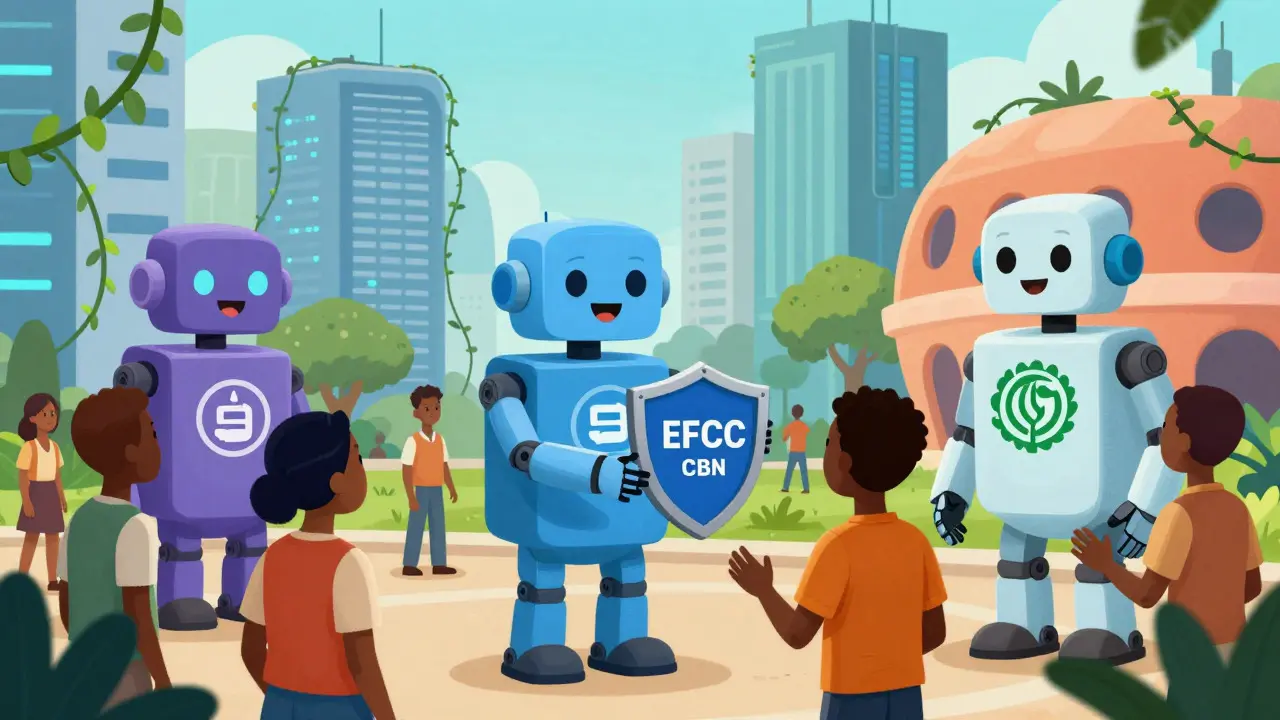
One common misconception is that the SEC is the only body watching your trades. In reality, Nigeria’s crypto landscape involves a coordinated effort among several powerful agencies. Each plays a distinct role, and understanding their jurisdictions helps you anticipate potential hurdles.
- Securities and Exchange Commission (SEC): They handle the licensing of exchanges and oversee the integrity of the market. They are the ones approving who gets to operate.
- Central Bank of Nigeria (CBN): They control the banking rails. They ensure that financial institutions servicing crypto businesses are not exposing the national economy to excessive risk.
- Economic and Financial Crimes Commission (EFCC): This is the enforcement arm. If fraud occurs, the EFCC investigates. They have been given enhanced tools under the new law to access telecom records and dismantle Ponzi schemes disguised as crypto investments.
- Nigerian Financial Intelligence Unit (NFIU): They monitor transactions for suspicious activity, ensuring compliance with global AML standards.
For the average trader, this means that while you have more freedom, you also have less anonymity. Transactions are tracked, and identities are verified through stringent Know Your Customer (KYC) procedures. This is designed to protect you from scams, but it requires patience during the onboarding process on any legitimate platform.
The Gap Between Law and Street Reality
Here is where the official narrative meets the ground truth. Despite the ISA 2025 providing a clear legal framework, user experiences reveal persistent challenges. Many Nigerian traders report that harassment from law enforcement continues, albeit in different forms. There are documented cases of police officers demanding bribes from individuals simply for owning crypto accounts or engaging in transactions, even when those transactions are legally compliant.
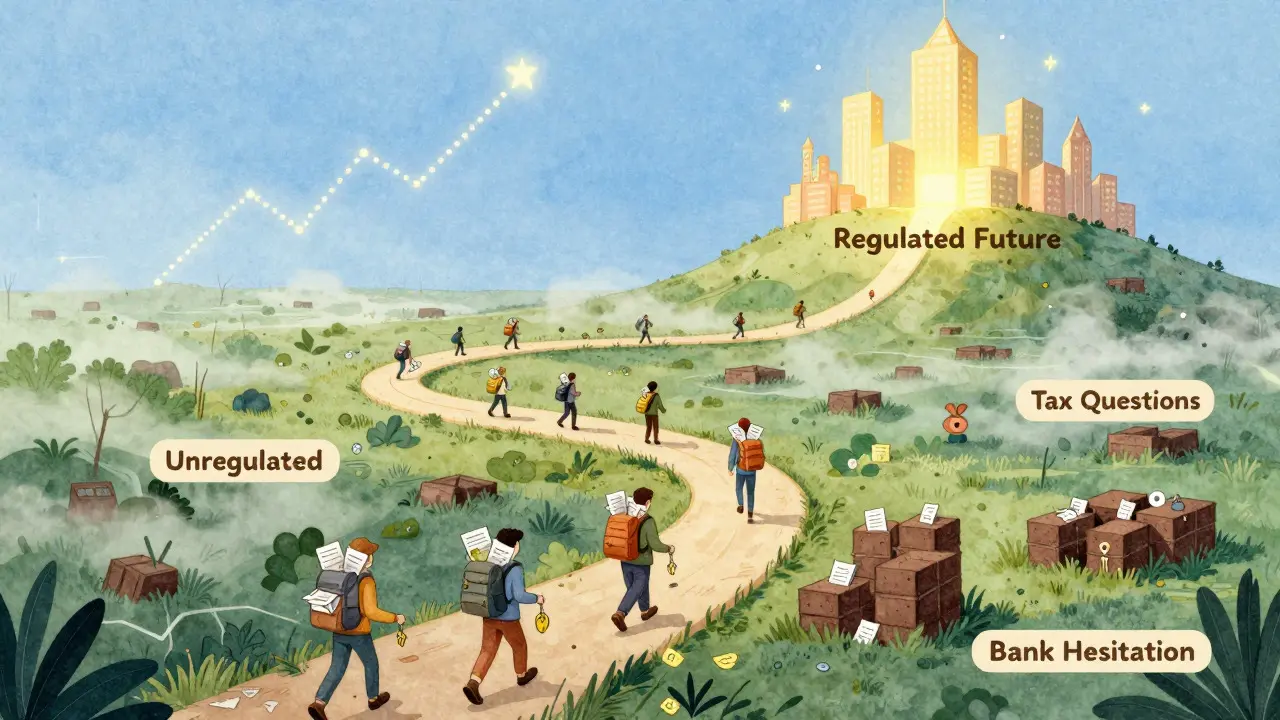
Community feedback on forums like Reddit and Twitter highlights a cautious optimism mixed with frustration. Users note that while regulatory uncertainty has decreased, practical implementation barriers remain. Some banks, wary of the complexities, still hesitate to process large crypto-related transfers, forcing users to rely heavily on P2P networks. This creates a paradox: the government encourages regulated trading, but the infrastructure to support seamless fiat-to-crypto conversion is still maturing.
Governor Cardoso admitted that regulators were "caught off guard by how quickly Nigerians embraced cryptocurrencies." This admission explains the lag between policy creation and effective enforcement. As a result, individual users must exercise due diligence. Always verify the licensing status of your exchange, keep detailed records of your transactions, and be prepared to demonstrate the source of your funds if questioned.
Market Impact and Future Outlook
The economic significance of this shift cannot be overstated. By October 2025, Nigeria’s digital asset market had expanded to an estimated $400 million. The country’s leadership in P2P trading volume is driven by currency devaluation concerns and limited access to traditional financial services. Clearer regulations are expected to attract foreign investment, positioning Lagos as a potential fintech hub for Africa.
Looking ahead, two major developments will shape the next phase of crypto adoption in Nigeria:
- Taxation Frameworks: The SEC has confirmed that work is underway to subject eligible crypto transactions to taxation. While specific timelines are undisclosed, traders should expect clearer guidelines on capital gains and transaction taxes in the near future.
- Stablecoin Regulations: With the exclusion of fiat-backed tokens from the current securities definition, expect separate guidelines to emerge governing stablecoins, which are widely used for remittances and savings.
Industry analysts suggest that if Nigeria can resolve enforcement inconsistencies and streamline the licensing process, it could set a precedent for other African nations. The goal is to transform resistance into opportunity, creating a safe environment for innovation without compromising financial stability.
Practical Steps for Nigerian Traders in 2026
If you are active in the crypto space, here is how to navigate the current landscape safely:
- Stick to Licensed Platforms: Only use exchanges that are publicly listed as approved by the SEC. Avoid unregistered offshore platforms unless you fully understand the risks.
- Complete Full KYC: Ensure your identity verification is up to date. This protects you if your account is ever flagged for review.
- Diversify Banking Relationships: Since some banks may still be hesitant, consider maintaining accounts with multiple financial institutions to ensure liquidity access.
- Stay Informed on Tax Obligations: Keep track of announcements from the SEC regarding crypto taxation. What is currently ambiguous may become mandatory soon.
- Document Everything: Save receipts, transaction hashes, and communication logs. In the event of a dispute or investigation, paper trails are your best defense.
The era of hiding your crypto activities is over. The new reality is one of transparency, regulation, and gradual normalization. While the journey has been bumpy, the destination-a mature, protected, and integrated crypto ecosystem-is within reach.
Is cryptocurrency legal in Nigeria in 2026?
Yes, cryptocurrency is legal in Nigeria as of 2026. The Investments and Securities Act (ISA) 2025 officially recognizes digital assets as securities, marking a shift from the previous ban imposed by the Central Bank of Nigeria.
Which crypto exchanges are licensed in Nigeria?
Exchanges such as Quidax and Busha have received early approval and licensing from the Securities and Exchange Commission (SEC). Users should check the SEC's official registry for the most up-to-date list of licensed Virtual Asset Service Providers (VASPs).
Can I use my bank account for crypto transactions?
Yes, since December 2023, the Central Bank of Nigeria has allowed banks to maintain relationships with licensed crypto businesses. However, individual experiences may vary, and some banks may still exercise caution with large transfers.
Will I be taxed on my crypto profits?
The SEC is currently developing taxation frameworks for cryptocurrency transactions. While specific rules are not yet fully implemented, traders should anticipate future tax obligations on capital gains and eligible transactions.
What happens if I use an unlicensed exchange?
Using an unlicensed exchange exposes you to higher risks, including lack of consumer protection and potential legal scrutiny. The SEC and EFCC have enhanced powers to investigate and penalize operators and users involved in non-compliant activities.
How does the EFCC fit into crypto regulation?
The Economic and Financial Crimes Commission (EFCC) handles enforcement. They investigate fraud, money laundering, and Ponzi schemes within the crypto sector, working alongside the SEC and NFIU to ensure market integrity.

Rebecca Andrews
I'm a blockchain analyst and cryptocurrency content strategist. I publish practical guides on coin fundamentals, exchange mechanics, and curated airdrop opportunities. I also advise startups on tokenomics and risk controls. My goal is to translate complex protocols into clear, actionable insights.
More Articles

2FA Bypass Attacks: How Hackers Slip Past MFA & How to Stop Them
Learn how attackers bypass two‑factor authentication using tricks like password‑reset flaws, phishing proxies, MFA fatigue, and token theft, and discover practical steps to harden your accounts.
EU Sanctions and Cryptocurrency Compliance: What You Need to Know in 2025
As of 2025, EU cryptocurrency compliance is enforced through MiCA, TFR, and CARF. All crypto service providers must license up, track every transaction over €1,000, and report to tax authorities. Non-compliance means fines, blacklisting, or criminal liability.