When it comes to cryptocurrency in Russia, there’s no simple answer to whether exchanges are banned. It’s not like the government shut down every platform overnight. Instead, Russia plays a game of selective enforcement - targeting some, tolerating others, and building its own system in the background. If you’re trying to figure out which exchanges you can’t use in Russia today, you need to understand who’s been punished, who’s still operating under the radar, and how the rules keep changing.
Garantex: The Exchange That Got Crushed
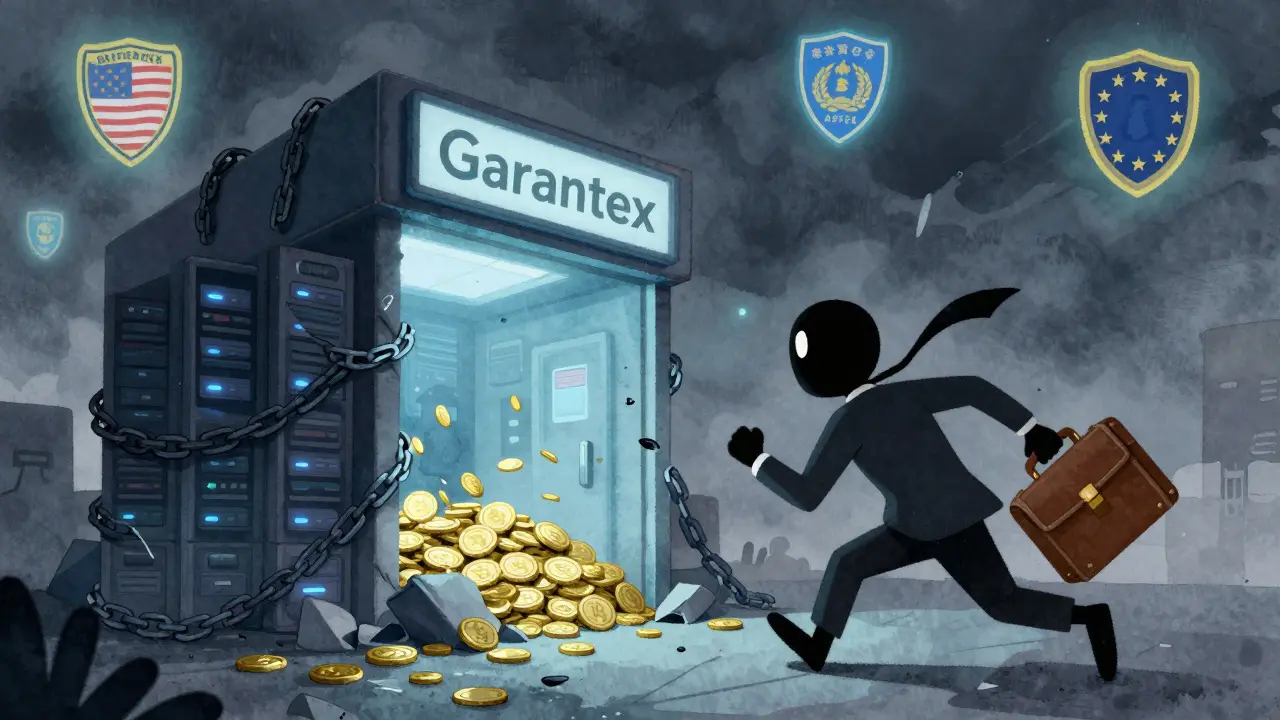
Garantex was once the biggest crypto exchange based in Russia. It handled billions in trades, mostly from users looking to move money out of the country or avoid Western banking restrictions. But in March 2025, everything collapsed. The U.S. Secret Service, working with German and Finnish authorities, seized its website, froze over $26 million in crypto, and shut down its servers. The U.S. Treasury labeled Garantex a key player in sanctions evasion - helping Russian entities bypass financial controls tied to the war in Ukraine. The fallout didn’t stop there. Two top executives, Aleksandr Mira Serda and Aleksej Besciokov, were indicted. Besciokov was arrested in India. Mira Serda is still on the run, with the U.S. State Department offering up to $5 million for information leading to his capture. Garantex’s official operations ended, but its ghost lives on. Inside Russia, the network didn’t disappear - it just changed names. A new payment service called Exved popped up in Moscow’s International Business Center. Its founder? Sergey Mendeleev, the same person who built Garantex’s backend. Exved doesn’t call itself an exchange. It markets as a tool for importers and exporters, helping businesses move money across borders using crypto. That’s the loophole Russia allows: crypto for international trade, not domestic payments.Grinex: The Successor That Got Sanctioned Too
As Garantex was being dismantled, its team didn’t vanish. They launched Grinex - a direct replacement, built by former Garantex employees. It took over Garantex’s customer base, wallets, and transaction flows. Within weeks, the U.S. Treasury added Grinex to its sanctions list. OFAC called it part of the same network, designed to keep the money flowing after Garantex went dark. The timing wasn’t random. Grinex launched right after the March 2025 international crackdown. That’s when Russian authorities quietly shifted from trying to ban crypto to trying to control it. Grinex became a test case: if you’re helping evade sanctions, you’re out. But if you’re helping Russia’s economy move money internationally? You might get a pass - if you play by the new rules.Binance, Coinbase, Kraken: Not Banned, But Effectively Blocked
You won’t find Binance, Coinbase, or Kraken on Russia’s official list of banned sites. That’s because Russia didn’t ban them directly. Instead, it made it impossible for them to operate. Russian banks can’t process payments to or from these platforms. Payment processors like Visa and Mastercard don’t work with Russian users on these exchanges. Even if you try to log in, your card gets declined. Your bank might freeze your account if they detect crypto activity linked to a Western exchange. The Bank of Russia doesn’t allow financial institutions to touch crypto at all - not for trading, not for deposits, not for withdrawals. So while these platforms aren’t technically banned, they’re functionally blocked. You can’t use them the way you would in the U.S. or Europe. The infrastructure simply doesn’t exist anymore. Russian users who still want access to these exchanges rely on VPNs and P2P traders - but even that’s getting riskier. The government now requires banks to report suspicious P2P transactions, especially those involving foreign currencies or large sums.
BestChange: The One That Got Unbanned
BestChange is a cryptocurrency aggregation platform - not an exchange, but a tool that compares rates across dozens of platforms. In 2024, Roskomnadzor blocked it for listing foreign payment systems and currencies like the Kazakhstani tenge. The Bank of Russia said it was enabling unregulated cross-border flows. But in early 2025, BestChange made changes. It removed all ruble-based foreign currency listings. It stopped promoting non-Russian payment methods. It worked with legal teams to prove it was complying with the new rules. And then - it was unbanned. Roskomnadzor removed it from the restricted sites list. This is the key lesson: Russia doesn’t always ban. It demands compliance. If you’re willing to adapt, remove what they don’t like, and align with their goals, you can stay open. BestChange didn’t fight the rules - it rewrote its business to fit them.What Russia Actually Allows
Russia’s stance on crypto isn’t about banning it. It’s about controlling it. The 2020 law made crypto legal - but only as an asset, not a payment method. That changed in summer 2024. Now, Russian companies can legally use crypto for international trade. That’s why Exved exists. That’s why state-backed crypto infrastructure is being built. The Bank of Russia is testing a new system: a government-controlled crypto environment. Only “especially qualified” investors - people with high net worth and verified income - can trade. All transactions must go through approved channels. KYC is strict. AML monitoring is real-time. The goal? Keep crypto activity visible, traceable, and under state control. This isn’t about stopping crypto. It’s about making sure Russia benefits from it. The government wants to tax it. Regulate it. Use it to bypass Western sanctions - on its own terms.
What’s Still Risky in Russia Today
If you’re in Russia and thinking about using crypto, here’s what you need to avoid:- Using unapproved exchanges - Garantex, Grinex, and any platform linked to them are high-risk. Even if they’re still online, you could lose funds or face legal trouble.
- Large P2P trades - Banks are required to report transactions over 600,000 rubles ($7,000 USD) that involve crypto. If you’re buying from strangers on Telegram, you’re on the radar.
- Using Western exchanges with Russian bank cards - Cards get declined. Accounts get frozen. It’s not worth the hassle.
- Trying to hide crypto activity - Russia’s tax authorities now share data with financial regulators. If you’re making profits and not reporting, you’re asking for trouble.
The Future: Russia’s Own Crypto System
Deputy Finance Minister Ivan Chebeskov confirmed in October 2025 that Russia is building a national crypto infrastructure. Think of it like a state-run version of Binance - but controlled by the Bank of Russia. It will allow institutional investors to trade crypto legally, with full oversight. This isn’t just about money. It’s about power. China has its digital yuan. The EU is testing a digital euro. Russia wants its own crypto ecosystem - one where the government decides who trades, how much, and when. For now, the only exchanges you can safely use in Russia are the ones that play by Moscow’s rules. Foreign platforms? They’re ghosts. Sanctioned platforms? They’re traps. The real action is inside Russia’s new system - and it’s just getting started.Are Binance and Coinbase banned in Russia?
No, Binance and Coinbase aren’t officially banned by Russian law. But they’re effectively blocked. Russian banks won’t process payments to them, payment cards don’t work, and the government doesn’t allow financial institutions to connect to them. So while you can technically access their websites, you can’t use them like you would in other countries.
Is crypto illegal in Russia?
No, crypto is not illegal in Russia. Since 2020, owning and trading cryptocurrency has been legal. But using it to pay for goods or services inside Russia has been banned since 2021. The rules changed again in 2024 - now, Russian companies can use crypto for international trade, as long as they follow strict reporting rules.
Why was Garantex shut down?
Garantex was shut down in March 2025 by U.S. and European law enforcement for helping Russian entities evade international sanctions. The U.S. Treasury accused it of laundering over $26 million in crypto to bypass financial restrictions tied to the war in Ukraine. Its founders were indicted, its domain seized, and its operations dismantled.
Can I still trade crypto in Russia?
Yes, but only through approved channels. The Bank of Russia allows qualified investors to trade crypto under strict rules. You must pass KYC checks, use only government-approved platforms, and report all transactions. P2P trading and foreign exchanges carry high risk and may trigger bank investigations.
What’s the difference between a banned exchange and a sanctioned one?
A banned exchange is blocked by Russian authorities - like a website taken offline by Roskomnadzor. A sanctioned exchange, like Garantex or Grinex, is targeted by international bodies (like the U.S. Treasury) for violating global rules. Russia doesn’t always ban sanctioned platforms - it sometimes lets them operate under new names if they serve its economic goals.
Is Exved a legal crypto exchange in Russia?
Exved isn’t labeled as an exchange. It’s registered as a payment service for importers and exporters. Since 2024, Russia allows crypto use in international trade, so Exved operates in a legal gray zone. It’s not officially approved by the Bank of Russia, but it’s also not targeted. It’s a product of Russia’s shifting rules - not a loophole, but a feature.

Rebecca Andrews
I'm a blockchain analyst and cryptocurrency content strategist. I publish practical guides on coin fundamentals, exchange mechanics, and curated airdrop opportunities. I also advise startups on tokenomics and risk controls. My goal is to translate complex protocols into clear, actionable insights.
13 Comments
-
kristina tina
January 18, 2026 AT 17:45OMG this is such a clutch breakdown!! I literally just read this and my brain exploded in the best way. So Garantex got crushed but Exved just popped up like a phoenix with a business license?? That’s not a loophole-that’s a whole new game. Russia’s playing 4D chess and we’re all just trying to remember which side the pawns are on. 🤯
-
Anna Gringhuis
January 20, 2026 AT 03:30Let’s be real-no one cares about ‘legal gray zones’ when your bank account gets frozen because you bought Dogecoin on a P2P app. This isn’t policy, it’s performance art for oligarchs. And the fact that BestChange got unbanned after deleting everything that made it useful? That’s not adaptation. That’s surrender with a PowerPoint.
-
Michael Jones
January 21, 2026 AT 10:07There's a critical distinction here between de facto and de jure restrictions. While Binance and Coinbase are not officially banned under Russian statute, the banking infrastructure blockade constitutes a functional prohibition. Furthermore, the regulatory shift toward state-controlled crypto infrastructure aligns with broader geopolitical objectives of financial sovereignty. The legal framework, while technically permissive, is deliberately engineered to exclude foreign platforms.
-
Jill McCollum
January 21, 2026 AT 13:12so like... i get that russia wants to control crypto, but why does it feel like they're building a prison with fancy gold bars? like, sure, you can trade, but only if you're rich enough, verified enough, and willing to let the state watch every single transaction. it's not freedom, it's surveillance with a blockchain label. also, exved? sounds like a typo for 'ex-vest'... as in, you're getting stripped. 😅
-
Hailey Bug
January 23, 2026 AT 08:46BestChange getting unbanned after scrubbing all non-Russian payment options is the most telling part. Russia doesn't hate crypto-it hates uncontrolled crypto. They want visibility, traceability, and tax revenue. The moment a platform stops being a threat and starts being a tool, it's welcomed. It’s not about legality. It’s about utility to the state.
-
Stephen Gaskell
January 25, 2026 AT 01:14Western exchanges are trash. Russia should ban them all and go full crypto autarky. No more foreign influence. No more sanctions. Just Russian crypto, Russian rules, Russian power. Let the West choke on their fiat.
-
Hannah Campbell
January 25, 2026 AT 22:06so like... garandex got shut down but exved just popped up and everyone's acting like this is normal?? i swear if i see one more article about 'gray zones' i'm gonna scream. this isn't innovation. this is a russian mafia movie with a blockchain logo. also who even is sergey mendeleev?? he's not even a real name, it's like 'mendel' + 'ev' + 'i'm-trying-to-look-legit'
-
Bryan Muñoz
January 26, 2026 AT 06:58THIS IS ALL A COINBASE AND CIA OPERATION TO DESTROY RUSSIA’S ECONOMY. GARANTEX WAS A FRONT FOR THE FEDS. EXVED? PROBABLY A BACKDOOR FOR NSA SURVEILLANCE. THEY LET BESTCHANGE LIVE BECAUSE THEY WANT US TO THINK WE’RE SAFE. THE BANK OF RUSSIA ISN’T BUILDING A CRYPTO SYSTEM-IT’S BUILDING A TRAP. THEY’RE GONNA TRACK EVERY WALLET AND THEN LOCK DOWN THE INTERNET. I TOLD YOU THIS WAS COMING. #CRYPTOISALREADYGONE
-
Sarah Baker
January 27, 2026 AT 20:26It’s actually kind of inspiring how Russia’s adapting-yes, it’s controlling, but they’re not ignoring the future. They’re building their own version of crypto, and that’s smarter than just banning it. Think of it like this: instead of fighting the tide, they’re learning to swim in it. And maybe, just maybe, they’re creating something that actually works for their people. It’s not perfect, but it’s real.
-
Kelly Post
January 28, 2026 AT 10:50I’ve been watching this whole situation unfold for years, and what’s fascinating is how Russia’s approach mirrors China’s digital yuan strategy-but with more chaos. The state isn’t trying to eliminate decentralized finance; it’s trying to centralize it under its own banner. The real question isn’t ‘what’s banned?’ but ‘who gets to decide what’s legal?’ And the answer is always: the ones with the most power. That’s not crypto. That’s control dressed in blockchain.
-
Tony Loneman
January 29, 2026 AT 22:33Let me get this straight-Russia bans Western exchanges, then lets a company called Exved, which sounds like a rejected Marvel villain, operate as a ‘payment service’ while secretly being Garantex 2.0? And you call that innovation? That’s not a loophole, that’s a clown car full of oligarchs driving through a blockchain tunnel while the U.S. Treasury screams into a void. This isn’t a financial system. It’s a performance art piece written by a Russian bureaucrat who binge-watched The Matrix and then took a crypto course on YouTube.
-
Alexis Dummar
January 30, 2026 AT 22:20Actually, the most chilling part? The fact that Russia’s new system will only let ‘especially qualified investors’ trade. So the rich get to play with crypto. The rest? They get to watch. That’s not financial inclusion. That’s financial apartheid with a digital wallet.


Write a comment
More Articles
Cybex DEX Review: Why the Decentralized Exchange Failed
A detailed review of the now-defunct Cybex DEX, covering its tech, low liquidity, community gaps, and key lessons for choosing a reliable decentralized exchange.
Tunisia's Complete Crypto Ban Explained: Laws, Risks & Future Outlook
Tunisia enforces a strict ban on all cryptocurrency activities, including trading, mining, and payments, with penalties up to five years in prison. Learn about the legal framework, enforcement realities, and potential future changes.

Alexis Dummar
January 17, 2026 AT 01:05It's wild how Russia's crypto policy isn't really about banning-it's about control. They're not trying to kill crypto, they're trying to own it. Like, if you're not part of the state-run system, you're basically a ghost transaction. And honestly? That's scarier than outright bans. You can't fight a system that just absorbs you and calls it compliance.