
Imagine trying to send a quick text message during a stadium concert where everyone is on the same network. The connection drops, messages fail, and you’re stuck waiting. This is exactly what happens on major blockchains like Bitcoin or Ethereum when they get congested. Transactions slow down, and fees skyrocket. That’s where sidechains come in. They act as parallel highways for data, allowing transactions to move quickly without clogging up the main road.
If you’ve been following crypto news, you’ve probably heard terms like Layer 2, rollups, and sidechains thrown around interchangeably. But they aren’t the same thing. Sidechains offer a unique set of advantages that make them particularly attractive for specific use cases, especially when speed and custom rules matter more than absolute security inheritance from the main chain. Let’s break down why sidechains are becoming a critical piece of the blockchain puzzle.
What Exactly Is a Sidechain?
To understand the advantages, we first need to define the beast. A sidechain is an independent blockchain that runs parallel to a primary blockchain (the mainchain). It has its own consensus mechanism, its own blocks, and its own rules. What connects it to the mainchain is a two-way pega mechanism that allows assets to be locked on one chain and minted on the other.
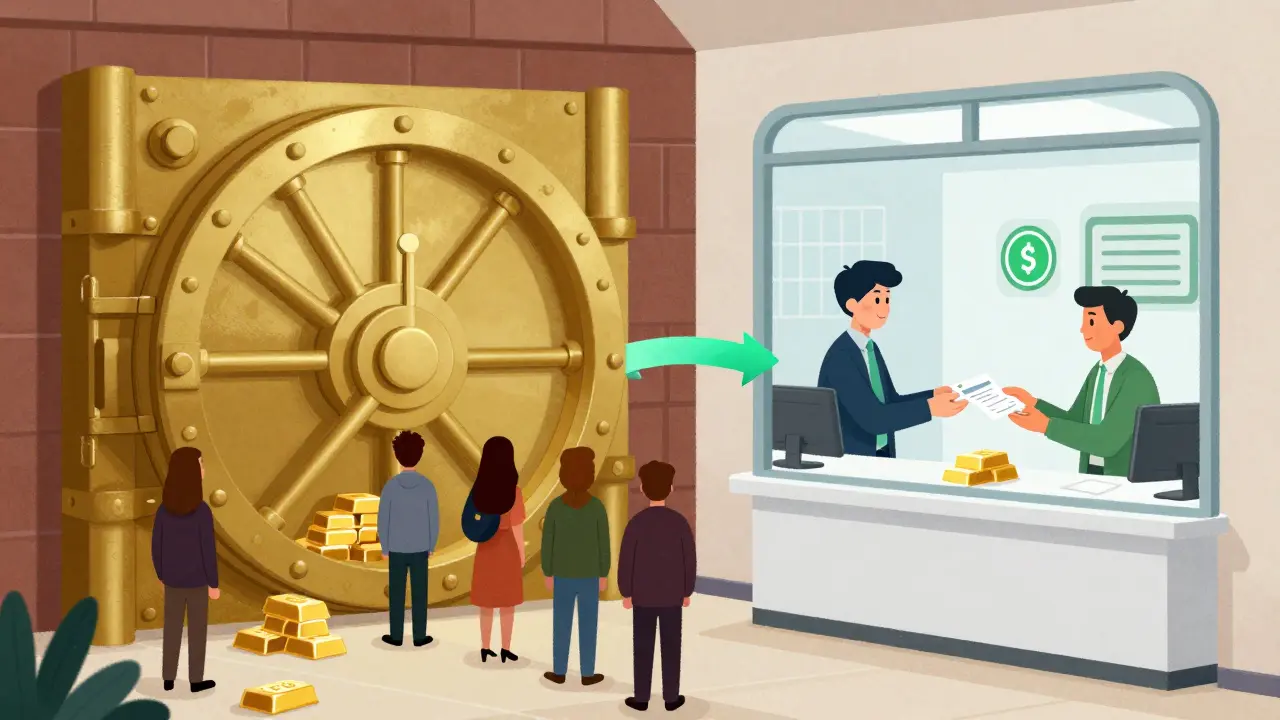
Think of the mainchain as a secure vault bank. It’s incredibly safe, but opening the door takes time and effort. The sidechain is like a branch office nearby. You can deposit your gold (assets) into the vault, get a receipt, and then use that receipt at the branch office to conduct business quickly. When you’re done, you bring the receipt back to the vault to redeem your gold.
This concept was formalized in 2014 by researchers including Adam Back and Pieter Wuille in their paper "Enabling Blockchain Innovations with Pegged Sidechains." Since then, projects like Polygon and Liquid Network have shown how this architecture works in practice.
The Core Advantage: Massive Scalability
The most obvious benefit of sidechains is throughput. Mainchains like Bitcoin are designed for security and decentralization, which means they sacrifice speed. Bitcoin processes about 7 transactions per second (TPS). Ethereum, before recent upgrades, hovered between 15-45 TPS. That’s nothing compared to Visa, which handles thousands per second.
Sidechains don’t share this bottleneck because they process transactions independently. For example:
- Polygon PoS Sidechain: Can handle up to 7,000 TPS.
- Immutable X: An NFT-focused sidechain capable of 9,000 TPS.
- Liquid Network: Processes Bitcoin transactions in under 1 minute, compared to Bitcoin’s average 10-minute block time.
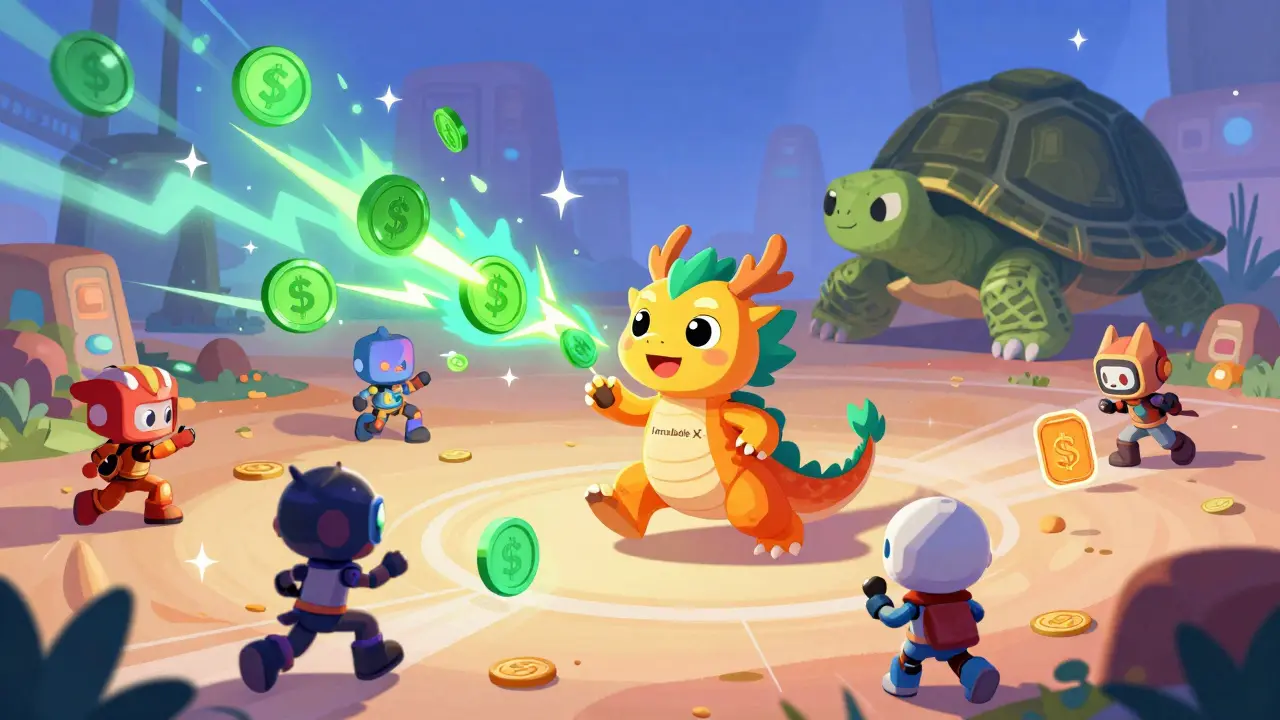
This isn’t just theoretical. During peak congestion periods in late 2021, Ethereum gas fees exceeded $50 per transaction. On Polygon’s sidechain, the same action cost pennies. If you’re building a game where users buy items for $0.50, paying $50 in fees makes no sense. Sidechains solve this economic mismatch.
Flexibility in Consensus Mechanisms
Mainchains are rigid. Bitcoin uses Proof of Work (PoW). Ethereum moved to Proof of Stake (PoS). You can’t change these fundamental rules easily without risking the entire network’s integrity. Sidechains, however, can choose their own consensus mechanism based on their needs.
| Feature | Mainchain (e.g., Bitcoin) | Sidechain (e.g., Liquid) |
|---|---|---|
| Consensus Type | Proof of Work (Fixed) | Federated Byzantine Agreement (Customizable) |
| Block Time | 10 minutes | Seconds |
| Privacy Features | Limited | Can implement confidential assets |
This flexibility allows developers to innovate. A supply chain sidechain might prioritize privacy features that aren’t available on the public mainchain. A gaming sidechain might prioritize instant finality over energy efficiency. This customization is impossible on a monolithic mainchain.
Cost Efficiency for Users and Developers
Let’s talk money. High transaction fees are the number one barrier to entry for everyday users. In December 2021, during the DeFi boom, simple swaps on Ethereum cost hundreds of dollars. This priced out retail users and limited innovation.
Sidechains drastically reduce these costs. According to Hedera’s 2022 benchmarking study, sidechains can reduce transaction fees by 70-90% during peak congestion. Here’s a real-world scenario:
A developer wanted to mint 12,500 NFTs. On Ethereum mainnet, the gas fees would have totaled approximately $187,500. By using a sidechain like Polygon, they processed all mints for about $37 total ($0.003 per transaction). That’s a difference of nearly 5,000x. For small businesses or hobbyist developers, this cost structure is the only way to make blockchain applications viable.
Security Trade-offs: The Catch
No technology is perfect, and sidechains have a significant drawback: security. When you use a sidechain, you are trusting the sidechain’s validators, not the mainchain’s massive hash power.
There are three main types of sidechain architectures, each with different security profiles:
- Federated Sidechains: Managed by a group of trusted nodes (like Liquid Network’s 15-member federation). Fast, but if the majority of the federation colludes, they can steal funds.
- SPV Proved Sidechains: Use Simplified Payment Verification to check mainchain blocks. More decentralized, but complex to implement.
- Drivechains: Use economic security models where miners choose which chains to secure. Still largely theoretical in widespread adoption.
In 2022, bridge hacks involving sidechain protocols resulted in over $2.1 billion in losses. The Wormhole hack alone stole $625 million. These incidents highlight that while sidechains offer speed, they fragment security. You are trading some of the mainchain’s robustness for performance. Always research who controls the validators before moving large amounts of value.
Sidechains vs. Rollups: Which Should You Choose?
You’ll often hear people compare sidechains to rollups (Optimistic or ZK-Rollups). Both aim to scale Ethereum, but they do it differently.
| Feature | Sidechains | Rollups (ZK/Optimistic) |
|---|---|---|
| Security Source | Own validators (Independent) | Mainchain (Inherited) |
| Data Availability | Off-chain | On-chain (Mainnet) |
| Flexibility | High (Custom VMs possible) | Lower (Must adhere to L1 rules) |
| Best For | Gaming, Enterprise, Custom Apps | DeFi, High-value settlements |
Rollups post their data to the mainchain, inheriting its security. This makes them safer for storing billions of dollars in DeFi protocols. Sidechains keep data off-chain, making them faster and more flexible but less secure. If you’re building a high-frequency trading platform or a video game, sidechains often win. If you’re building a savings account protocol, rollups might be better.
Real-World Adoption and Future Outlook
Despite the security concerns, adoption is growing fast. The sidechain market was valued at $3.87 billion in 2022 and is projected to reach $22.54 billion by 2028. Why? Because enterprises need solutions now.
J.P. Morgan implemented a private Ethereum sidechain for its JPM Coin, achieving sub-second finality and 99.98% uptime. Supply chain companies use sidechains to track goods without exposing sensitive data on public ledgers. Gaming studios like Immutable use sidechains to enable microtransactions that are economically impossible on mainnets.
Looking ahead, interoperability is key. Projects like Polygon’s AggLayer aim to unify liquidity across multiple sidechains, reducing the friction of moving assets between them. As cross-chain communication protocols mature, the security risks may decrease, making sidechains even more attractive.
Are sidechains safer than the main blockchain?
No. Sidechains generally have lower security guarantees than the mainchain because they rely on their own smaller set of validators rather than the massive computational power or stake of the main network. This makes them more vulnerable to attacks if the validator set is compromised.
How long does it take to transfer assets between a mainchain and a sidechain?
Transfer times vary significantly depending on the implementation. Typically, locking assets on the mainchain requires 10-100 confirmations for security. This process can take anywhere from 2 to 15 minutes, or longer during periods of extreme network congestion.
What is the difference between a sidechain and a Layer 2 solution?
All sidechains are Layer 2 scaling solutions, but not all Layer 2s are sidechains. Rollups (like Arbitrum or Optimism) are also Layer 2s but they inherit security from the mainchain. Sidechains operate independently with their own security model.
Why do games prefer sidechains over rollups?
Games require high throughput and low latency for a good user experience. Sidechains can process thousands of transactions per second with near-zero fees, making microtransactions viable. Rollups, while secure, often have higher costs and slower finality times due to challenge periods.
Is it expensive to build a dApp on a sidechain?
For users, yes, it’s much cheaper. For developers, deployment costs are low, but maintenance can be complex. You need to manage cross-chain bridges and ensure your smart contracts are compatible with the sidechain’s specific virtual machine (e.g., EVM compatibility).

Rebecca Andrews
I'm a blockchain analyst and cryptocurrency content strategist. I publish practical guides on coin fundamentals, exchange mechanics, and curated airdrop opportunities. I also advise startups on tokenomics and risk controls. My goal is to translate complex protocols into clear, actionable insights.
More Articles
Ring Exchange (Ethereum) Crypto Exchange: Is It Legit or a Scam?
Ring Exchange is not a legitimate Ethereum exchange - it's a scam. No verified reviews, no regulatory registration, and no presence on major crypto platforms. Learn the red flags and where to trade Ethereum safely instead.
RaiseFX Exchange Review: Crypto & Forex Platform Pros, Cons, and Risks
A detailed review of RaiseFX exchange covering platform features, pricing, regulatory status, security, and risks for crypto and forex traders.
Historical Smart Contract Hacks: Major Breaches That Changed Blockchain Security
Major smart contract hacks like The DAO, Ronin Network, and Nomad Bridge have cost over $3 billion since 2014. These breaches exposed critical flaws in blockchain security and reshaped how protocols are built and audited today.