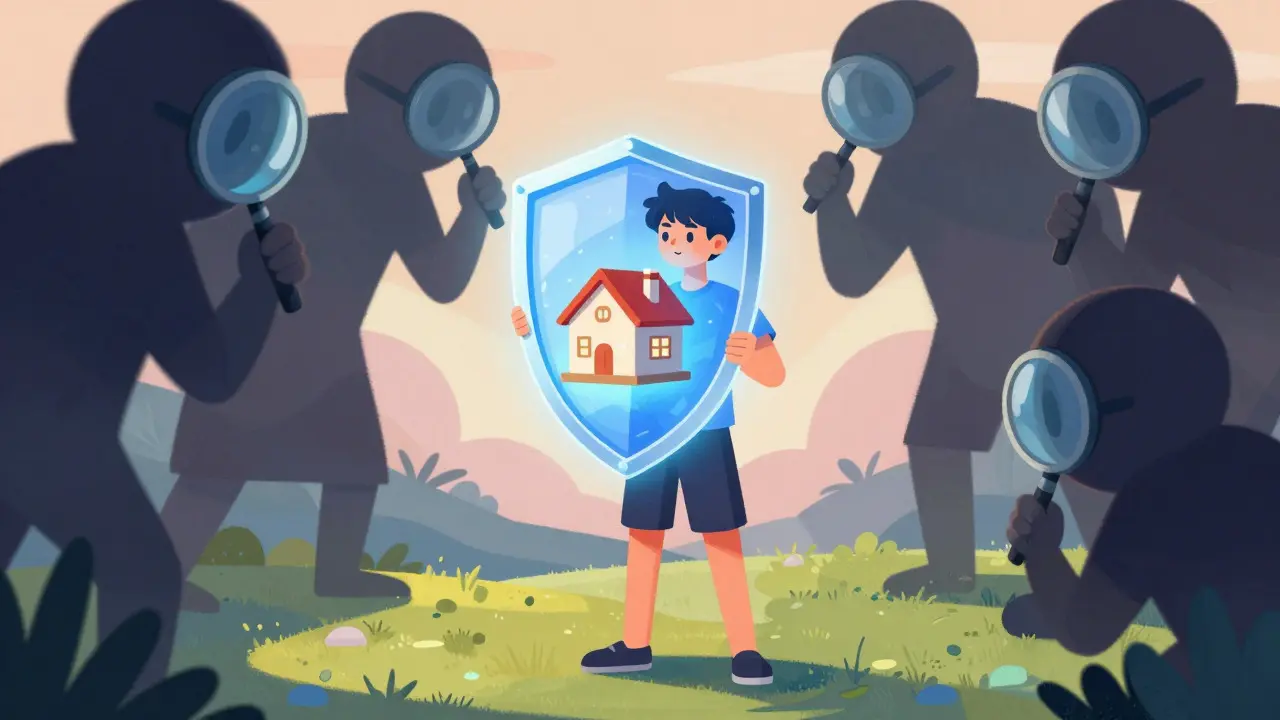
Every time you log into a new service, sign up for an app, or show your ID at a bar, you are handing over pieces of your life to someone else's database. If that company gets hacked, your data is gone. But what if you could prove who you are without giving away your entire history? That is the core promise of Decentralized Identity, a system where you own your digital footprint instead of renting it from tech giants.
This isn't just about storing data on a blockchain. It is about using cryptography to let you share only exactly what needs to be shared, and nothing more. Here is how this technology flips the script on privacy and why it matters for anyone tired of data breaches.
The Core Problem with Centralized Databases
Right now, most of our identities live in silos. Your bank knows your address. Your university knows your grades. Your employer knows your job title. These entities act as gatekeepers. When you need to prove something-like that you are over 18 or that you have a valid driver's license-you often have to provide far more information than necessary. This is called "over-disclosure."
The biggest risk here is the single point of failure. If a central server holding millions of records gets breached, all those records are exposed at once. Think of the massive data leaks we see in the news every year. In a decentralized model, there is no central server to hack because the data isn't stored in one place. Instead, your identity is distributed across a network, secured by cryptographic keys that only you hold.
How Decentralized Identity Works
To understand the privacy benefits, you need to know the three players in this ecosystem. They are the Issuer, the Holder, and the Verifier.
- The Issuer: This is the entity that creates the credential. It could be a government agency issuing a passport, a university granting a degree, or a company providing an employee badge. They sign the data cryptographically but do not keep a copy of your wallet.
- The Holder: That is you. You store these credentials in a secure digital wallet on your phone or computer. You control when and where they are used.
- The Verifier: This is the person or organization checking your identity. A bouncer at a club, a landlord checking your lease eligibility, or an HR department verifying your qualifications. They check the cryptographic signature to ensure the credential is real, but they don't need to call the issuer to verify it.
This separation is crucial. Because the verifier doesn't need to query a central database, your personal data stays in your pocket. The verification happens locally through math, not through a phone call to a data center.
Key Technologies Enabling Privacy
Several specific technologies make this possible. Understanding them helps demystify how your privacy is actually protected.
Decentralized Identifiers (DIDs)
A DID is a unique string of characters that identifies you on a decentralized network. Unlike a username or email address, a DID contains no personal information. It is essentially a random hash. For example, your DID might look like did:example:123456789. It points to a document on a blockchain that contains your public key, but not your name, age, or address. This means even if someone sees your DID, they can't tell who you are unless you choose to reveal it.
Verifiable Credentials
These are the digital certificates you receive from issuers. They are cryptographically signed, which means any tampering is easily detected. More importantly, they support selective disclosure. This allows you to prove a specific fact without revealing the underlying data. For instance, you can prove you are over 18 without showing your actual date of birth. You can prove you have a valid driver's license without showing your home address.
Zero-Knowledge Proofs
This is the magic behind selective disclosure. Zero-knowledge proofs allow one party to prove to another that a statement is true without revealing any information other than the truth of that statement. In the context of identity, this means you can satisfy a requirement (like being a citizen) while keeping the rest of your profile hidden. It is the strongest form of privacy protection available in current cryptography.
Blockchain's Role in Trust Without Surveillance
Many people assume that putting identity on a blockchain means everyone can see everything. That is a common misconception. Most decentralized identity systems use a hybrid approach.
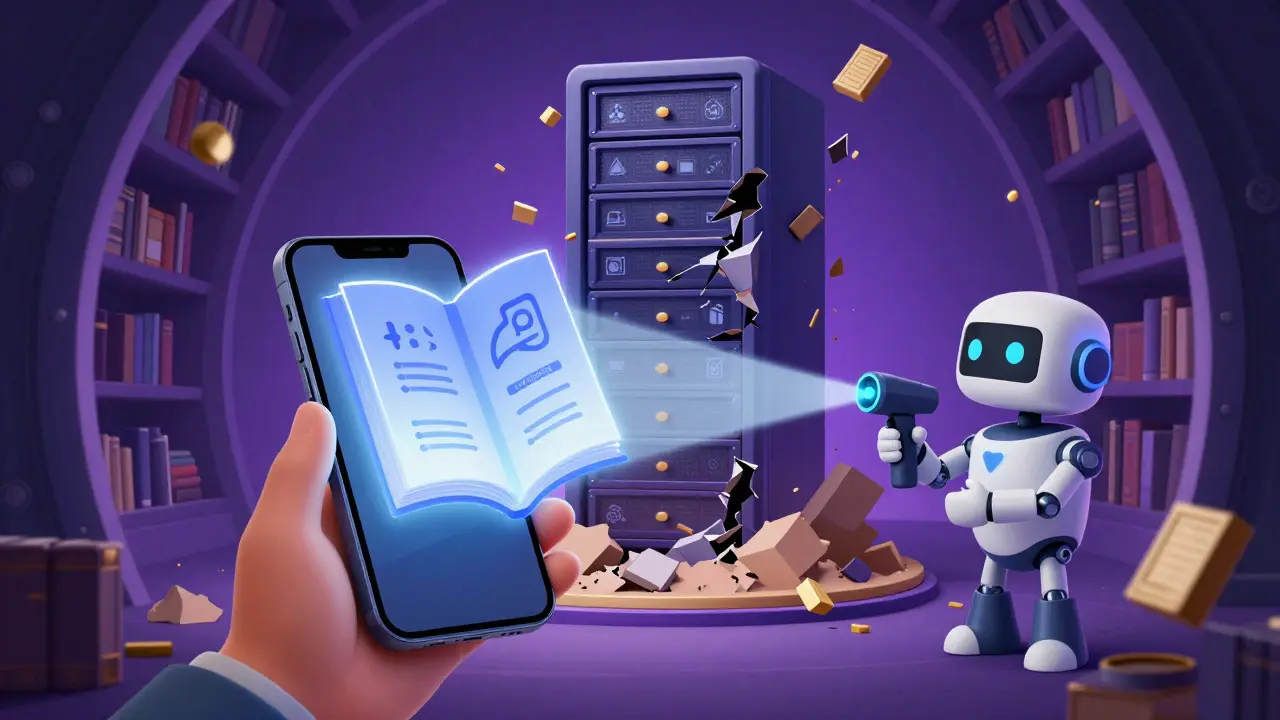
The immutable ledger of the blockchain stores the DIDs and the public keys. This ensures that once a credential is issued, its authenticity can be verified forever without trusting a central authority. However, the actual personal data (your name, photo, etc.) usually lives off-chain, inside your private digital wallet. The blockchain just holds the "anchor" that proves the credential exists and hasn't been altered.
This setup provides two major benefits:
- Immutability: Records can't be quietly changed by a corrupt administrator.
- Decentralization: No single company controls the network. If one node goes down, the others keep working.
So, while the blockchain provides the trust layer, your private data remains encrypted and local to you.
Comparing Centralized vs. Decentralized Identity
Let's look at the practical differences between the old way and the new way. This table highlights why the shift matters for your daily life.
| Feature | Centralized Identity | Decentralized Identity |
|---|---|---|
| Data Storage | Central servers owned by companies/govts | User-controlled digital wallets |
| Breach Risk | High (single point of failure) | Low (distributed, encrypted) |
| Data Sharing | All-or-nothing disclosure | Selective disclosure via ZKPs |
| Control | Issuer controls access | User controls access |
| Verification Method | Database lookup | Cryptographic proof |
Notice the shift in control. In centralized systems, you ask permission to use your data. In decentralized systems, you grant permission to view it. This subtle change has massive implications for privacy and autonomy.
Real-World Scenarios: Where Privacy Matters
Abstract concepts are hard to grasp, so let's look at concrete examples. Imagine you are applying for a job. Under the current system, you send your CV, which includes your full work history, education, and contact details. The employer now has all that data, whether they need it or not. With decentralized identity, you could present a verifiable credential that says "Candidate has relevant experience in software engineering" without revealing your previous employers' names or your exact salary history. You only unlock the specific data points required for the application.
Another scenario is healthcare. Currently, medical records are scattered across different providers. To get a second opinion, you often have to fax records or download PDFs. With decentralized identity, you could hold a verifiable credential for your blood type or allergies in your wallet. You can share this specific piece of info with a new doctor instantly, without giving them access to your entire medical history. This speeds up care while minimizing data exposure.
Challenges and Current Limitations
It is important to be realistic. Decentralized identity is not a silver bullet. There are hurdles to overcome before it becomes the standard.
- Interoperability: Different platforms use different standards. Making sure a credential issued in one country works in another is still a work in progress. Standards like W3C DIDs are helping, but adoption is uneven.
- User Experience: Managing private keys can be intimidating. If you lose your seed phrase, you lose your identity. Digital wallets are getting better, but they need to be as easy to use as password managers.
- Regulatory Compliance: Laws like GDPR give users the right to be forgotten. Since blockchain is immutable, deleting data is tricky. Solutions involve encrypting data so it becomes useless without the key, effectively "forgetting" it without erasing the record.
- Scalability: As more people join, the network must handle high transaction volumes. Layer-2 solutions and sidechains are being developed to address this.
Despite these challenges, the direction is clear. As privacy regulations tighten and data breaches become more costly, businesses and governments are increasingly interested in models that reduce their liability and respect user rights.
The Future of Self-Sovereign Identity
Self-sovereign identity (SSI) is the ultimate goal. It is a state where individuals have full control over their digital identity, free from third-party dependencies. We are already seeing pilots in Estonia, where citizens use e-residency cards backed by blockchain-like infrastructure. In New Zealand, there are ongoing discussions about integrating digital identity into government services to streamline processes while protecting citizen data.
The future likely involves a mix of centralized convenience and decentralized security. You might use a centralized app for everyday tasks, but under the hood, it will interact with decentralized protocols to ensure your data isn't trapped in one vendor's ecosystem. This hybrid approach offers the best of both worlds: ease of use and robust privacy.
Frequently Asked Questions
Is my data really safe on the blockchain?
Generally, yes, but with nuance. Personal data is usually stored off-chain in encrypted wallets. Only the cryptographic hashes and public keys are on the blockchain. This means hackers would need to break the encryption of your specific wallet to see your data, rather than hacking a central server. The blockchain itself provides integrity and availability, ensuring the record hasn't been tampered with.
What happens if I lose my phone?
If your digital wallet is on your phone, losing the device could lock you out of your credentials. Most modern wallets allow you to back up your recovery phrase (a set of words) securely. Some systems are also exploring social recovery methods, where trusted contacts can help restore access. It is crucial to treat your recovery phrase like a master key to your house-keep it safe, but don't write it on a sticky note on your monitor.
Do I need to buy cryptocurrency to use decentralized identity?
Not necessarily. While some networks require small fees paid in native tokens to write DIDs to the chain, many emerging solutions use gasless relayers or layer-2 rollups that minimize costs. The focus is on identity, not speculation. You shouldn't need to be a crypto trader to benefit from a private digital ID.
Can companies track me if I use decentralized identity?
Much harder than before. Since you control the disclosure, you can use different DIDs for different contexts. For example, you could have one DID for shopping and another for professional networking. By using zero-knowledge proofs, you can prove attributes (like age) without linking them to a persistent identifier. This makes cross-context tracking significantly more difficult compared to traditional cookies and account logins.
Is decentralized identity ready for mass adoption today?
It is in early stages. You will find it in specific niches like supply chain tracking, enterprise B2B verification, and pilot government programs. For the average consumer, it is not yet the default. However, as mobile wallets improve and standards mature, expect to see it integrated into mainstream apps within the next few years. Start paying attention to the standards being adopted by major tech firms and governments.

Rebecca Andrews
I'm a blockchain analyst and cryptocurrency content strategist. I publish practical guides on coin fundamentals, exchange mechanics, and curated airdrop opportunities. I also advise startups on tokenomics and risk controls. My goal is to translate complex protocols into clear, actionable insights.
22 Comments
-
Jillian Pye
August 24, 2026 AT 11:55I find the concept of 'self-sovereignty' quite poetic when applied to digital footprints 🌿 It reminds me of how we curate our physical spaces; we choose who enters and what they see. The idea that a bouncer at a club doesn't need to call the government to verify your age is actually quite liberating in a philosophical sense. It shifts the burden of proof from the state to the individual, which is a heavy lift but also empowering.
-
Martha Packard
August 25, 2026 AT 17:45You're all missing the point. This isn't privacy, it's obfuscation. If you have nothing to hide, why do you need zero-knowledge proofs? It's just a new way for criminals to operate without being tracked by the benevolent eye of the state. The blockchain is a public ledger, people! Public means everyone can see it if they bother to look. Don't be fooled by the marketing fluff about 'owning your data'.
-
Jarnail Singh
August 26, 2026 AT 00:40Hello friends 😊 I must say, this technology is a marvel of modern engineering, truly showcasing the pinnacle of decentralized logic which India has been pioneering in its own unique way for decades now with our robust digital infrastructure. It is fascinating to see how the West is finally catching up to what we understood about identity verification long before these fancy terms like 'DIDs' were coined, and I hope that as we integrate these systems globally, we remember that interoperability is key because if your credential doesn't work across borders, it is merely a digital paperweight rather than a true sovereign identity tool that respects the dignity of the user while maintaining the necessary checks and balances required by any civilized society to ensure order and stability. 🇮🇳✨
-
Ashwini Chaskar
August 27, 2026 AT 20:32its so selfish honestly you think you are protecting yourself but really you are just making life harder for everyone else who needs to verify you like my doctor or my landlord who just wants to do their job without having to learn cryptography every time someone walks in the door i feel like we are becoming too focused on our own little bubbles and forgetting that community requires some level of shared trust and transparency not just hidden behind code
-
Sam Ariafar
August 28, 2026 AT 10:51We need to be careful here. While the tech is sound, the moral hazard is real. If we lose the ability to audit a system centrally, do we really have accountability? Privacy is a right, yes, but anonymity is often a shield for wrongdoing. We must ensure that 'decentralized' does not become synonymous with 'unaccountable' in the eyes of the law.
-
Jane yuan
August 30, 2026 AT 10:29The US leads in innovation, but we always forget to build the safety rails. Estonia did it. New Zealand is doing it. We are still arguing about whether to use a seed phrase or a password. Typical.
-
Ian Munro
August 31, 2026 AT 12:54The UX hurdle is the biggest barrier. If losing a phone means losing your identity, adoption will stall. Social recovery is promising but complex. Until wallets are as easy as Venmo, this remains a niche tool for tech enthusiasts.
-
Trista Dennis
September 1, 2026 AT 23:29Oh, look at us, playing god with our own souls via hash functions. How very avant-garde. Tell me, does the bouncer at the club get a discount if you prove you're over 18 using a zero-knowledge proof, or does he just stare at his phone confused? Because that seems likely.
-
nic c
September 3, 2026 AT 06:16Let’s not pretend this is magic, folks. It’s just math wearing a trench coat. The real drama is that we’re replacing one set of gatekeepers (big tech) with another (crypto whales and protocol governors). Who holds the keys to the kingdom when the network forks? Spoiler: it’s not you. It’s the guys writing the smart contracts. And if those contracts have bugs, your 'sovereign' identity is just a line item in a bug bounty report. Beautifully written article, but let’s keep the hype train running slowly, shall we? The scenery is lovely, but the brakes are non-existent.
-
Kevin Payette
September 3, 2026 AT 20:37Privacy is a myth.
You want to be invisible? Fine. But don't act surprised when the system breaks down because nobody trusts anyone.
Trust is dead. Long live the algorithm. -
Rebecca Springer
September 5, 2026 AT 10:44In many cultures, identity is communal, not individual. This Western-centric view of 'owning' your data might clash with societies where reputation is held collectively. It’s important to consider how this tech adapts to different cultural norms of privacy and sharing. We shouldn't export our specific definition of autonomy without checking if it fits elsewhere.
-
J Shepherd
September 6, 2026 AT 12:48From a dev perspective, the key management is the nightmare fuel here. We talk about ZKPs like they are free, but the computational overhead on mobile devices is still significant. We need better hardware acceleration for elliptic curve operations before this hits the mainstream consumer market. Great writeup on the theory, though. Solid breakdown of the Issuer/Holder/Verifier triad.
-
Alan Hawkins
September 6, 2026 AT 15:41I agree with the points about interoperability. It would be great if major banks started adopting W3C standards sooner rather than later. It feels like we are reinventing the wheel with proprietary solutions. Collaboration is key here.
-
Steve Sulley
September 7, 2026 AT 02:26imho this is all just a big scam to sell us more tokens. you dont need blockchain for id cards. a simple database with good encryption works fine. why do we need to decentralize everything? its just a fad that will die out in 5 years like nft art. the only thing decentralized is the responsibility for fixing it when it breaks. lol
-
Linda Jevne
September 8, 2026 AT 08:02There is something deeply beautiful about the idea of 'selective disclosure.' It mirrors the way we navigate social interactions in the real world-we reveal pieces of ourselves based on context, trust, and necessity. To digitize that nuance, to allow the machine to understand 'I am an adult' without demanding 'Here is my birth certificate,' feels like a restoration of human dignity in the digital sphere. It transforms the cold transaction into a dance of mutual respect between the holder and the verifier. I wonder if this could reshape how we approach consent in healthcare, allowing patients to feel less like files and more like humans?
-
Carey Thornton
September 10, 2026 AT 07:56Finally, an article that doesn't treat us like idiots. Most 'explanations' of SSI are written by people who have never used a wallet. This gets it. The hybrid model is the only sane path forward. Pure decentralization is for anarchists, not citizens. We need the anchor, the immutability, but we need the privacy of the local wallet. It's the perfect balance of control and convenience. Bravo. 👏
-
David Powell
September 11, 2026 AT 17:42Sure, 'you own your data.' Right up until you need to reset your password because you lost your brain. Then who owns it? The recovery service provider, probably. Let's not romanticize the chaos of self-custody.
-
Ellie Brooks
September 11, 2026 AT 22:15This gives me so much hope! I've been following the EU's eIDAS 2.0 regulations and seeing similar concepts pop up there. It's amazing to see how quickly the tech is maturing. I love the example of the healthcare records-just imagine how much faster emergency care would be if a paramedic could instantly verify your allergies without digging through paper files or calling three different hospitals. It really is a game changer for everyday life, not just for tech geeks. I can't wait to see this integrated into my phone's native features!
-
Dave Worth
September 12, 2026 AT 01:20It's all a front for the NSA. 🕵️♂️ They don't want to hack your server, they want to hack your KEY. Once you have a private key, you have a target on your back. Decentralized just means they have to work harder to track you. The 'zero-knowledge' part is just for show to make us feel safe while they log every DID interaction on a sidechain we don't know about. Wake up people! 🚨
-
Kelechi Precious Nwachukwu
September 13, 2026 AT 06:22Its wild to think about this from a developing nation perspective. In Nigeria, we struggle with basic ID fraud and duplicate records. This tech could fix that, but only if the infrastructure supports it. Can you run a node on a connection that drops every hour? Probably not. So for us, the 'decentralized' part might just mean 'more complicated.' But the privacy aspect? That is huge. We value our family privacy highly. Maybe this is the future. 🌍
-
Valentine Okpala
September 14, 2026 AT 10:47To be fair, the article glosses over the energy consumption of the underlying chains, which is a bit ironic given the 'efficiency' narrative. But otherwise, a solid overview. The comparison table was helpful for the layperson. 📉🔋


Write a comment
More Articles
What is Memeseco (MECO)? A Deep Dive into the AI Meme Coin
Discover what Memeseco (MECO) is, its AI meme concept, price volatility, and risks. Learn how to buy this BNB Chain token and why it remains a high-risk micro-cap asset.

Paul Needham
August 24, 2026 AT 11:47Oh great, another tech solution to a human problem. You know what else fixes data breaches? Just stop selling our data in the first place. But sure, let's trust a distributed ledger instead of a guy in a suit.