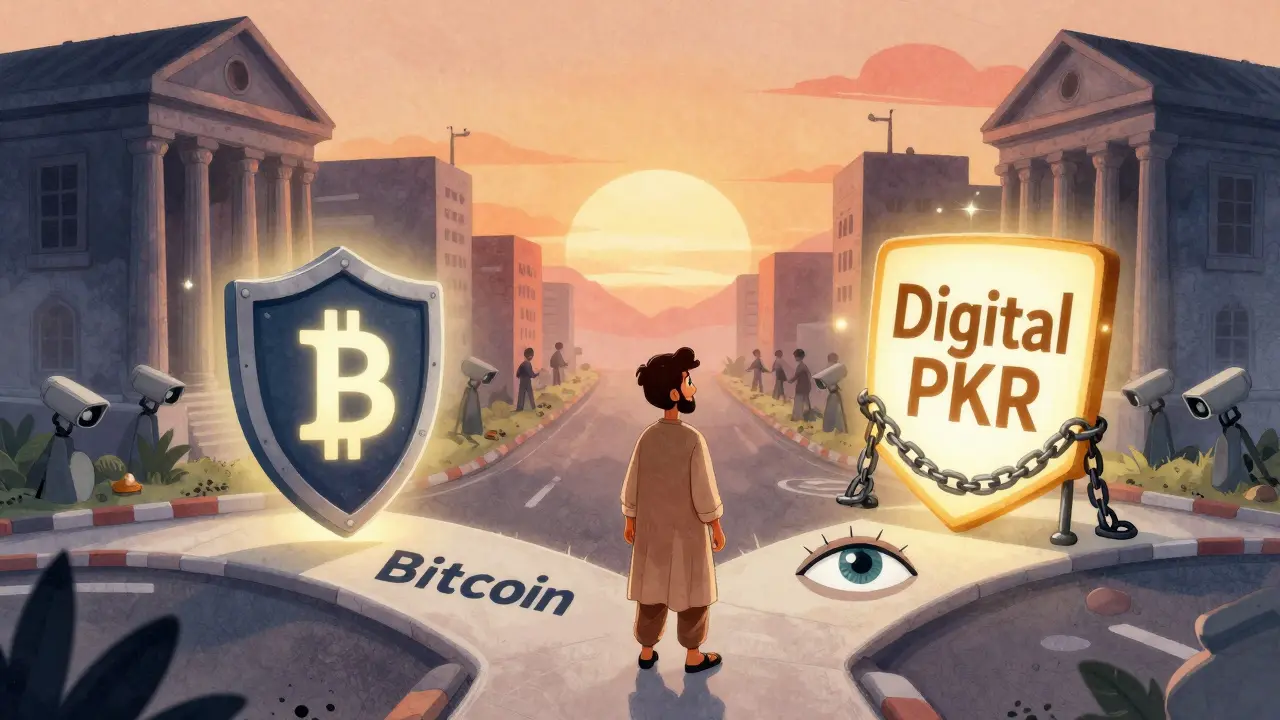
Before 2025, owning Bitcoin or Ethereum in Pakistan was a gray zone-technically against the rules, but widely practiced. Millions of Pakistanis held crypto anyway, using peer-to-peer platforms and offshore exchanges to send remittances, invest, or simply protect savings from inflation. The State Bank of Pakistan had banned banks from handling crypto transactions since 2018, but that didn’t stop the market. It just pushed it underground. By 2024, estimates put the value of crypto held by Pakistanis at over $21 billion. That’s more than the annual budget for Pakistan’s entire education sector. And then, in 2025, everything changed.
The 2025 Legalization: What Actually Happened
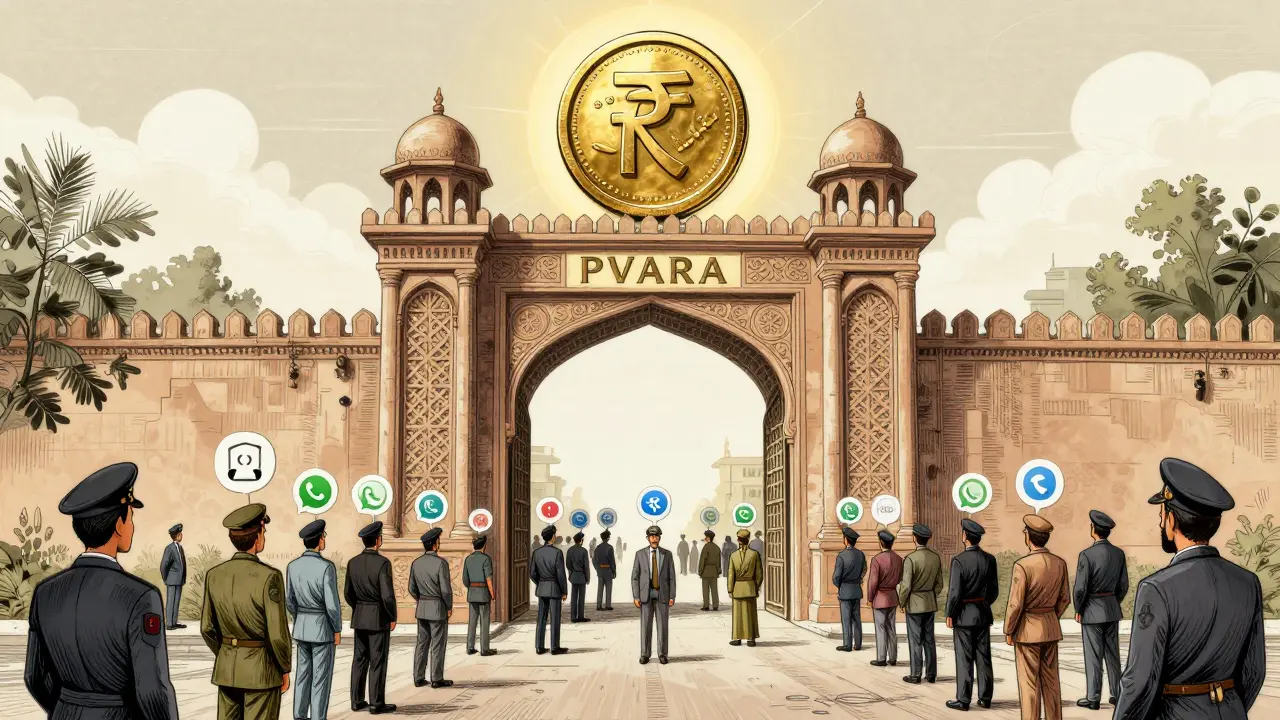
On July 8, 2025, President Asif Ali Zardari signed the Virtual Assets Bill 2025 into law as an ordinance. This wasn’t just a policy tweak. It was a full legal reversal. For the first time, owning, buying, and transferring cryptocurrencies became officially legal in Pakistan. The law didn’t just remove the ban-it created a new regulator: the Pakistan Virtual Asset Regulatory Authority (PVARA). This independent body now handles everything from licensing crypto exchanges to enforcing anti-money laundering rules.
But here’s the twist: legalization didn’t mean freedom. The government didn’t open the floodgates. Instead, it built a cage. You can hold crypto. You can send it. You can even trade it on licensed platforms. But you can’t use it to buy groceries, pay your phone bill, or tip a freelancer. Retail payments with Bitcoin, Ethereum, or any altcoin are still banned. The same goes for open trading on decentralized exchanges. Only approved, licensed platforms can operate-and they’re under heavy surveillance.
The Digital Pakistani Rupee: The Real Star of the Show
While crypto was being legalized, the State Bank of Pakistan quietly rolled out its own digital currency: the Digital Pakistani Rupee (Digital PKR). This isn’t Bitcoin. It’s not even close. The Digital PKR is a Central Bank Digital Currency (CBDC), fully controlled by the government. Think of it like digital cash, but with a built-in tracking system. Every transaction is recorded. Every transfer can be monitored. No anonymity. No decentralization.
The government’s goal? Replace informal remittance channels and reduce reliance on foreign payment systems. Pakistan receives over $30 billion in remittances every year, mostly from workers in the Gulf and Europe. Right now, those funds flow through hawala networks or expensive wire services. The Digital PKR aims to cut costs, speed up transfers, and bring that money into the formal banking system. It’s a smart move-but it’s not crypto. It’s state-controlled money with blockchain tech.
How It Compares to Other Countries
Pakistan’s approach is unlike anything else in the world. In El Salvador, Bitcoin is legal tender-you can pay for coffee with it. In the United States, you can trade crypto on Coinbase, use it to buy a house, or even get paid in it. In the UAE, Dubai has crypto-friendly free zones where startups can raise funds and list tokens without fear.
Pakistan? No. You can’t do any of that. The country’s model looks more like China’s: allow holding, ban spending, and push your own digital currency. Unlike India, which taxes crypto trades heavily but lets people buy and sell freely, Pakistan doesn’t even let you trade altcoins on unlicensed platforms. It’s not about innovation. It’s about control.
This makes Pakistan’s model risky. On one hand, it brings $21 billion out of the shadows and creates tax revenue. On the other, it kills any chance of becoming a regional fintech hub. Startups won’t build apps for a market where you can’t use crypto to pay for services. Investors won’t fund projects that can’t scale beyond remittance corridors.
Who Benefits? Who Gets Left Behind
The winners are clear: licensed crypto exchanges, large remittance companies, and the State Bank. With PVARA’s licensing system, only well-funded firms with legal teams can apply. Small operators? Out. The old P2P traders who ran Telegram groups and WhatsApp channels? Now they’re either out of business or forced to register under strict rules.
What about regular users? Many are relieved they’re no longer breaking the law just for holding Bitcoin. But they’re frustrated. A Reddit thread from October 2025 had over 12,000 comments. The top complaint? "I can own crypto, but I can’t spend it. What’s the point?" Another user wrote: "They legalized it so they can tax it. Not so we can use it."
The real losers? The unbanked. Millions of Pakistanis don’t have bank accounts. They rely on mobile wallets or cash. The Digital PKR requires a national ID and a registered phone number. That excludes rural populations, informal workers, and refugees. Meanwhile, the government is spending millions building infrastructure for a system that won’t reach the people who need it most.

The Road Ahead: 2026 and Beyond
As of early 2026, PVARA is still hiring. The authority needs lawyers, data analysts, blockchain engineers, and compliance officers. Training programs are underway for banks and fintech firms. The Digital PKR pilot is running in three cities-Karachi, Lahore, and Faisalabad-with plans to expand to 10 more by mid-year.
But here’s the big question: will Pakistan loosen the rules? Right now, the law is rigid. No retail use. No decentralized trading. No foreign crypto platforms. But the market is already pushing back. Some users are finding workarounds-using crypto as collateral for loans, or converting it to gift cards on gray-market platforms. Others are moving to neighboring countries to trade freely.
If Pakistan wants to stay relevant, it will have to adapt. The world isn’t waiting. Countries like Thailand, Nigeria, and Indonesia are rolling out more open frameworks. Pakistan’s model might work for short-term control-but long-term? It risks becoming a footnote in crypto history: the country that legalized crypto… but refused to let anyone use it.
What This Means for You
If you’re a Pakistani crypto holder: you’re now legal. But don’t expect to use it like cash. Keep it as a store of value. Use licensed exchanges. Watch for updates on the Digital PKR rollout.
If you’re a business owner: don’t build a payment system around crypto. It won’t work. But if you’re in remittances or fintech, PVARA’s licensing could be your gateway. Apply early. The rules are strict, but the first movers will get the best deals.
If you’re an investor: this isn’t a boom. It’s a controlled experiment. The $21 billion market is real-but it’s trapped. Until Pakistan allows real spending and open trading, don’t expect massive growth. The real value here is in the government’s digital currency, not Bitcoin.

Rebecca Andrews
I'm a blockchain analyst and cryptocurrency content strategist. I publish practical guides on coin fundamentals, exchange mechanics, and curated airdrop opportunities. I also advise startups on tokenomics and risk controls. My goal is to translate complex protocols into clear, actionable insights.
13 Comments
-
Mary Scott
March 2, 2026 AT 07:44this is a trap. theyre using this to track every single transaction. next thing u know ur bank account gets frozen because u bought eth on a licensed exchange. they dont care about innovation. they care about control. #bigbrother
-
Jeremy buttoncollector
March 3, 2026 AT 05:17The ontological paradox here is that the state has co-opted the very decentralizing force of blockchain to reinforce centralized surveillance infrastructure. The Digital PKR isn't a currency-it's a behavioral nudge matrix wrapped in distributed ledger theory. The PVARA isn't a regulator-it's a compliance engine with a blockchain veneer. We're witnessing performative liberalism in financial governance.
-
Michelle Xu
March 3, 2026 AT 23:43I appreciate how nuanced this breakdown is.
It's fascinating how Pakistan is walking this tightrope-legalizing ownership to bring capital into the system, while blocking retail use to protect monetary sovereignty. The Digital PKR is clearly the real play here. It’s not about banning crypto-it’s about replacing its utility with something the state can fully audit and manage. Smart, if cold. -
Amita Pandey
March 4, 2026 AT 17:15The irony is palpable. A nation that has historically struggled with financial inclusion now imposes a digital currency that excludes the unbanked. This is not progress. It is technocratic paternalism dressed in blockchain aesthetics. The government's priority is surveillance, not empowerment. The $21 billion market is not a victory-it is a statistic.
-
Tracy Peterson
March 6, 2026 AT 14:37You think they’re being sneaky? They’re being *brilliant*. Let people think they’re free, while the real power moves into the Digital PKR. That’s how you win. No one’s going to protest when they’re told they can ‘own’ crypto. But if you try to use it? Boom-compliance flag. This isn’t repression. It’s evolution. And if you’re not on the right side of the ledger? You’re just noise.
-
George Suggs
March 7, 2026 AT 22:19honestly the most realistic move i’ve seen from any country
no one wants to be el salvador
they just want to stop the leak
and the digital pkr is the real deal -
Dianna Bethea
March 9, 2026 AT 17:26I’ve been following this since 2023. The P2P traders were the unsung heroes. Now they’re either licensed or gone. I get why the government did it-remittances are too big to ignore. But the exclusion of rural users? That’s a failure. The Digital PKR needs offline access points-phone booths, kiosks, village agents. Not just ID and a smartphone. That’s not inclusion. That’s digital apartheid.
-
Alyssa Herndon
March 11, 2026 AT 08:00I just hope people don’t forget that crypto was never really about money for most of us
it was about autonomy
and now we’ve traded that for a government-approved wallet
we’re not free
we’re just less illegal -
Elana Vorspan
March 13, 2026 AT 03:38this is actually kind of sweet 🥺
they didn’t outlaw it, they didn’t ignore it
they made a middle path
and yeah the restrictions suck
but maybe… maybe this is how it starts?
like, imagine if in 5 years they let you pay for chai with crypto? 🤞 -
Kenneth Genodiala
March 13, 2026 AT 10:15The fact that you’re calling this "legalization" is laughable. You don’t legalize something and then make it unusable. This is not a regulatory framework-it’s a performance. Pakistan is not a crypto hub. It’s a compliance theater stage with a blockchain backdrop. The only thing being regulated is public perception.
-
Michael Rozputniy
March 15, 2026 AT 02:02They’re not just tracking transactions. They’re building a behavioral database. Every time someone converts crypto to PKR, it’s logged. Every exchange login. Every withdrawal. In five years, this data will be merged with national ID, tax records, and social credit scores. This isn’t finance. It’s social engineering under the guise of innovation.
-
Danny Kim
March 15, 2026 AT 21:39so they legalized crypto... but only so they could tax it and track it?
classic. next they’ll make us sign a waiver saying we "voluntarily surrendered our financial privacy for national security"
and then charge us 18% for the privilege


Write a comment
More Articles
BitMEX Crypto Exchange Review: Features, Risks, and Who It's Really For
BitMEX is a top-tier crypto derivatives exchange for experienced traders seeking high-leverage Bitcoin trading. With 100x leverage, deep liquidity, and zero hacks, it's unmatched for pros - but not for beginners or U.S. users.

christopher luke
February 28, 2026 AT 18:18This is actually kinda beautiful 😊
They didn’t just legalize crypto-they made it a controlled experiment. Kinda like letting someone borrow your car but only if they park it in the garage and never drive it. Still, better than jail time for holding BTC. 🚀