
Imagine trying to find a specific grain of sand on every beach in New Zealand. You don't know which beach, you don't know which pile, and you can only check one grain at a time. Now imagine that as more people join the hunt, the rules change so it still takes about ten minutes for someone to find that grain. This is essentially what Bitcoin mining is all about. At the heart of this digital gold rush lies a simple yet powerful concept: the nonce. It’s a small number that miners tweak endlessly to solve a cryptographic puzzle, securing the network and regulating how fast new blocks are added.
If you’ve ever wondered why your home computer can’t mine Bitcoin anymore, or why mining pools are such big deals, understanding the relationship between the nonce range and mining difficulty is the key. These two elements work together like a lock and a key, ensuring the blockchain remains secure without becoming too easy or too hard to maintain.
What Exactly Is a Nonce?
In the world of Proof of Work, a nonce stands for "number used once." It is a 32-bit integer field located in the Bitcoin block header. Miners start with a block template containing transaction data, a timestamp, and a reference to the previous block. They then plug these details into a hashing algorithm called SHA-256. The goal? To produce a hash output that is numerically lower than a specific target value set by the network.
Here’s where it gets interesting. The hash function is deterministic-if you input the same data, you get the same result. But it’s also unpredictable; changing just one bit of the input completely scrambles the output. Since miners can’t predict which combination will work, they have to guess. They do this by incrementing the nonce value from 0 up to its maximum limit. If they reach the end of the range (4,294,967,296 possible values) without finding a valid hash, they must change other parts of the block, like the timestamp or the order of transactions, and reset the nonce to zero. This process repeats billions of times per second across the global network.
| Component | Description | Role in Mining |
|---|---|---|
| Version | Block version number | Signals protocol upgrades |
| Previous Hash | Hash of the preceding block | Links blocks together |
| Merkle Root | Hash of all transactions | Summarizes transaction data |
| Timestamp | Time block was created | Can be tweaked within limits |
| Bits | Current difficulty target | Sets the puzzle difficulty |
| Nonce | 32-bit random number | The primary variable miners adjust |
The Math Behind Mining Difficulty
You might hear terms like "difficulty" thrown around loosely, but in Bitcoin, it’s a precise mathematical parameter. Difficulty isn’t just a vague measure of hardness; it’s a representation of how many hashes you need to try on average to find a valid block. When Bitcoin launched in 2009, the difficulty was 1. Today, it’s in the trillions. This massive increase reflects the sheer amount of computing power now dedicated to the network.
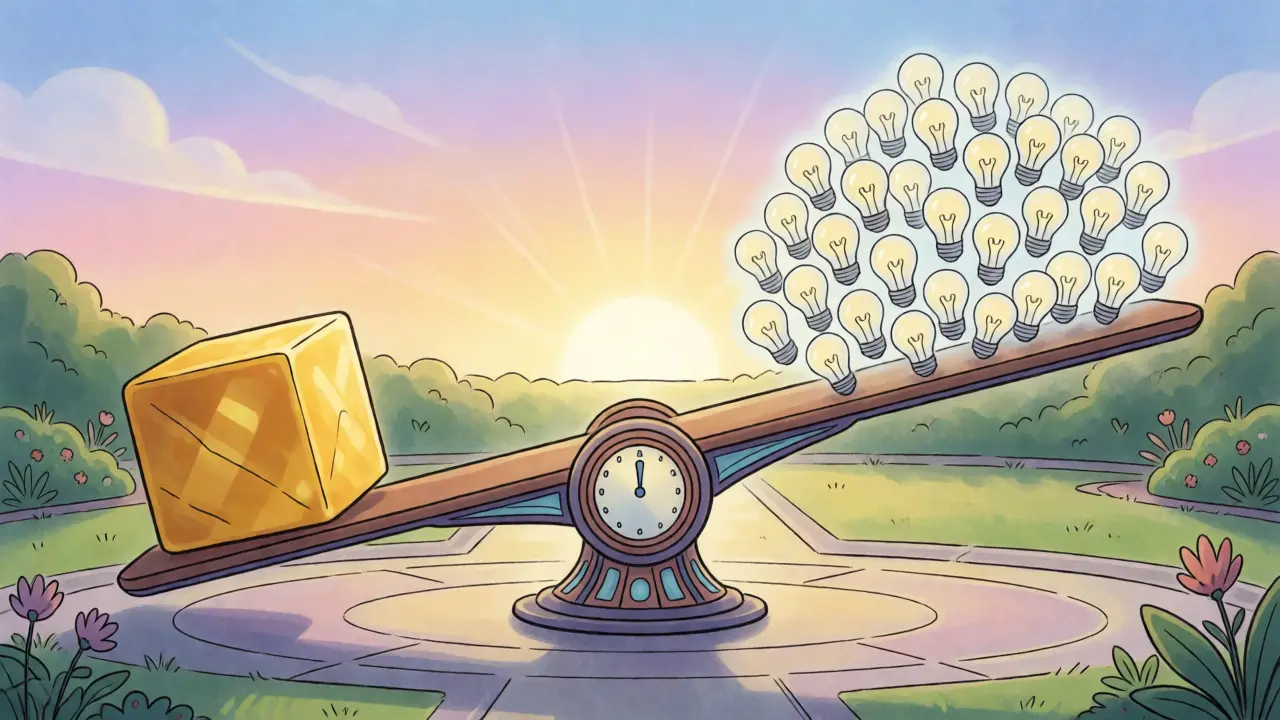
The network adjusts this difficulty automatically every 2,016 blocks-roughly every two weeks. The logic is straightforward: if the last 2,016 blocks were mined faster than the expected 10-minute interval, difficulty goes up. If they took longer, difficulty goes down. This self-correcting mechanism ensures that regardless of whether thousands of new ASIC machines come online or half the network shuts down due to a power outage, the pace of new coins entering circulation remains steady.
Why does this matter to you? Because it directly impacts profitability. As difficulty rises, the chance of any single miner finding a block decreases. This is why solo mining has become nearly impossible for individuals using standard hardware. Unless you control a significant portion of the global hash rate, you’re likely waiting years for a reward.
When the Nonce Runs Out: The Extra Nonce Solution
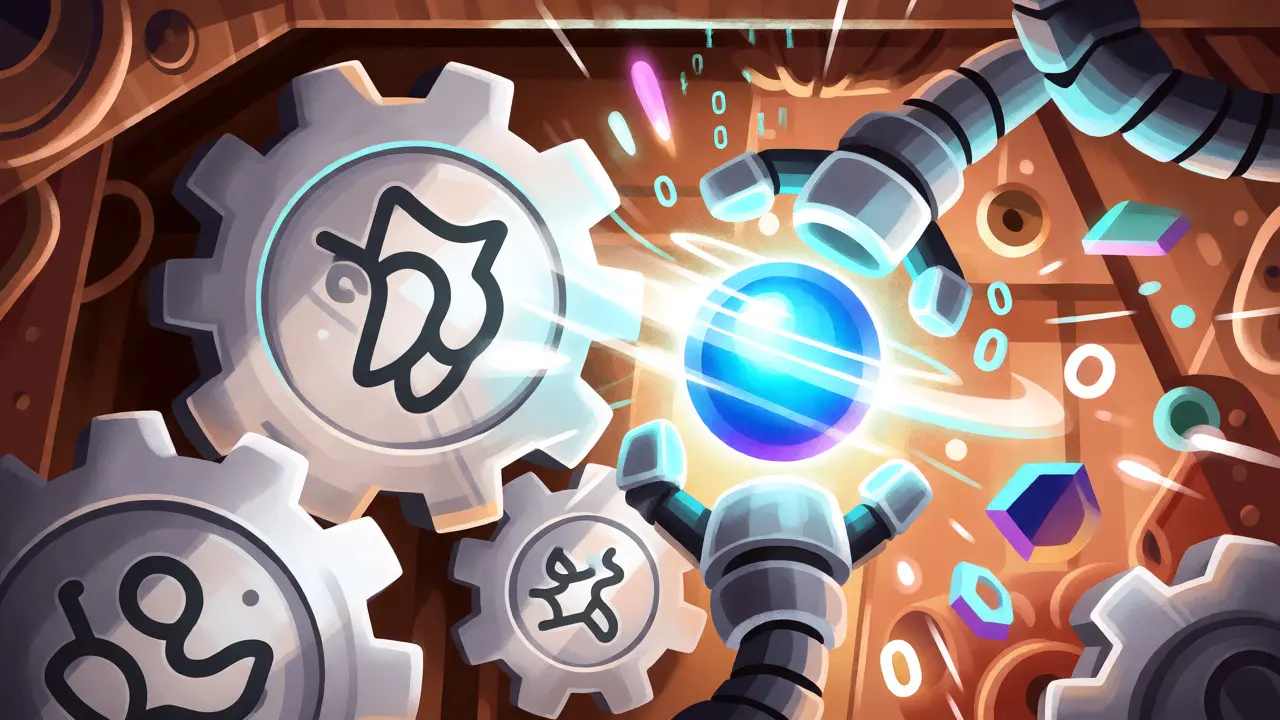
A common misconception is that miners just keep counting up forever. But remember, the nonce is only 32 bits long. That means there are only about 4.3 billion possibilities. In the early days of Bitcoin, exhausting this range took hours. Today, with modern Application-Specific Integrated Circuits (ASICs), a miner can burn through the entire nonce space in milliseconds.
So, what happens when you hit the ceiling? Miners use an "extra nonce." This is a smaller field embedded within the coinbase transaction-the first transaction in a block that pays the miner. By changing the extra nonce, miners effectively create a new block template even if the main nonce hasn’t changed. This allows them to continue searching for a valid hash without waiting for new transactions to arrive or the clock to tick forward.
This workaround highlights a clever design choice by Satoshi Nakamoto. While the fixed nonce size seems limiting, it forces miners to constantly rebuild the Merkle root (the hash of all transactions). This adds entropy and security, preventing specialized hardware from pre-computing solutions too easily. However, it does mean that mining software needs to be sophisticated enough to manage these rotations efficiently.
How Hash Rate Influences Your Mining Experience
Hash rate is the total computational power securing the network, measured in exahashes per second (EH/s). As of late 2023, the Bitcoin network hovered around 500-600 EH/s. This number fluctuates based on hardware efficiency, electricity costs, and regulatory environments. For example, when China banned mining in 2021, the hash rate dropped significantly, causing difficulty to decrease temporarily until miners relocated to other regions.
For individual miners, tracking hash rate trends is crucial. A sudden spike often signals that large industrial players are coming online, which will soon drive up difficulty. Conversely, a drop might present a brief window of opportunity for smaller operations. Tools like blockchain explorers provide real-time data on current difficulty and estimated block times, helping you gauge whether your setup is competitive.
It’s worth noting that different cryptocurrencies handle nonces differently. Litecoin, for instance, uses a similar structure but targets a 2.5-minute block time, leading to more frequent adjustments. Ethereum moved away from Proof of Work entirely, eliminating the need for nonces altogether. Understanding these differences helps if you’re considering altcoin mining, though Bitcoin remains the dominant force in terms of security and recognition.
Practical Tips for Navigating Nonce Management
If you’re setting up a mining rig, don’t underestimate the importance of software configuration. Poor management of the nonce and extra nonce fields can lead to rejected shares-work submitted to a pool that doesn’t meet the difficulty requirement due to timing errors or stale templates.
- Monitor Rejection Rates: High rejection rates often indicate issues with network latency or improper nonce handling. Aim for less than 1% rejection.
- Update Firmware Regularly: Hardware manufacturers frequently release updates that optimize nonce iteration speed and reduce energy consumption per hash.
- Understand Pool Settings: Some pools allow you to adjust the "difficulty multiplier," which changes how often you submit shares. Higher multipliers reduce network overhead but require higher local difficulty settings.
Also, consider the environmental impact. The constant rebuilding of block headers consumes energy. Efficient miners focus not just on raw hash rate but on joules per terahash (J/TH). Modern ASICs strive to minimize this metric, making the most of every watt consumed while cycling through nonce ranges.
The Future of Nonces and Difficulty
Will the 32-bit nonce limit ever become a problem? Experts debate this. Some argue that as quantum computing advances, we might see proposals to expand the nonce space. Others believe the current system is robust enough for decades. BIP-320, a proposed improvement, suggests ways to enhance auxiliary proof-of-work mechanisms, potentially addressing scalability concerns without breaking backward compatibility.
Regardless of technical tweaks, the core principle remains: difficulty adjusts to maintain stability. Whether we’re talking about GPUs in 2010 or industrial farms in 2026, the interplay between the nonce and difficulty ensures that Bitcoin continues to produce blocks at a predictable rate. This predictability is what makes it a reliable store of value and a secure ledger.
What happens if a miner exhausts the nonce range?
When a miner tries all 4.29 billion possible nonce values without finding a valid hash, they modify other fields in the block header, such as the timestamp or the extra nonce in the coinbase transaction. This creates a new block template, allowing them to restart the nonce count from zero and continue searching.
How often does Bitcoin mining difficulty adjust?
Bitcoin difficulty adjusts every 2,016 blocks, which typically occurs approximately every two weeks. The adjustment aims to keep the average time between blocks close to 10 minutes, compensating for changes in the network's total hash rate.
Why can't I mine Bitcoin on my laptop anymore?
The difficulty of mining has increased exponentially since Bitcoin's inception. General-purpose CPUs and GPUs are no longer efficient enough to compete with specialized ASIC hardware designed specifically for the SHA-256 algorithm. Solo mining on a laptop would statistically take centuries to find a block.
Is the nonce range a security risk?
No, the fixed 32-bit nonce range is considered a feature, not a bug. It forces miners to frequently update the Merkle root, adding complexity and entropy to the hashing process. This prevents certain types of pre-computation attacks and maintains the integrity of the Proof of Work consensus.
Does a higher hash rate always mean higher profits?
Not necessarily. While a higher network hash rate indicates strong security, it also increases competition. If your hardware's efficiency (hashes per watt) doesn't improve at the same rate as the network's total hash rate, your profitability may decrease despite the network growing stronger.

Rebecca Andrews
I'm a blockchain analyst and cryptocurrency content strategist. I publish practical guides on coin fundamentals, exchange mechanics, and curated airdrop opportunities. I also advise startups on tokenomics and risk controls. My goal is to translate complex protocols into clear, actionable insights.
20 Comments
-
Stephen McElreavy
September 4, 2026 AT 22:17The interplay between the 32-bit nonce and the extra nonce in the coinbase transaction is truly the unsung hero of Bitcoin's security model. It is a masterclass in cryptographic engineering that prevents pre-computation attacks while maintaining network stability.
Many newcomers overlook how the Merkle root rotation forces entropy into every hash attempt, which is critical when ASICs can burn through the entire nonce space in mere milliseconds. Without this mechanism, the deterministic nature of SHA-256 would allow specialized hardware to dominate far more aggressively than they already do.
We must appreciate that Satoshi designed this system with foresight, knowing that computational power would grow exponentially over decades. The self-correcting difficulty algorithm acts as a digital thermostat, ensuring the heartbeat of the blockchain remains steady at ten-minute intervals regardless of global hash rate fluctuations.
This robustness is why Bitcoin remains the gold standard for decentralized consensus, even as altcoins experiment with different consensus mechanisms like Proof of Stake or Delegated Proof of Stake. The elegance lies in its simplicity: one variable changes, everything else adjusts to maintain equilibrium.
For those studying protocol design, understanding these foundational elements is essential before diving into complex Layer 2 solutions or cross-chain interoperability protocols. It reminds us that security often comes from constraints rather than infinite possibilities. -
Indu Nair
September 6, 2026 AT 02:01You are absolutely right! This is exactly what we need to understand to stop worrying about mining becoming impossible!
People get so scared by the numbers but they forget the system adapts automatically. It’s beautiful really. We just need to keep learning and stay optimistic about the future of tech! -
Dominic Jones
September 7, 2026 AT 15:57Indeed, the adaptability is key... yet one must consider the philosophical implications of energy consumption vs security trade-offs...
The fact that difficulty adjusts every 2,016 blocks creates a predictable rhythm... almost like a digital heartbeat...
However, some argue that this predictability itself is a vulnerability if attackers can time their entry perfectly...
Still, for now, it works... and that is what matters most... -
Sheryl Nelsen Hutton
September 9, 2026 AT 04:41I have been thinking quite deeply about this topic lately because I feel like people tend to oversimplify the relationship between hash rate and profitability without considering the environmental externalities that are increasingly being scrutinized by regulators and the public alike.
When we talk about the nonce range, we are essentially talking about a lottery where the odds change dynamically based on participation levels, which is fascinating from an economic perspective but also raises questions about centralization.
If only large industrial farms can afford the latest ASICs, does the decentralization promise still hold true, or are we slowly moving toward a oligopoly of mining pools?
The extra nonce solution is clever, yes, but it adds complexity that might be hard for average users to grasp, potentially creating a barrier to entry for new developers who want to contribute to core improvements.
Moreover, the energy discussion cannot be ignored because as difficulty rises, the total electricity consumed by the network increases, leading to debates about whether Proof of Work is sustainable in the long term given climate goals.
Some proponents argue that the energy usage is justified by the security provided, comparing it to the cost of securing traditional financial systems, but others believe that alternative consensus mechanisms could achieve similar security with less waste.
Ultimately, the balance between security, decentralization, and efficiency is delicate, and any changes to the nonce structure or difficulty adjustment interval could have unforeseen consequences on the network's stability and user experience.
We should remain open-minded about potential upgrades while respecting the ingenuity of the original design that has stood the test of time for over a decade. -
sri harni
September 9, 2026 AT 11:13cool breakdown. i liked the table part. easy to read.
-
Duncan Fisher
September 10, 2026 AT 15:09That is a very clear explanation, thank you for sharing this. I found the section on the extra nonce particularly helpful as I had always wondered how miners continued searching after hitting the 32-bit limit. It seems like such a simple workaround but it plays a crucial role in maintaining the integrity of the block header. Do you think there will ever be a proposal to increase the nonce size directly instead of relying on the coinbase transaction?
-
adam veikkanen
September 10, 2026 AT 15:46No. Changing the nonce size breaks backward compatibility. Too risky.
-
Rishi Mehta
September 10, 2026 AT 23:00and honestly who cares about backward compat when the whole system is rigged anyway
miners control everything and regular people just watch
its all a big game -
Michael Rubin
September 11, 2026 AT 04:50Good post.
-
Kathryn Haber
September 12, 2026 AT 07:21the universe is just a giant hashing function isn't it? we are all just trying to find our own nonce in the chaos of existence and sometimes the difficulty feels too high to bear but then suddenly the stars align and you find your block. it's spiritual really.
-
Emerson Droguet
September 12, 2026 AT 17:54Thank you for this detailed exposition. I am curious about the specific latency requirements for pool submissions when managing the extra nonce field. Does the network penalize stale shares significantly if the template update lags behind the current tip?
-
Eugene McGrath
September 14, 2026 AT 15:05whatever man just buy btc and forget about it. all this tech jargon is just noise to confuse us little guys. american miners got the best deals on power anyway.
-
Robert Brabham
September 15, 2026 AT 15:53Or maybe the difficulty adjustments are manipulated by big players to squeeze out small miners? Just saying. The timing is always suspicious.
-
Sonya Kirkwood
September 17, 2026 AT 01:43They definitely manipulate it. I read somewhere that the NSA monitors the hash rate spikes. It's not random at all. Everything is connected.
-
Charlotte Richardson
September 17, 2026 AT 09:43I appreciate the balanced perspective here. It is important to remember that technology evolves to meet demand. If mining becomes too centralized, new solutions will emerge to restore balance. We should support educational resources like this to help people make informed decisions.
-
Rachel Aldaco
September 19, 2026 AT 07:24why does nobody talk about the emotional toll of waiting for a block?? its like watching paint dry but worse!! you stare at the screen and your soul leaves your body!!
-
Ted Thoroughgood
September 20, 2026 AT 18:44haha true dat! but hey keep grinding fam. eventually u hit jackpot. dont give up on dream!!
-
Sasha Wilde
September 21, 2026 AT 04:51actually solo mining is statistically irrelevant 📉 unless you have >1% hashrate. pools exist for a reason 🧠 don't let hope cloud math 🚫💸
-
Ferdinand Friday
September 21, 2026 AT 05:47The beauty of the system lies in its indifference to individual suffering; the network does not care if you find the grain of sand today or next year, only that the aggregate effort sustains the chain. It is a cold, mathematical truth that mirrors the vastness of the cosmos, where human ambition meets the immutable laws of cryptography. To mine is to participate in a grand, silent negotiation with probability itself, where each hash is a whisper against the roar of entropy. We build these digital cathedrals not for glory, but for the sheer persistence of order amidst chaos. Every block mined is a testament to collective human ingenuity, a shared victory over disorder that requires no leader, no permission, and no apology. It is, in essence, the purest form of meritocracy, stripped of bias and favoritism, leaving only the raw power of computation and luck. As we look to the future, let us remember that the nonce is not just a number, but a bridge between the physical world of energy and the virtual world of value. It connects our efforts to the ledger, binding our labor to the timeline of history. In this light, mining becomes a philosophical act, a daily affirmation that we can create something lasting through patience and precision. Let us honor the code, respect the math, and continue to explore the depths of this remarkable invention.


Write a comment
More Articles

PumpSwap Crypto Exchange Review: Speed, Fees, and Why Memecoin Traders Love It
PumpSwap is a Solana-based DEX built for memecoins launched on Pump.fun. It offers free, instant migration, low fees, and front-running protection. Learn why traders love it and where it falls short.

Zug Crypto Hub Policies and Incentives: How Switzerland’s Crypto Valley Attracts Global Blockchain Projects
Zug, Switzerland, known as Crypto Valley, offers unmatched legal clarity, low corporate taxes, and regulatory stability for blockchain companies. Discover how its policies attract global projects like Cardano and Solana.

Sophie Fitzgerald
September 3, 2026 AT 20:46It really helps to visualize the beach analogy, makes the concept of difficulty adjustment click for beginners.