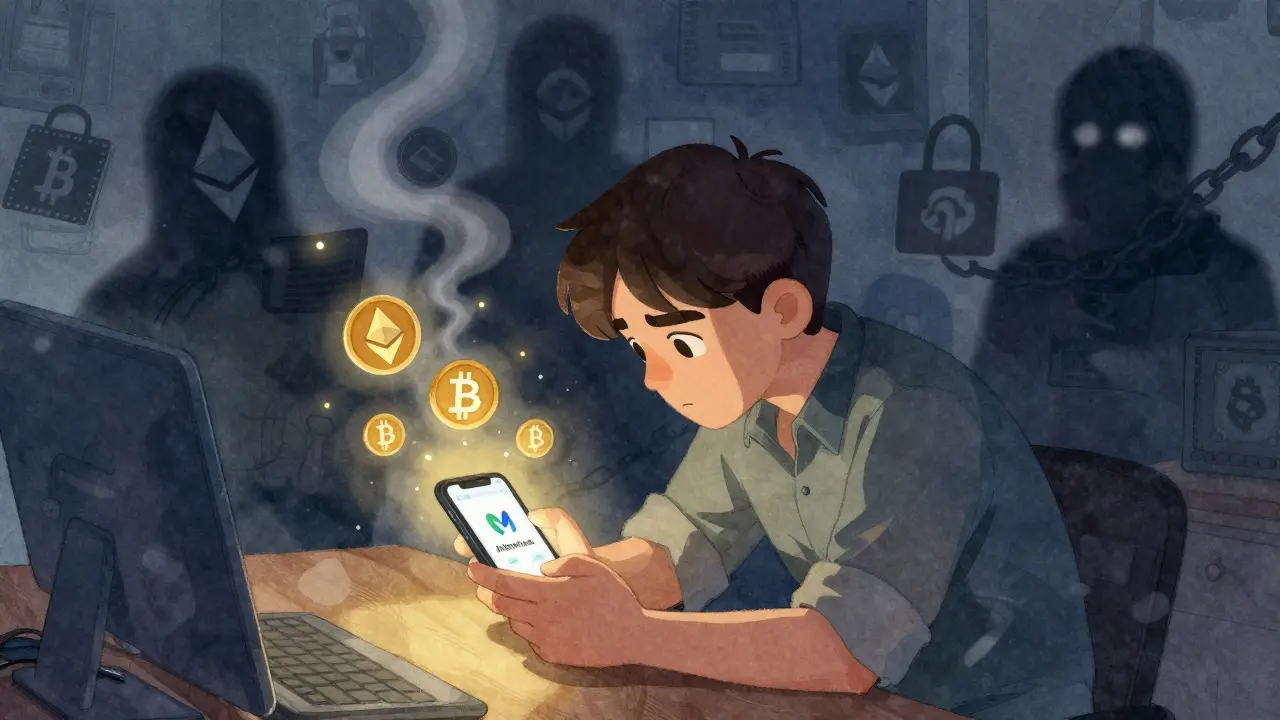
When your government bans crypto exchanges, blocks access to Coinbase or Binance, and freezes bank accounts tied to digital assets, what do you do? You don’t give up. You take control. That’s where non-custodial crypto wallets come in - the only way to hold your crypto when no one else is allowed to.
What Exactly Is a Non-Custodial Wallet?
A non-custodial wallet is software or hardware that puts you, and only you, in charge of your private keys. These keys are the digital passwords that prove you own your Bitcoin, Ethereum, or any other cryptocurrency. No bank. No exchange. No government can freeze your funds because they never had access to them in the first place. This isn’t theory. It’s fact. In countries like Nigeria, Venezuela, and Iran, where local exchanges have been shut down or forced to comply with capital controls, people are using wallets like MetaMask and Trust Wallet to send, receive, and store crypto without asking anyone’s permission. The rule is simple: not your keys, not your crypto. If you don’t control the keys, you don’t control the money.Why This Matters in Restricted Countries
In places where financial freedom is limited, non-custodial wallets are more than a tool - they’re a lifeline. Here’s why:- No KYC required: You don’t need to submit your ID, passport, or selfie. No government can demand your personal data to open the wallet.
- No account freezes: Unlike custodial exchanges that can be ordered to block users, your wallet can’t be shut down remotely. It lives on your phone or hardware device.
- Direct access to DeFi: You can connect to decentralized exchanges like Uniswap or PancakeSwap and trade without intermediaries. No middleman means no one to censor you.
- Resistant to sanctions: If your country is under international financial sanctions, traditional banks cut you off. Crypto on a non-custodial wallet doesn’t care about borders.
Types of Non-Custodial Wallets You Can Use
There are three main types, each with trade-offs:1. Software Wallets (Mobile and Browser)
These are apps you install on your phone or browser extension. The most popular:- MetaMask (browser extension and mobile app): Works with Ethereum, BSC, Polygon, and others. Used by millions in restricted countries because it’s free, open-source, and doesn’t require registration.
- Trust Wallet (mobile only): Owned by Binance but still non-custodial. Supports over 10 million tokens. Easy for beginners.
2. Hardware Wallets
These are physical devices that store your private keys offline. Think of them like a digital safe.- Ledger Nano S: $79. Supports Bitcoin, Ethereum, Solana, and more. Keeps keys offline.
- Ledger Nano X: $149. Adds Bluetooth and more app support. Better for active traders.
3. Paper Wallets (Not Recommended for Most)
A printout of your public and private keys. Used by a tiny fraction of users today. Risky because paper can burn, fade, or be stolen. Only consider this if you’re extremely tech-savvy and have a secure, fireproof location.The Big Trade-Off: Control vs. Convenience
Non-custodial wallets give you freedom - but they also put all the responsibility on you. Here’s what you gain:- True ownership
- No third-party risk
- No KYC
- No account freezes
- No customer support: If you send crypto to the wrong address, there’s no help desk to call. It’s gone.
- No password reset: Forget your PIN? Lose your recovery phrase? Too bad. No one can recover it.
- Technical learning curve: You need to understand gas fees, network switches, and smart contract risks.
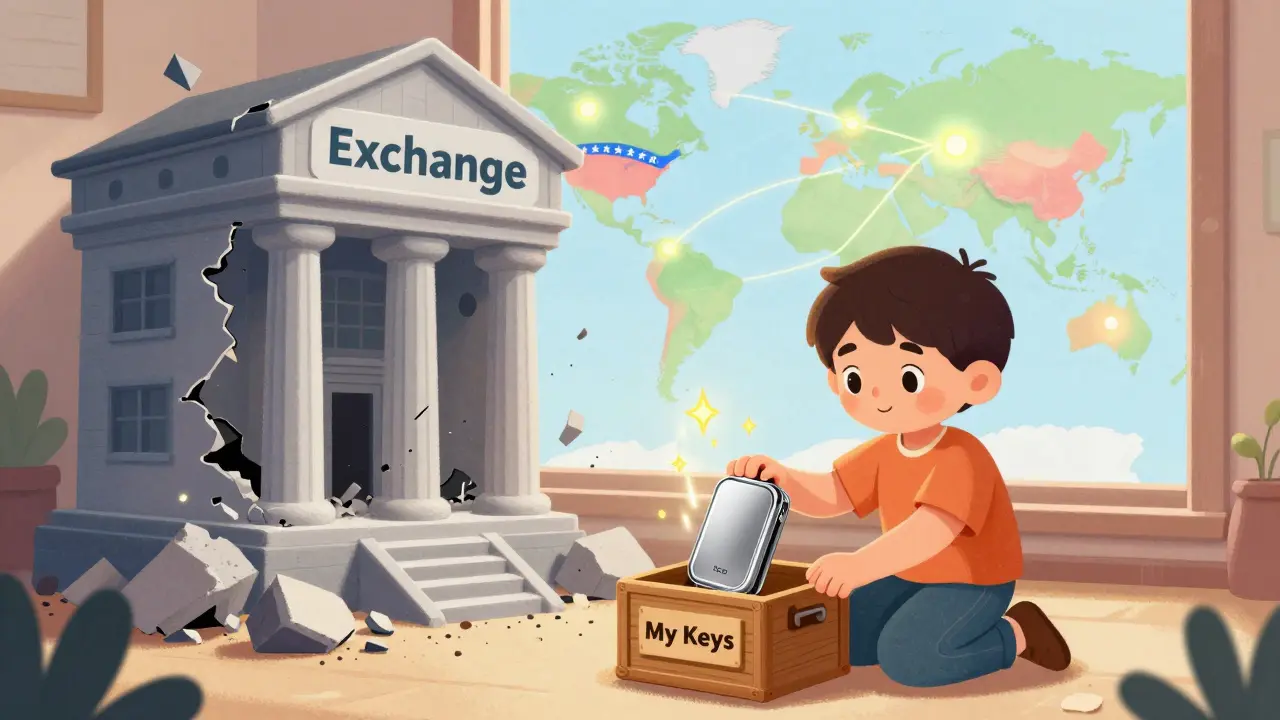
How to Stay Safe in a Restricted Environment
If you’re in a country where crypto is monitored or banned, security isn’t optional - it’s survival. Here’s how to protect yourself:- Write down your 12- or 24-word recovery phrase by hand. Don’t type it anywhere. Don’t screenshot it. Don’t store it on your phone or cloud.
- Store it in multiple secure locations. One in a fireproof safe. One with a trusted family member in another city. One in a sealed envelope buried in your garden (yes, people do this).
- Use a hardware wallet for anything over $500. It’s worth the cost.
- Use a VPN to access wallet sites. Many countries block MetaMask’s download page or blockchain explorers. A reliable VPN (like ProtonVPN or Mullvad) lets you bypass that.
- Verify every smart contract address. Scammers create fake tokens with names like “ETH” or “BTC.” Always double-check the contract address on Etherscan or BscScan before approving a transaction.
- Never share your recovery phrase. Not even with “support staff.” Legit wallets never ask for it.
What Happens If You Lose Your Keys?
This isn’t a hypothetical. It happens every day. According to BitPay’s 2024 analysis, it is impossible to recover digital assets if users lose private keys and/or recovery phrases. There’s no backdoor. No reset button. No help line. In restricted countries, this risk is even higher. If you’re under surveillance, you can’t go to a local crypto meetup for help. If your phone is confiscated, you can’t call a friend. You’re alone. That’s why the first thing you do after setting up your wallet is write down your recovery phrase - and then test it. How? Set up a second wallet on a different device. Use your recovery phrase to restore access. If it works, you’ve confirmed your backup is valid. If it doesn’t, you’ve found the problem before it’s too late.Is This Legal?
That’s the question most people in restricted countries are afraid to ask. In most cases, owning a non-custodial wallet isn’t illegal - but using it to bypass capital controls might be. Countries like China, Russia, and Egypt have cracked down on crypto trading, but not on holding private keys. The law often targets exchanges, not individuals. But here’s the catch: If you’re caught using crypto to send money abroad, you could face fines, asset seizure, or worse. That’s why many users in high-risk areas use non-custodial wallets quietly - no social media posts, no public discussions, no sharing wallet addresses. It’s not about being a rebel. It’s about survival.
What’s Next? The Future of Self-Custody
The technology is evolving. Hardware wallets now support “passphrase protection” - a second layer of security that lets you create hidden wallets. If someone forces you to reveal your recovery phrase, you can give them a fake one that leads to a wallet with $10 - while your real $10,000 stays hidden. Multi-signature wallets are also emerging. These require 2 or 3 people to approve a transaction. Useful if you’re in a country where you can’t trust just one person with your keys. But the core truth hasn’t changed since Bitcoin’s birth in 2009: you are your own bank. In restricted countries, that’s not a luxury. It’s the only option left.Frequently Asked Questions
Can I use a non-custodial wallet if my country bans crypto exchanges?
Yes. Non-custodial wallets don’t rely on exchanges. You can send and receive crypto directly on the blockchain using apps like MetaMask or Trust Wallet. As long as you can access the internet, you can use them - even if exchanges are blocked. Many users in Nigeria, Venezuela, and Iran rely on these wallets to bypass exchange bans.
Do I need to verify my identity to use a non-custodial wallet?
No. Non-custodial wallets require zero KYC. You download the app, generate your keys, and you’re done. No ID, no email, no government paperwork. This is why they’re the only viable option in countries with strict crypto regulations.
What’s the safest non-custodial wallet for beginners?
For beginners, Trust Wallet (mobile) or MetaMask (browser or mobile) are the easiest to start with. They have simple interfaces and good documentation. But if you’re holding more than $500, upgrade to a Ledger Nano S or Nano X. Hardware wallets add a critical layer of security that software wallets can’t match.
Can I recover my crypto if I lose my recovery phrase?
No. There is no way to recover your crypto if you lose your 12- or 24-word recovery phrase. No company, no government, no developer can help you. This is by design - it’s what makes non-custodial wallets secure. But it also means you must treat your recovery phrase like a bank vault key: backup multiple copies, store them securely, and never share them.
Are hardware wallets worth the cost in restricted countries?
Absolutely. A Ledger Nano S costs $79. If you’re holding $1,000 or more in crypto, that’s a tiny price to pay for peace of mind. Hardware wallets keep your keys offline, making them immune to remote hacking. In countries where phones are monitored or seized, this is the only reliable way to protect your assets long-term.
Final Thoughts
Non-custodial wallets aren’t a trend. They’re a necessity in restricted countries. They’re not perfect. They’re not easy. But they’re the only tool that lets you keep your money when the system tries to take it away. If you’re in a country where financial freedom is under threat, your crypto isn’t just an investment - it’s your financial independence. Protect it like your life depends on it. Because in some places, it does.
Rebecca Andrews
I'm a blockchain analyst and cryptocurrency content strategist. I publish practical guides on coin fundamentals, exchange mechanics, and curated airdrop opportunities. I also advise startups on tokenomics and risk controls. My goal is to translate complex protocols into clear, actionable insights.
14 Comments
-
Bharat Kunduri
January 14, 2026 AT 23:34bro why are we even talking about this like it’s a fucking revolution? i lost 4k because i thought ‘oh i’ll just screenshot my phrase’ and then my phone got stolen. no one cares about your ‘lifeline’ when your crypto is gone forever. it’s not freedom, it’s a trap with a fancy name.
-
Nishakar Rath
January 16, 2026 AT 14:02non-custodial? more like non-survivable. you think you’re some crypto anarchist rebel but you’re just a dumbass with a 24-word password you can’t even remember. if you’re not rich enough to buy a ledger you’re not ready for this. stop pretending you’re in control when you’re one typo away from poverty
-
Katherine Melgarejo
January 17, 2026 AT 08:44so let me get this straight… you’re telling me the solution to government oppression is… downloading an app and hoping you don’t misplace a phrase written on napkin #3? cool. i’ll stick with my under mattress cash thanks.
-
Patricia Chakeres
January 17, 2026 AT 10:53Of course this is a government psyop. The real reason they ban exchanges is to push you into non-custodial wallets so they can track your blockchain activity through metadata correlation. Ledger? Ha. They have backdoors. You think the NSA doesn’t have a way to fingerprint your device’s thermal signature during signing? Wake up.
-
kristina tina
January 18, 2026 AT 21:24THIS IS SO IMPORTANT. I’ve helped 7 friends in Nigeria set up MetaMask and I cried when one of them sent her first $50 to her mom across borders without a middleman. This isn’t just tech-it’s dignity. You think you’re just holding crypto? No. You’re holding hope. Write down that phrase. Triple backup. Use a hardware wallet. You’re not just saving money-you’re saving your family’s future.
-
Hailey Bug
January 19, 2026 AT 07:23For anyone in a restricted country: use Mullvad VPN + MetaMask. Never connect to wallet sites on public Wi-Fi. Always test your recovery phrase on a second device before trusting it. And if you’re holding more than $500, spend the $79 on a Ledger. It’s the difference between sleeping and sweating every night.
-
Liza Tait-Bailey
January 20, 2026 AT 23:18My cousin in Venezuela used a paper wallet tucked inside a Bible. She still has her crypto. I’m not joking. No phone, no internet, just faith and ink. You don’t need tech to be free. You just need to be smart.
-
Michael Jones
January 21, 2026 AT 17:15Don’t forget to disable auto-updates on your wallet app. Some updates include telemetry or backdoor changes. Always download from official sites. And never use a cloud backup-even encrypted. If you can’t physically hold it, it’s not safe.
-
Dustin Secrest
January 22, 2026 AT 18:31There’s a quiet truth here: self-custody isn’t about technology. It’s about sovereignty. When the state controls your money, it controls your choices. When you hold your keys, you hold your voice. That’s why they fear it-not because it’s illegal, but because it’s liberating.
-
Pramod Sharma
January 22, 2026 AT 20:25Control vs convenience. Always the same choice. Always the same cost.
-
Andre Suico
January 23, 2026 AT 12:16For those in high-risk regions: consider using a burner phone with no SIM, no Google account, and no biometrics. Install the wallet there. Store it in a Faraday pouch. Only power it on when you need to transact. Physical isolation is the ultimate encryption.
-
Stephanie BASILIEN
January 25, 2026 AT 11:39While I appreciate the sentiment, I must point out that the legal ambiguity surrounding non-custodial wallets in sanctioned jurisdictions may expose users to unintended violations of OFAC regulations. The moral imperative of financial autonomy must be weighed against the potential for extrajudicial consequences, which, in certain regimes, may extend beyond mere asset seizure to personal liberty.
-
Jason Zhang
January 26, 2026 AT 17:33Yeah, but have you ever tried explaining this to your grandma? Or your mom who just wants to send money to her sister? This isn’t freedom-it’s a tech support nightmare wrapped in libertarian fantasy. People die waiting for help that doesn’t exist.


Write a comment
More Articles

How to Buy Crypto with Rubles in Russia: P2P, Cards & Exchanges Guide (2026)
A practical guide to buying cryptocurrency with Rubles in Russia in 2026. Learn how to use P2P trading, instant cards, and local exchanges safely despite banking restrictions.


nathan yeung
January 14, 2026 AT 12:59Been using Trust Wallet since my bank froze my crypto last year. No drama, no questions asked. Just send and receive. My only worry? Losing my phone. But hey, at least I’m not stuck waiting for some CEO’s whim to unfreeze my cash.