SEC Crypto License Capital Calculator
Nigerian SEC Crypto Exchange Requirements
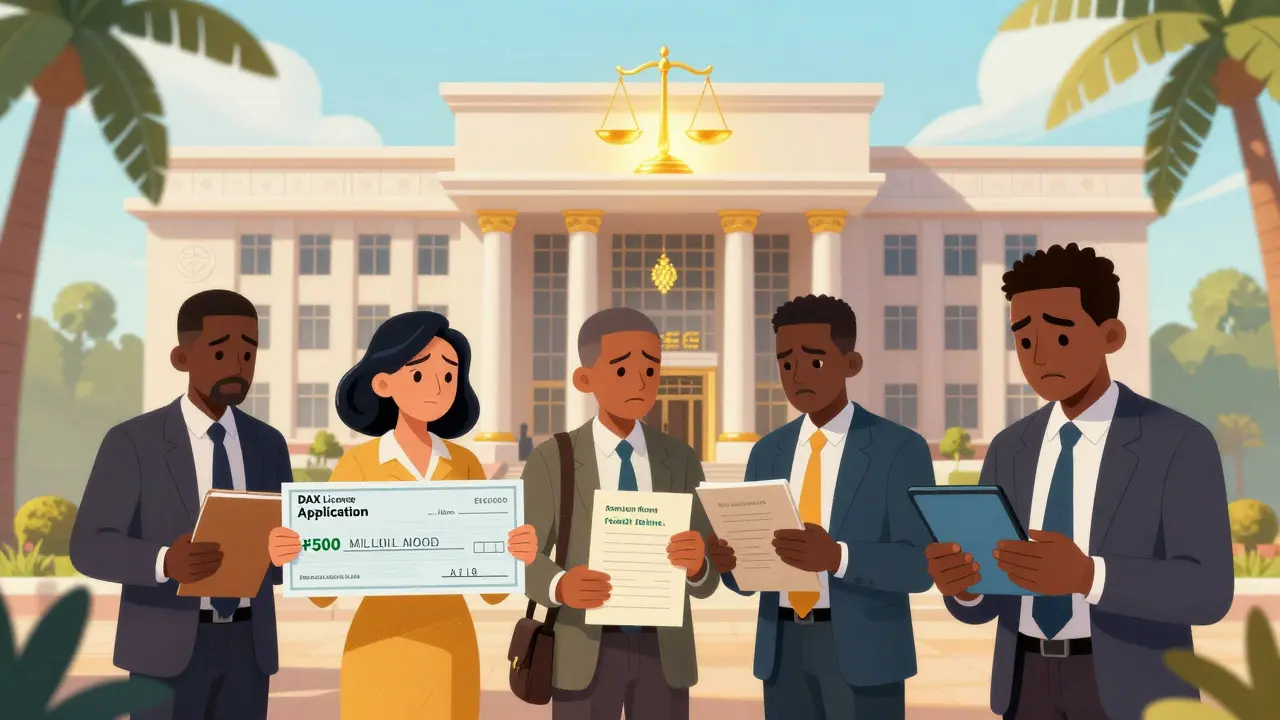
Calculate if your business meets the minimum capital requirement for SEC crypto licensing. Under the new regulations, you need ₦500 million (approx. $325,000 USD) in paid-up capital to apply.
If you're running or planning to launch a cryptocurrency exchange in Nigeria, you can't afford to ignore the Nigerian SEC crypto licensing rules. The game changed in 2025 when President Bola Ahmed Tinubu signed the Investments and Securities Act 2025 into law. For the first time, digital assets are officially recognized as securities under Nigerian law-and the Securities and Exchange Commission (SEC) now has full power to regulate every crypto exchange operating in the country. This isn’t a suggestion. It’s the law. And if you’re not licensed, you’re operating illegally.
What Exactly Is a Digital Asset Exchange (DAX)?
A Digital Asset Exchange (DAX) is any platform that lets people buy, sell, or trade cryptocurrencies like Bitcoin, Ethereum, or stablecoins such as USDT. Under the new rules, if your platform connects buyers and sellers of digital assets-even if you don’t hold the coins yourself-you need a license. This includes peer-to-peer matching services, order book platforms, and even apps that let users convert crypto to Naira instantly. The SEC doesn’t care if you call it a wallet, a marketplace, or a trading bot. If it facilitates trades, it’s a DAX.There’s no gray area here. Even foreign companies that target Nigerian users-through ads on Instagram, WhatsApp groups, or Nigerian-language websites-are required to get licensed. The SEC doesn’t care where your servers are. If Nigerians are using your service, you’re under their jurisdiction.
The Minimum Requirements to Apply
Getting licensed isn’t about filling out a form. It’s about proving you can operate safely, securely, and transparently. Here’s what the SEC demands before they even look at your application:- ₦500 million in paid-up capital-that’s about $325,000 USD. You can hold this in cash, fixed assets like property, or quoted stocks, but you must prove the money is clean. The SEC will trace every naira back to its source.
- A fidelity bond of at least ₦125 million-this is insurance that covers losses if your company mismanages funds or gets hacked. It’s non-negotiable.
- Valid corporate documents-you need your Certificate of Incorporation from the Corporate Affairs Commission (CAC), your Memorandum and Articles of Association (MEMART), and forms CAC 1.1 and Form 7. Your MEMART must explicitly state that your business is a cryptocurrency exchange. Generic descriptions won’t cut it.
- Audited financial statements-if you’re a new company, you must submit a statement of affairs. If you’ve been around, you need full audits from a registered Nigerian auditor.
These aren’t suggestions. They’re hard gates. Skip one, and your application gets rejected without review.
The Accelerated Regulatory Incubation Programme (ARIP)
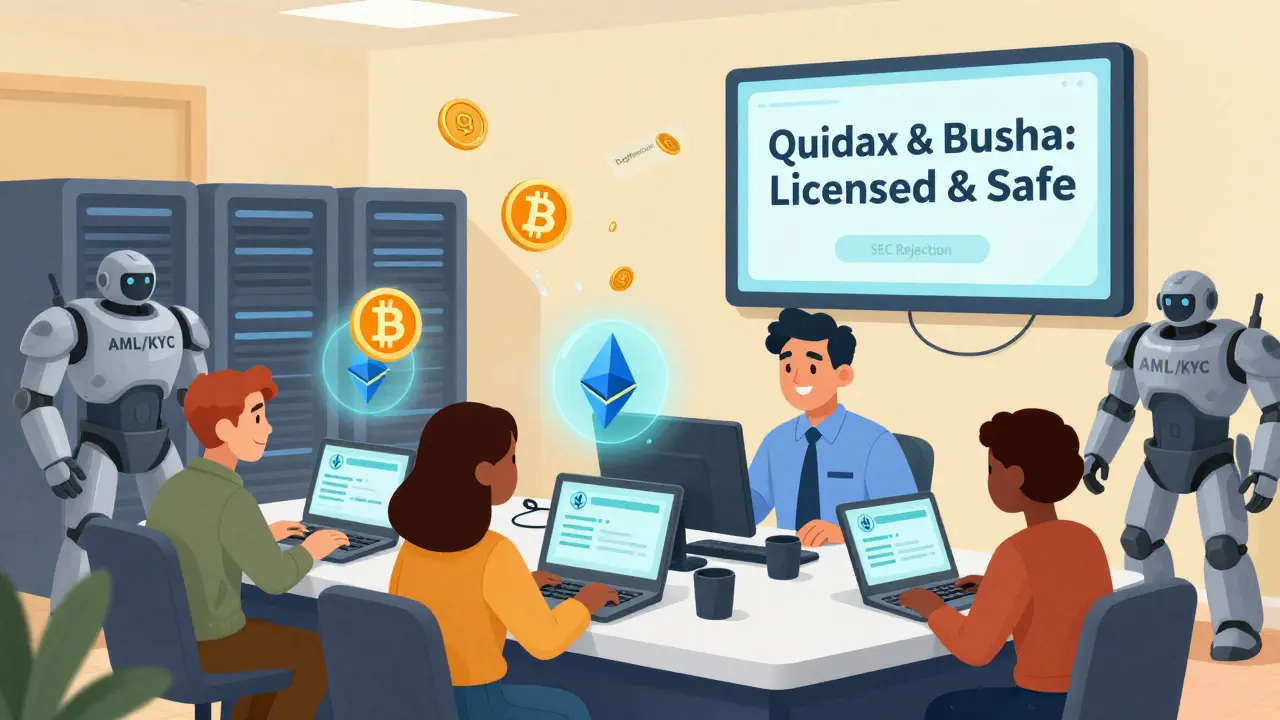
In June 2024, the SEC launched ARIP to speed up licensing for serious players. Before ARIP, companies waited months-or never got approved at all. Now, the process is faster, but still strict. Only two companies have received provisional licenses so far: Quidax and Busha. These two are now the only legal crypto exchanges in Nigeria with SEC backing.SEC officials said in December 2024 that they plan to issue more provisional licenses “a lot quickly” in 2025. That’s not just marketing talk. They’re under pressure. Nigeria has one of the highest crypto adoption rates in Africa, with millions using digital assets to protect savings from inflation and bypass broken banking systems. The SEC can’t ignore that. But they also can’t let scams run wild.
Compliance: AML, KYC, and Transaction Monitoring
Once you’re licensed, the real work begins. You’re now on the hook for full Anti-Money Laundering (AML) and Combating the Financing of Terrorism (CFT) compliance. That means:- Every customer must pass KYC-government-issued ID, proof of address, selfie verification. No exceptions.
- You must monitor all transactions for suspicious patterns-large transfers, rapid deposits and withdrawals, addresses linked to known scams.
- You must report any activity that looks like money laundering to the Financial Reporting Council (FRC), even if the user is a long-time client.
And yes, the SEC is watching your users’ transactions for tax purposes. They’re working with the Federal Inland Revenue Service (FIRS) to track crypto gains. If you’re trading Bitcoin and making profits, you’re liable for capital gains tax. The SEC’s goal? Make it impossible to hide crypto income.
What You Can’t Do (Even If You’re Licensed)
Having a license doesn’t mean you can do whatever you want. The SEC laid out clear red lines:- No lending or financial help-you can’t give users loans to buy crypto, offer margin trading, or encourage them to borrow money to trade on your platform. That’s considered financial assistance-and it’s banned.
- No listing without approval-you can’t just add any new token to your exchange. Every single digital asset you want to list must get prior written approval from the SEC. This stops rug pulls and fake meme coins from flooding the market.
- No insider trading-employees, officers, and even family members can’t use their position to trade ahead of public announcements. The SEC will audit internal trading logs.
Violating any of these rules can lead to immediate suspension, fines up to ₦1 billion, or even criminal charges.
Why This Matters for Nigerian Crypto Users
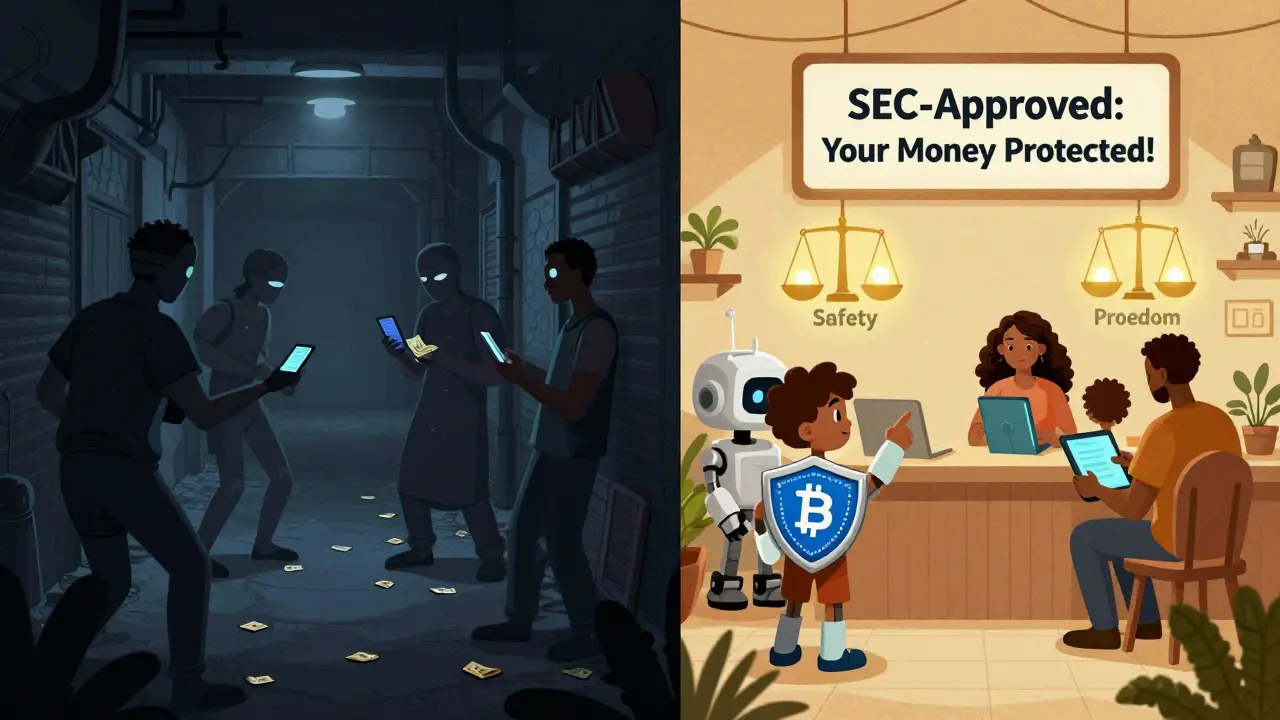
For regular users, this shift means more safety-but also more friction. Before, you could trade crypto on P2P platforms like LocalBitcoins or Telegram groups with zero verification. Now, you’ll need to submit your ID, wait for approval, and face limits on how much you can trade in a day. It’s slower. It’s more paperwork. But it’s also safer.A 2024 survey by Busha found that nearly half of Nigerian crypto users avoid the market because they fear scams and hacks. The SEC’s rules directly target those fears. Licensed exchanges now have insurance, audits, and real oversight. If your funds are stolen from a licensed platform, you have legal recourse. That wasn’t true before.
But there’s a trade-off. Cross-border payments that used to take minutes via P2P now take days due to stricter AML checks. Small businesses that relied on crypto for fast international payments are feeling the squeeze. The SEC knows this. They’re working on solutions-but for now, compliance comes first.
What’s Next in 2025?
The SEC is already looking ahead. They’re finalizing rules on crypto taxation, which could mean mandatory reporting of capital gains for all licensed exchanges. They’re also exploring ways to let Nigerians trade international tokens like Solana or Cardano under SEC supervision-something that’s currently blocked.There’s also talk of creating a “white list” of approved tokens-similar to how stock exchanges list only qualified companies. That could help weed out the 90% of crypto projects that are scams.
One thing’s clear: Nigeria is moving from a Wild West crypto market to a regulated financial ecosystem. The goal isn’t to kill crypto-it’s to protect people who use it. And if you’re serious about operating here, you have to play by the new rules.
Who Should Apply for a License?
If you’re a startup with less than ₦500 million in capital? Wait. Build your business model, get funding, and come back when you’re ready. The SEC isn’t here to help you bootstrap.If you’re a foreign exchange targeting Nigerians? You have two choices: get licensed or shut down your Nigerian operations. There’s no third option. The SEC has already started blocking websites and apps that don’t comply.
If you’re a Nigerian entrepreneur with the capital, tech team, and compliance mindset? This is your moment. The market is open. Only a handful of players are licensed. The rest are still operating in the shadows. You could be one of the first to build a trusted, legal, and scalable crypto business in Africa’s largest economy.
Can I operate a crypto exchange in Nigeria without a SEC license?
No. Operating a crypto exchange without a license from the Nigerian SEC is illegal under the Investments and Securities Act 2025. Unlicensed platforms risk being blocked, fined up to ₦1 billion, or facing criminal prosecution. Even foreign platforms targeting Nigerian users must comply.
How long does it take to get a SEC crypto license?
Under the Accelerated Regulatory Incubation Programme (ARIP), the process can take 3-6 months if all documents are complete and compliant. However, incomplete applications can take much longer-or be rejected outright. Only two companies have received provisional licenses so far: Quidax and Busha.
What happens if my exchange gets hacked after getting licensed?
You’re still responsible. The SEC requires all licensed exchanges to carry a fidelity bond of at least ₦125 million to cover losses from theft or fraud. If users lose funds due to a security breach, the bond may be used to compensate them. However, the SEC will investigate whether your security practices met industry standards. Poor security can lead to license suspension.
Can I list any cryptocurrency on my licensed exchange?
No. Every digital asset you want to list must be approved by the SEC in advance. This is to prevent rug pulls, scams, and low-quality tokens from flooding the market. The SEC will review the token’s whitepaper, team, use case, and liquidity before granting approval.
Do I need to pay taxes on crypto trades if I’m licensed?
Yes. Licensed exchanges are required to report user transaction data to the Federal Inland Revenue Service (FIRS) for tax purposes. Capital gains from crypto trades are taxable under Nigerian law. The SEC is working with FIRS to implement mandatory tax reporting for all licensed platforms in 2025.

Rebecca Andrews
I'm a blockchain analyst and cryptocurrency content strategist. I publish practical guides on coin fundamentals, exchange mechanics, and curated airdrop opportunities. I also advise startups on tokenomics and risk controls. My goal is to translate complex protocols into clear, actionable insights.
25 Comments
-
Isha Kaur
December 7, 2025 AT 02:50I think this is actually a really positive step even though it feels overwhelming at first, because for so long Nigerian crypto users have been left in this dangerous gray zone where anyone could set up a fake exchange and vanish with your life savings, and now at least there's a legal framework that says you can't do that anymore, and even if it's slow and bureaucratic, it's better than the Wild West where you had to trust strangers on WhatsApp with your entire savings, and I've seen too many friends lose everything because there was no oversight, no insurance, no recourse, and now with the fidelity bond requirement, there's at least a safety net, even if it's not perfect, it's a start, and honestly I'm glad the SEC is finally taking this seriously because the adoption rate here is insane and you can't ignore it forever, and the fact that they're working with FIRS on tax reporting means they're treating crypto like real finance now, not some weird underground side hustle, and that gives me hope that one day Nigerian crypto will be as stable and respected as any other financial market, even if it takes years to get there
-
Glenn Jones
December 7, 2025 AT 03:44LMAO the SEC thinks they're the Fed? Bro they can't even fix power outages but now they wanna regulate crypto? This is peak bureaucratic delusion. You know what’s really illegal? Charging 500 million naira just to apply for a license while 70% of the population lives on less than $2 a day. This isn’t regulation, it’s a pay-to-play cartel. Quidax and Busha? Those are just the SEC’s approved puppets. The rest of us are just peasants trying to survive inflation. And don’t even get me started on KYC-my cousin got his ID stolen 3x trying to verify. The SEC is just creating a new layer of rent-seeking for their cronies. Crypto was supposed to be freedom. Now it’s just another Nigerian bureaucracy with more paperwork and less electricity.
-
Nelson Issangya
December 7, 2025 AT 06:03This is the future. Stop crying about the money. If you can’t raise 500 million naira, you weren’t ready to run a real business anyway. The people who are complaining are the same ones who thought they could flip meme coins and retire by 25. Real entrepreneurs build systems, not scams. The fact that the SEC is forcing transparency is a win for everyone who’s been burned. And yes, it’s slow-but that’s because they’re not rushing to protect the scammers anymore. This isn’t about stopping crypto. It’s about saving it from itself. The people who survive this will be the ones who change African finance forever. Stop whining. Build. Or get out of the way.
-
Richard T
December 8, 2025 AT 18:01Interesting that they’re requiring audited statements from Nigerian auditors only. That’s a smart move-prevents foreign firms from gaming the system with fake audits. But I wonder how many of the smaller exchanges are just going to shut down instead of complying. The cost barrier is massive.
-
miriam gionfriddo
December 10, 2025 AT 17:38So the SEC is gonna monitor every single transaction?? Like… my grandma sends 5000 naira to her cousin in Abuja using USDT and now they’re gonna flag it as suspicious?? This is just digital surveillance with extra steps. They’re not regulating crypto, they’re trying to turn Nigeria into a financial police state. And don’t even get me started on the tax thing-FIRS is already broke, so now they want crypto to bail them out? Classic.
-
Brooke Schmalbach
December 11, 2025 AT 02:45The fact that they’re banning margin trading and lending is actually a good thing. Too many people were borrowing money to buy crypto like it was a lottery ticket. I’ve seen people take out payday loans to buy Dogecoin. This isn’t finance, it’s gambling. The SEC is doing the right thing by drawing a line. If you can’t afford to lose it, you shouldn’t be trading it. Period.
-
Cristal Consulting
December 11, 2025 AT 04:05This is huge. Licensed = safe. Unlicensed = gamble. Simple as that. If you’re a user, stick to Quidax and Busha. If you’re a founder, get your docs in order. No drama. No excuses. Just do the work.
-
michael cuevas
December 11, 2025 AT 17:52So you need 500 million naira to even apply but the SEC takes 6 months to respond? Bro that’s not regulation, that’s a tax on ambition. You’re basically paying to wait in line. And for what? So a few companies get to be the only ones allowed to profit while everyone else gets locked out? This isn’t capitalism. This is feudalism with a blockchain logo
-
Nina Meretoile
December 13, 2025 AT 10:27This is the moment Nigeria becomes a real financial player. Not because of oil. Not because of pop music. But because they’re finally treating digital assets like real money. The fact that they’re requiring fidelity bonds? That’s insurance for the people. That’s responsibility. And the token approval process? That’s how you stop rug pulls from destroying lives. This isn’t about control-it’s about care. And honestly? I’m proud. Nigeria is leading Africa into a new financial era. Not by copying the West. By building something better. Slower. Safer. Real.
-
Barb Pooley
December 13, 2025 AT 11:44This is all a distraction. The real story is that the SEC is working with the IMF. You think they care about protecting Nigerians? They care about getting a bailout. This is a condition. They’re forcing crypto into the system so they can track every naira and control the economy. They don’t want you to be free. They want you to be compliant. And once they have all your data? Good luck ever leaving the system.
-
Shane Budge
December 15, 2025 AT 06:51Fidelity bond = insurance. That’s the only thing that matters.
-
sonia sifflet
December 15, 2025 AT 23:13You call this regulation? This is a monopoly. Only two companies licensed after a year? That’s not acceleration, that’s corruption. The SEC is protecting their friends in Quidax and Busha. Everyone else is just a target for fines. And don’t tell me about safety-when the government controls who can operate, you don’t get innovation. You get stagnation. And stagnation kills economies. This isn’t progress. It’s control dressed up as protection.
-
Vincent Cameron
December 17, 2025 AT 14:50There’s a philosophical tension here. Crypto was born to escape central control. Now the most populous economy in Africa is building the most centralized crypto regime on the continent. Is this progress? Or just another form of power consolidation? The answer depends on whether you see regulation as a cage or a foundation. I’m not sure yet.
-
Noriko Robinson
December 18, 2025 AT 09:39I think people are missing the bigger picture-this isn’t just about crypto. It’s about trust. For years, Nigerians have had to trust strangers on Telegram. Now, they can trust a system. That’s huge. Yes, it’s slower. Yes, it’s bureaucratic. But imagine your mom sending money to her sister and knowing that if something goes wrong, there’s an insurance fund to cover it. That’s not a burden. That’s dignity.
-
Mairead Stiùbhart
December 19, 2025 AT 11:18So you need 500 million naira to play? Cool. Meanwhile my cousin’s uncle runs a P2P bot from his bedroom and makes more than most banks. Guess who’s really winning? The system doesn’t care about the real players. It only cares about who can afford the paperwork.
-
Billye Nipper
December 21, 2025 AT 06:44I know this sounds harsh, but if you’re a startup with less than 500 million naira, you’re not ready. Not because you’re bad. Because the stakes are too high. People’s savings are on the line. You don’t get to wing it when you’re handling other people’s money. This isn’t a game. It’s finance. And finance requires responsibility. So build. Save. Grow. Come back when you’re ready. The market will still be here.
-
Roseline Stephen
December 21, 2025 AT 15:56The requirement to list only SEC-approved tokens is smart. Too many people lost everything to fake coins with no team, no code, no future. This could actually save lives.
-
Tara Marshall
December 23, 2025 AT 00:33KYC + AML = baseline. Not optional. If you’re running a platform that touches real money, you owe it to users to verify who they are. This isn’t privacy-it’s accountability.
-
Joe West
December 23, 2025 AT 06:32Honestly, I’m impressed. Most African regulators just ban crypto. Nigeria’s trying to make it work. That takes guts. The rules are tough, but they’re clear. That’s better than chaos.
-
jonathan dunlow
December 25, 2025 AT 03:36I’ve been working on my application for 8 months. The docs are brutal. CAC 1.1, MEMART with crypto explicitly stated, audited statements, fidelity bond-all in Nigerian naira, no foreign currency. I thought I was ready. I wasn’t. The SEC isn’t just checking your paperwork-they’re checking your soul. Are you serious? Or just chasing a quick exit? Most applicants fail because they think this is a formality. It’s not. It’s a filter. And if you’re not built for this, you shouldn’t be here. But if you are? This is your shot. The market is massive. The competition is low. And the world is watching. Don’t waste it.
-
Mariam Almatrook
December 26, 2025 AT 07:44The notion that digital assets are securities under Nigerian law is a dangerous precedent. It relegates innovation to the status of a financial instrument. Crypto is not a stock. It is not a bond. It is a paradigm shift. To regulate it as if it were Wall Street 1929 is not just misguided-it is an act of intellectual colonialism. The SEC is trying to fit a blockchain into a 19th-century legal mold. This will not end well.
-
rita linda
December 27, 2025 AT 05:11Why should Nigerians have to jump through these hoops while American exchanges operate freely? This is economic apartheid. The West gets to trade crypto with zero oversight, but Nigeria has to beg for permission? The SEC is just another tool of global financial domination. They’re not protecting us-they’re keeping us poor.
-
Martin Hansen
December 27, 2025 AT 10:56You think you’re building something revolutionary? Nah. You’re just becoming the new bank. The same old gatekeepers, now with a blockchain logo. The real winners? The ones who stayed off the platform and bought Bitcoin in 2020. The rest of you? You’re just paying for the privilege of being regulated.
-
Lore Vanvliet
December 28, 2025 AT 01:56They’re watching your transactions for taxes?? And they’re gonna report your crypto gains?? Bro, that’s not regulation, that’s a trap. They want to know everything you own so they can tax it. Then they’ll say you didn’t pay enough. Then they’ll freeze your account. Then they’ll say you’re a criminal. This isn’t safety. This is a digital prison. And you’re handing them the key.


Write a comment
More Articles
Cybex DEX Review: Why the Decentralized Exchange Failed
A detailed review of the now-defunct Cybex DEX, covering its tech, low liquidity, community gaps, and key lessons for choosing a reliable decentralized exchange.

What is Redemption Of Pets (ROP) Crypto Coin? Everything You Need to Know
Curious about Redemption Of Pets (ROP)? Learn how this unique meme coin unites pet lovers and funds animal shelters while navigating the volatile crypto market.

What is Ocean Protocol (OCEAN) crypto coin? A clear breakdown of how it works and why it matters
Ocean Protocol (OCEAN) is a blockchain-based system that lets people securely buy, sell, and share data using tokens. Unlike other cryptocurrencies, OCEAN powers a real marketplace for datasets - enabling AI research, privacy-preserving computation, and decentralized data ownership.
Jon Visotzky
December 6, 2025 AT 18:56So the SEC is basically saying if you're not a bank with a billion naira in the bank you can't touch crypto? Feels like they're protecting the old guard more than the people
Meanwhile my uncle in Lagos is still trading USDT on Telegram like it's 2021