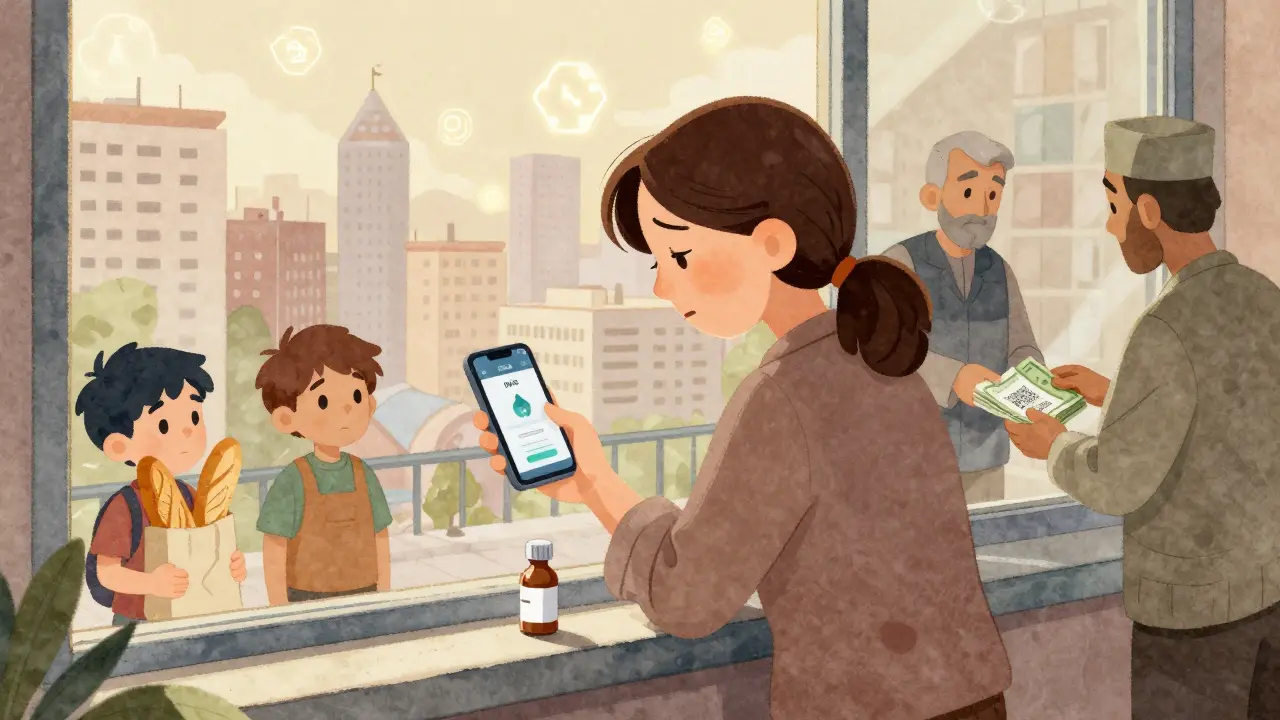
When governments cut off access to banks, payment systems, and foreign currency, people don’t stop needing money-they find other ways. In countries under international sanctions like Iran, North Korea, and Russia, cryptocurrency has become a lifeline. Not because it’s perfect, but because it’s one of the few systems that still works when everything else is locked down.
Why crypto works when banks don’t
Banks in sanctioned countries are cut off from SWIFT, the global financial messaging system. Credit cards stop working abroad. Foreign wire transfers get blocked. Even sending money to family overseas can trigger automatic freezes. Crypto doesn’t need any of that. It runs on open networks-Bitcoin, Ethereum, and others-that anyone with an internet connection can access. No passport. No bank account. No permission. The result? Millions of ordinary people in these countries use crypto to buy food, pay for medicine, send remittances, and protect savings from hyperinflation. In Iran, where the rial lost over 400% of its value against the dollar since 2018, crypto isn’t a luxury-it’s survival.How they actually get in
Most people don’t sign up for Binance or Coinbase directly. Those platforms have strict KYC rules and actively block users from sanctioned regions. Instead, they use indirect paths:- Peer-to-peer (P2P) marketplaces: Platforms like LocalBitcoins, Paxful, and Telegram-based groups connect buyers and sellers directly. Someone in Turkey or Kazakhstan buys USDT with cash, then sends it to an Iranian user via wallet address.
- Decentralized exchanges (DEXs): Uniswap, SushiSwap, and 1inch let users swap tokens without signing up. No ID needed. Just connect a wallet like MetaMask and trade.
- VPN and proxy networks: Many users mask their IP addresses to bypass geo-blocks. Some use Tor, others use residential proxies from non-sanctioned countries.
- Gift cards and crypto vouchers: People buy Amazon or Steam gift cards in countries like the UAE or India, sell them for crypto on P2P platforms, then convert to cash or stablecoins.
Stablecoins are the real currency
Bitcoin is volatile. Ethereum is slow and expensive for small transfers. That’s why stablecoins dominate in sanctioned economies. USDT (Tether) was the go-to for years-backed by the U.S. dollar, easy to move, widely accepted. But after Tether froze over 40 Iranian-linked addresses in July 2025, users scrambled. They didn’t disappear. They switched. DAI, a decentralized stablecoin pegged to the dollar and built on the Polygon network, became the new favorite. Why? Because no single company controls it. No CEO can freeze your wallet. No compliance officer can shut you down. You own the keys. You control the funds. This shift wasn’t random. It was coordinated. Crypto influencers in Iran, Telegram groups, even state-aligned media pushed the move to DAI. Within weeks, over 60% of stablecoin activity in Iran moved from USDT to DAI.
What happens when exchanges get shut down
When an exchange like Garantex gets sanctioned-its domain seized, its funds frozen-it doesn’t die. It evolves. After U.S. and German authorities took down Garantex in March 2025, its users didn’t vanish. They moved to Grinex, a new platform with the same interface, same customer support, same wallet addresses. The only difference? The name and the server location. Behind the scenes, a network of shell companies and payment processors kept things running. Exved, a Dubai-based firm, handled cross-border transfers disguised as "e-commerce payments." MKAN Coin, a Telegram bot, let users trade crypto without ever visiting a website. This isn’t an exception. It’s the rule. Sanctioned exchanges now operate like viruses-when one strain is killed, another emerges. The infrastructure is decentralized. The users are resilient.How governments are fighting back
The U.S. Treasury’s Office of Foreign Assets Control (OFAC) has become the world’s most active crypto enforcer. As of 2025, it has sanctioned over 1,200 crypto wallet addresses linked to sanctioned countries. That’s not just addresses-it’s people’s life savings. OFAC’s tactics are growing more aggressive:- First-ever sanction on a DeFi protocol in January 2025, freezing $150 million in assets.
- Major crackdowns on mixers like Tornado Cash, used to obscure transaction trails.
- Collaboration with INTERPOL and Europol to track cross-border crypto flows.
- $430 million in fines imposed on crypto firms in 2024 for failing to block sanctioned users.
Where the loopholes still exist
Sanctions work best when they’re enforced everywhere. But crypto operates globally-and not every country plays by the same rules.- Dubai: The UAE’s Virtual Assets Regulatory Authority (VARA) lets anyone trade crypto with zero taxes. Many sanctioned users route funds through Dubai-based exchanges or wallets.
- El Salvador: Bitcoin is legal tender. No one asks where your money came from. It’s a quiet transit point.
- Singapore: Strong regulation but no capital gains tax. Easy to open a crypto-friendly bank account if you have the right paperwork.
- Malta and Estonia: These countries offer legal crypto frameworks that attract businesses operating in gray zones.
What it looks like on the ground
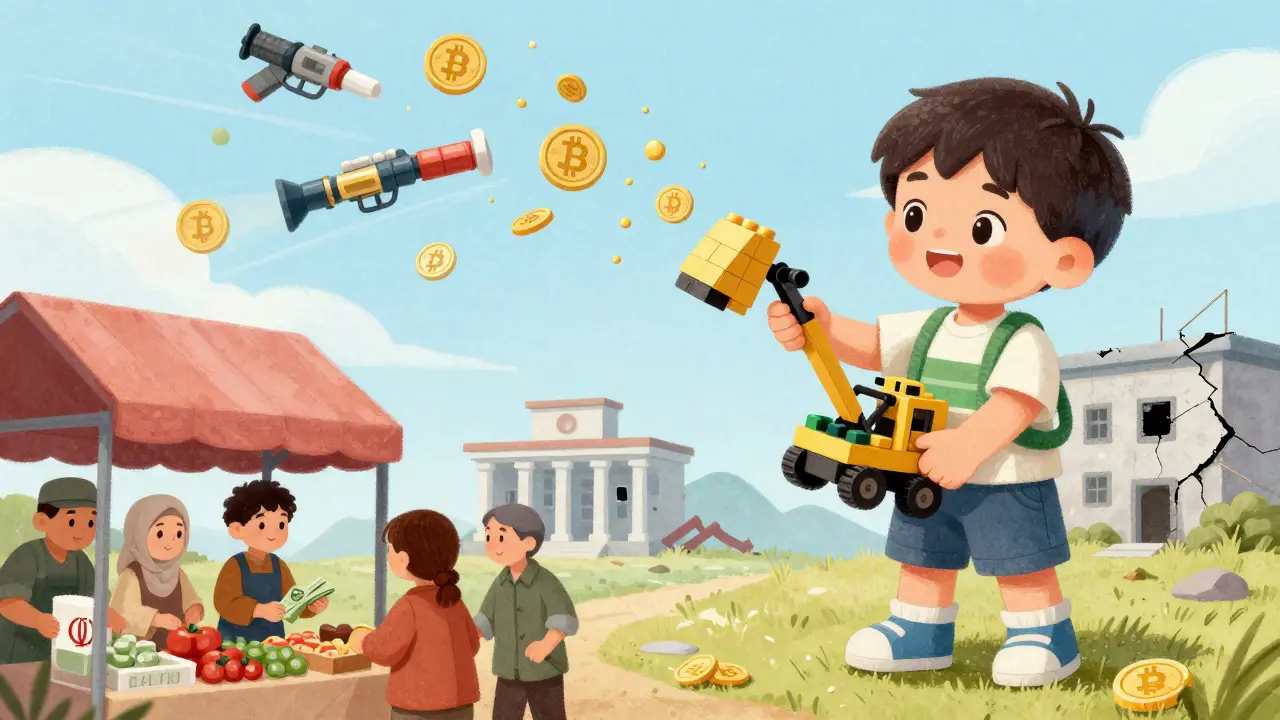
In Tehran, a 32-year-old teacher uses crypto to pay for her son’s insulin. She buys DAI via a Telegram bot, then sends it to a local merchant who exchanges it for cash. The merchant pays her in rials at a rate slightly better than the black market. In Moscow, a small business owner uses crypto to import spare parts for his repair shop. He pays a vendor in Kazakhstan via a P2P trade, then receives the goods through a logistics company that doesn’t ask questions. In Pyongyang, the scale is different. State-run mining operations generate crypto, which is then sold abroad to fund weapons programs. OFAC says North Korea is responsible for 38% of all crypto-related sanctions in 2024. But for most people, it’s not about rebellion. It’s about feeding their families.Is it working?
Enforcement has had an impact. TRM Labs reported an 11% drop in crypto inflows to Iran in the first half of 2025. But activity didn’t stop-it adapted. Iran’s government even passed a law in August 2025 taxing crypto profits, treating it like gold or real estate. Why? Because they realized they couldn’t stop it. So they tried to control and tax it. The truth? Sanctions haven’t stopped crypto access. They’ve made it more complex, more dangerous, and more decentralized.What’s next?
The arms race is accelerating. Regulators are targeting DeFi protocols, wallet providers, and even crypto influencers who promote bypass methods. Users are responding with better privacy tools-coin mixing, multi-chain swaps, and self-custody wallets that don’t rely on any central server. One thing is clear: as long as people need to move money across borders and governments try to stop them, crypto will be the tool they turn to. Not because it’s ideal. But because it’s the only thing that still works.Can you get in trouble for using crypto in a sanctioned country?
Yes. While individuals are rarely prosecuted for personal use, governments can freeze your wallet, block your internet access, or fine you if you’re caught trading through a sanctioned exchange. In Iran and Russia, authorities have arrested people for operating P2P crypto businesses. For most, the risk is low if they avoid large transactions and use decentralized tools like DAI and MetaMask.
Why not just use Bitcoin instead of stablecoins?
Bitcoin is too volatile and expensive for daily use. A $100 transfer on Bitcoin can cost $5-$10 in fees and take hours. Stablecoins like DAI or USDT hold their value and move faster. For buying groceries or paying rent, you need stability-not speculation.
Do all crypto exchanges block sanctioned countries?
No. Centralized exchanges like Binance and Coinbase do. But decentralized exchanges (DEXs), peer-to-peer platforms, and Telegram bots often don’t. They don’t require sign-ups, so they’re harder to block. That’s why most users in sanctioned countries avoid big platforms entirely.
Is using crypto in sanctioned countries illegal?
It depends. In the U.S. and EU, using crypto to bypass sanctions is illegal under OFAC rules. In the sanctioned country itself, the rules vary. Iran taxes crypto now. Russia allows it under strict limits. North Korea uses it to fund its military. So legality is tied to where you are, who you’re trading with, and how you’re doing it.
How do people send crypto without getting caught?
They use wallets they control-like MetaMask or Trust Wallet-and avoid linking them to personal info. They send small amounts across multiple addresses. They use DEXs instead of centralized platforms. And they often swap into privacy-focused coins like Monero before converting back to stablecoins, making tracking harder.

Rebecca Andrews
I'm a blockchain analyst and cryptocurrency content strategist. I publish practical guides on coin fundamentals, exchange mechanics, and curated airdrop opportunities. I also advise startups on tokenomics and risk controls. My goal is to translate complex protocols into clear, actionable insights.
20 Comments
-
Sue Bumgarner
December 16, 2025 AT 21:38So let me get this straight - we’re praising people for bypassing sanctions meant to stop nuclear programs and human rights abuses? Great. Next you’ll say stealing medicine from a pharmacy is okay because ‘they needed it.’
Sanctions aren’t about punishing civilians - they’re about pressuring regimes. Crypto isn’t a lifeline, it’s a loophole for dictators and their enablers. -
Jesse Messiah
December 18, 2025 AT 06:32Hey, I get where Sue’s coming from - sanctions are serious business. But I’ve talked to teachers in Tehran who use Telegram bots to buy insulin. They’re not funding missiles.
Maybe the real question is: why are we forcing families to choose between their kids’ health and obeying a system that doesn’t care if they live or die?
There’s gotta be a better way than freezing wallets and calling it justice. -
Elvis Lam
December 18, 2025 AT 20:00Let’s cut the sentimental nonsense. DAI isn’t some magical ethical coin - it’s just another tool. And tools don’t care who uses them. The same DAI that buys insulin also buys missile parts.
Decentralized doesn’t mean moral. Just because it’s hard to trace doesn’t make it right.
OFAC isn’t evil. They’re trying to stop war criminals. If you think crypto is just for ‘ordinary people,’ you’re not looking at the full picture. -
Bradley Cassidy
December 18, 2025 AT 22:00bro i had no idea ppl were using steam gift cards to buy crypto 😭
like imagine buying a $50 steam card in india, selling it on p2p for usdt, then trading it for dai so your mom can get her diabetes meds
the system is so broken its almost poetic -
Kelsey Stephens
December 20, 2025 AT 03:45I’ve been reading this whole thing and I just feel so heavy. Not because of the politics - but because of the quiet resilience.
People aren’t signing up for Binance. They’re not even using wallets with their names. They’re using MetaMask like a secret language. Just to keep their families alive.
I don’t know how to fix the world, but I know we should stop pretending this is just a tech issue. -
Mark Cook
December 21, 2025 AT 23:29lol so crypto is the new black market now? 🤡
next you'll say the mafia's just 'entrepreneurs' because they 'create jobs.'
sanctions are law. if you break it, you're a criminal. no matter how 'emotional' your story is. -
Shruti Sinha
December 22, 2025 AT 14:23In India, we’ve seen how crypto helps small businesses bypass forex controls. I’ve known shopkeepers who use USDT to pay suppliers in Bangladesh. It’s not about sanctions - it’s about efficiency.
When banks charge 15% for wire transfers and take 5 days, crypto is the only rational choice. The morality comes later - first, people need to eat. -
Dionne Wilkinson
December 24, 2025 AT 13:27I wonder if the people who design these sanctions ever sit down with someone who uses crypto to buy insulin. Do they know what it feels like to watch your child go without medicine because a bank froze your account?
Maybe the problem isn’t crypto. Maybe it’s that we’ve made survival into a crime. -
Timothy Slazyk
December 24, 2025 AT 15:03Let’s be real - the entire global financial system is built on extraction. Sanctions are just another form of economic warfare. Crypto isn’t the problem - it’s the symptom.
People don’t turn to decentralized systems because they’re tech-savvy. They turn to them because centralized systems have failed them.
And guess what? The system will keep trying to crush it. But you can’t regulate human desperation. You can only try to understand it. -
George Cheetham
December 25, 2025 AT 08:24There’s a quiet dignity in how people adapt. No grand speeches. No protests. Just a Telegram bot, a wallet, and a prayer.
It’s not about crypto being ‘free.’ It’s about being allowed to be human when the world says you’re not.
Maybe the real revolution isn’t in the blockchain - it’s in the fact that millions still choose dignity over surrender. -
Jonny Cena
December 27, 2025 AT 03:32For everyone saying ‘this is illegal’ - yes, technically. But legality doesn’t equal morality.
Think about the Underground Railroad. Was it legal? No. Was it right? Absolutely.
People aren’t breaking rules to be rebels. They’re breaking rules because the rules are broken.
Let’s not confuse obedience with justice. -
Heather Turnbow
December 28, 2025 AT 13:25While I acknowledge the humanitarian imperative, the legal and geopolitical implications of enabling circumvention of multilateral sanctions cannot be dismissed as mere technicalities. The erosion of international financial norms, even in pursuit of noble ends, risks destabilizing the global order upon which economic stability, and ultimately, human security, depends.
There must be a more structured, accountable pathway - one that preserves both dignity and the rule of law. -
Greg Knapp
December 29, 2025 AT 18:48why do you think the government cares about your insulin
they care about the money they're not getting
and if you're using crypto to buy food
then you're just helping the system keep going
they don't want you to survive
they want you to beg
and then they'll give you a sandwich
and call it mercy -
Kayla Murphy
December 30, 2025 AT 02:01My aunt in Russia used crypto to send her grandkids vitamins during the winter. She didn’t know what DAI was. She just knew the bank wouldn’t let her send money.
She asked me to help her buy it on a Telegram bot. I cried while I did it.
This isn’t politics. This is love. And we can’t pretend it’s not happening. -
Amy Copeland
January 1, 2026 AT 01:54Oh look, another ‘crypto is for the oppressed’ fairy tale. Tell me, does the Iranian regime also use DAI to buy fighter jets? Or is that just a coincidence?
Let’s not romanticize criminal behavior because it’s convenient. You’re not a hero for bypassing sanctions - you’re a participant in a global evasion network.
And yes, I know your mom needs insulin. But that doesn’t make you right. -
Samantha West
January 1, 2026 AT 19:52Is it not the height of human arrogance to believe that technology can transcend the moral architecture of civilization?
We have laws for a reason - not to punish the poor, but to protect the structure that allows the poor to exist at all.
When we elevate crypto as a moral alternative to sanctions, we are not liberating people - we are dissolving the very framework that holds society together.
And what comes after dissolution?
Chaos.
And chaos has no mercy. -
Tom Joyner
January 3, 2026 AT 01:11It’s fascinating how the same people who decry centralized power suddenly become evangelists for blockchain when it suits their convenience.
Decentralization only matters when it’s convenient. When it comes to compliance, regulation, or accountability? Suddenly it’s ‘too complex’ or ‘unfair.’
It’s not a revolution. It’s hypocrisy with a wallet. -
Sally Valdez
January 3, 2026 AT 07:33Oh my god you people are so naive. The US doesn’t care if your kid gets insulin. They care if the regime gets cash. And guess what? Crypto lets them get both.
Don’t act like you’re Robin Hood. You’re just the guy handing the bandits the ladder.
And if you think DAI is ‘safe’ - you haven’t seen what happens when the blockchain gets blacklisted.
They’ll freeze the whole network next. And then where will you be? -
Jack Daniels
January 3, 2026 AT 10:23i just read this whole thing and now i’m crying in my car
why does it have to be this hard
why can’t we just let people live


Write a comment
More Articles

Mobius Finance (MOT) Token Airdrop Details & Project Overview
Explore the real facts behind the MOT token, why no official Mobius Finance airdrop exists, current price, distribution details, and how to buy safely.

Sammy Tam
December 15, 2025 AT 10:48Man, I never realized how many people are just trying to feed their kids with crypto. It’s wild how DAI became the new lifeline after Tether froze those wallets. No CEO can shut it down - that’s the real power move.
People aren’t trying to be hackers. They’re just trying to buy insulin without begging for charity.
It’s not about rebellion. It’s about survival. And honestly? The system’s broken if this is what it takes to stay alive.