
You hold Bitcoin. You want to use it in Ethereum’s decentralized finance ecosystem. So you wrap it into WBTC. It sounds simple enough-lock your coins, get a receipt token on another chain, and start earning yield. But that "receipt" is only as good as the vault holding the original asset. When that vault gets compromised, or the code minting the receipt has a bug, your digital gold turns into digital dust.
Wrapped tokens are the glue holding the multi-chain world together. They allow assets native to one blockchain to function on another. However, this convenience comes with a heavy price tag in terms of security risk. In recent years, cross-chain bridges have been the single largest source of losses in the cryptocurrency industry. Understanding how these bridges work, where they break, and how to protect yourself is no longer optional-it’s essential survival skills for any crypto participant.
How Wrapped Tokens Actually Work
To understand the risk, you first need to understand the mechanism. A wrapped token is not magic; it is a pegged representation of an underlying asset. Let’s look at WBTC (Wrapped Bitcoin), which is an ERC-20 token on Ethereum that represents Bitcoin 1:1. When you want WBTC, you don’t just create it out of thin air. You send your BTC to a custodian or a multi-signature vault on the Bitcoin network. Once that deposit is confirmed, the bridge operator mints an equivalent amount of WBTC on the Ethereum network and sends it to your wallet.
The reverse process works similarly. If you want your Bitcoin back, you burn the WBTC on Ethereum. The system verifies the burn, unlocks the corresponding BTC from the vault, and releases it to your Bitcoin address. This lock-and-mint model is the standard for most major wrapped assets. It relies entirely on trust in the custodial infrastructure and the integrity of the smart contracts executing the mint and burn functions.
This process usually takes between two and five minutes. While fast, it introduces several points of failure. Every step-from the initial deposit to the final mint-is a potential target for attackers. The complexity increases when you consider that some modern protocols, like ChainPort, aim to streamline this by storing only a small percentage of native assets in hot contracts while keeping the majority in cold storage secured by Multi-Party Computation (MPC) and multi-signature wallets provided by services like Fireblocks and Gnosis Safe. Even with these advanced measures, the fundamental reliance on centralized control remains.
The Two Main Ways Bridges Fail
When bridge security fails, it rarely happens due to a lack of effort by developers. Instead, it usually stems from two specific attack vectors: collateral theft and infinite mint exploits. These are not theoretical risks; they are the primary reasons behind billions of dollars in lost funds.
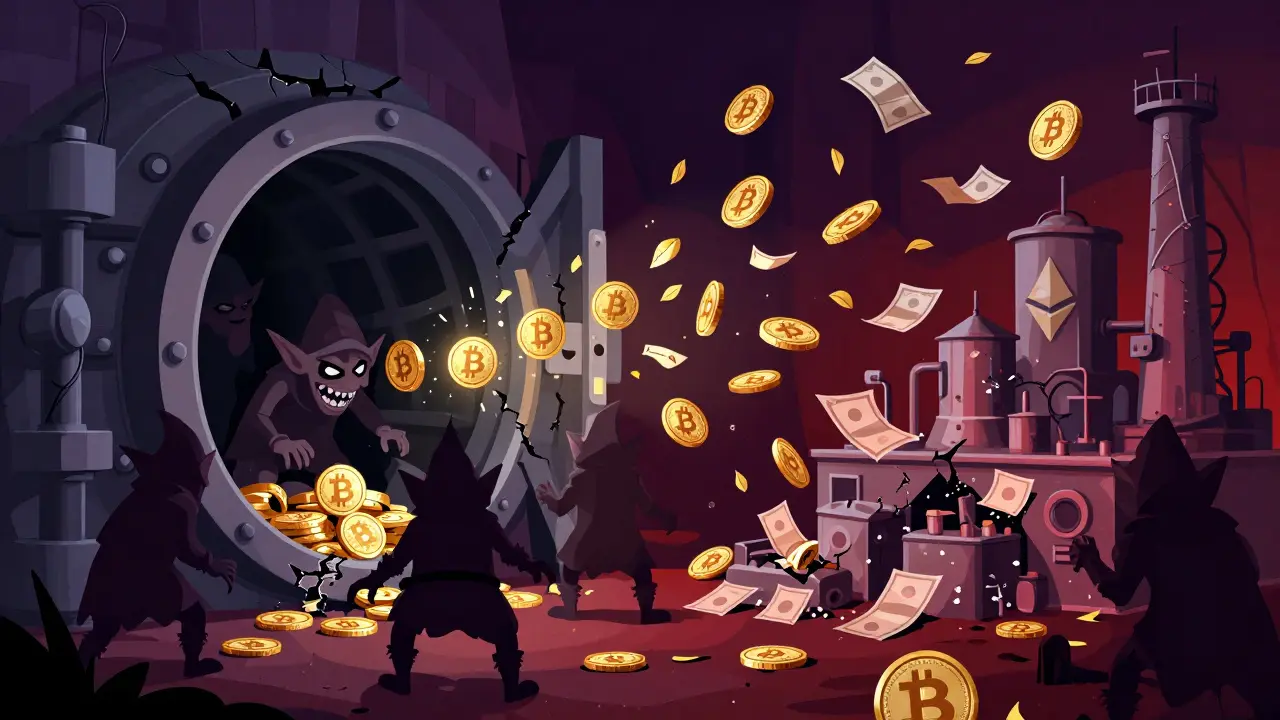
Collateral Withdrawal Attacks: Imagine a scenario where an attacker gains unauthorized access to the private keys controlling the vault on the source chain (e.g., Bitcoin). They steal the underlying BTC. Meanwhile, the wrapped tokens (e.g., WBTC) still exist on the target chain (Ethereum), circulating freely in DeFi protocols. Since the backing asset is gone, the wrapped token becomes worthless. Holders are left with a digital token that promises value but has no reserve to redeem it against. This breaks the 1:1 peg instantly.
Infinite Mint Exploits: This attack targets the smart contract on the target chain. If there is a bug in the code that governs minting, an attacker might be able to trigger the minting function without actually depositing collateral on the source chain. They can then mint millions of dollars worth of wrapped tokens out of nowhere. These fake tokens are sold on decentralized exchanges or used as collateral in lending markets. Because the supply has exploded without corresponding reserves, the value of the legitimate wrapped tokens crashes. This creates a fractional reserve situation where the system is insolvent.
| Attack Type | Target Layer | Mechanism | Impact on Users | |
|---|---|---|---|---|
| Collateral Theft | Source Chain Vault | Unauthorized withdrawal of underlying assets | Wrapped tokens become unbacked and worthless | |
| Infinite Mint | Target Chain Smart Contract | Bug allows minting without deposit | Supply inflation causes price crash and insolvency | |
| Key Compromise | Custodian Infrastructure | Hacking of multi-sig or MPC nodes | Total loss of bridged funds |
Why Your DeFi Portfolio Is at Risk
You might think, "I only use wrapped tokens occasionally, so I’m safe." That’s a dangerous assumption. The risk extends far beyond the people who directly bridge their assets. It spreads through the entire decentralized finance ecosystem via contagion.
Consider a lending protocol like Aave or Compound. You lend USDC and earn interest. Someone else borrows ETH using WBTC as collateral. If the WBTC bridge is exploited and WBTC loses its value, the borrower’s collateral is wiped out. The loan becomes undercollateralized. The protocol cannot recover the borrowed ETH because the collateral is now trash. This leads to protocol insolvency. As a lender, your principal is at risk even though you never touched a wrapped token yourself.
This interconnectedness means that every time you interact with a DeFi protocol, you are implicitly trusting the security of every bridge that supports the assets within that protocol. The more widely adopted a wrapped token becomes, the greater the systemic risk. A breach doesn’t just hurt bridge users; it can collapse entire lending markets, liquidity pools, and derivative platforms.
Smart Contracts: The Code Behind the Curtain
At the heart of every bridge is a set of smart contracts. These are self-executing codes that handle the logic of locking, minting, burning, and unlocking. If this code has a vulnerability, no amount of physical security or insurance will save the funds.
Smart contract security is not a one-time fix. It requires continuous auditing by third-party firms specializing in blockchain security. Reputable auditors review the code line by line, looking for reentrancy attacks, integer overflows, and logic errors. Upon completion, they publish public reports detailing any issues found and recommendations for fixes. Transparency here is key. If a bridge does not publish regular audit reports from multiple independent firms, you should treat it with extreme caution.
However, audits are not guarantees. Auditors check the code at a specific point in time. If new code is deployed later without proper review, vulnerabilities can slip through. Additionally, complex interactions between different chains introduce edge cases that are difficult to test. The best bridges employ formal verification methods and bug bounty programs to incentivize white-hat hackers to find flaws before malicious actors do.

Security Best Practices for Users
Since you cannot control the security of the bridge itself, you must manage your exposure. Here are practical steps to reduce your risk when dealing with wrapped tokens.
- Minimize Exposure Time: Only wrap tokens when necessary. Unwrap them back to their native form as soon as you are done using them in DeFi. The less time your assets are exposed to bridge risk, the better.
- Diversify Bridges: Don’t put all your eggs in one basket. Use multiple reputable bridges if possible. If one fails, your other assets remain secure.
- Check Audit History: Before using a new wrapped token, research its bridge. Look for recent audits from top-tier firms like OpenZeppelin, Trail of Bits, or CertiK. Avoid projects with no public audit history.
- Understand Custody Models: Prefer bridges that use decentralized custody models or those with transparent proof-of-reserves. Centralized custodians are single points of failure.
- Monitor Insurance Options: Some platforms offer insurance coverage for bridge failures. While not a perfect solution, it can provide a safety net in case of a hack.
The Future of Cross-Chain Security
The industry is moving away from trusted custodians toward trustless architectures. Protocols like LayerZero and Wormhole are experimenting with message-passing standards that reduce reliance on centralized vaults. These systems use light clients and cryptographic proofs to verify transactions across chains without locking assets in a single pot controlled by a few entities.
Additionally, regulatory pressure is increasing. Governments are beginning to scrutinize cross-chain bridges as financial intermediaries. This could lead to stricter requirements for capital reserves, insurance, and operational transparency. While regulation brings compliance costs, it may also force bridges to adopt higher security standards, ultimately benefiting users.
For now, wrapped tokens remain indispensable for blockchain interoperability. They enable liquidity, lower fees, and expand use cases across disparate networks. But they come with inherent risks that require vigilance. By understanding the mechanics of bridge security, recognizing the signs of vulnerability, and adopting prudent risk management strategies, you can navigate the multi-chain landscape with greater confidence.
What happens if a wrapped token bridge is hacked?
If a bridge is hacked, the outcome depends on the type of attack. In a collateral theft attack, the underlying assets are stolen, rendering the wrapped tokens worthless. In an infinite mint exploit, excessive amounts of wrapped tokens are created, causing their value to crash due to oversupply. In both cases, holders lose money, and DeFi protocols using these tokens as collateral may face insolvency.
Are all wrapped tokens risky?
All wrapped tokens carry some level of risk because they rely on external infrastructure (bridges and custodians). However, risk levels vary significantly. Tokens backed by well-audited, decentralized bridges with strong track records are generally safer than those relying on opaque, centralized custodians. Diversification and minimizing exposure time help mitigate this risk.
How do I know if a bridge is secure?
Look for public audit reports from reputable third-party firms, evidence of multi-signature or MPC custody for assets, and a history of transparency regarding proof-of-reserves. Avoid bridges that hide their technical details or lack regular security reviews. Community reputation and uptime history are also important indicators.
Can I insure my wrapped tokens against bridge hacks?
Some DeFi platforms and insurance protocols offer coverage for smart contract failures and bridge exploits. However, policies often have exclusions, limits, and waiting periods. Always read the fine print and understand what is covered. Insurance is a layer of protection, not a guarantee against total loss.
Why do we need wrapped tokens if blockchains are becoming faster?
Speed is not the only factor. Different blockchains offer unique features, ecosystems, and user bases. Wrapped tokens enable interoperability, allowing assets to move between these specialized environments. For example, Bitcoin’s security combined with Ethereum’s DeFi applications creates opportunities that neither chain could offer alone. Until true atomic swaps become widespread, wrapped tokens remain the most practical solution.

Rebecca Andrews
I'm a blockchain analyst and cryptocurrency content strategist. I publish practical guides on coin fundamentals, exchange mechanics, and curated airdrop opportunities. I also advise startups on tokenomics and risk controls. My goal is to translate complex protocols into clear, actionable insights.
More Articles

Beethoven X (Optimism) Crypto Exchange Review - Deep Dive into Features, Tokenomics, and Performance
In-depth review of Beethoven X on Optimism, covering architecture, BEETS tokenomics, performance, pros, cons, and how it compares to other DEXs.